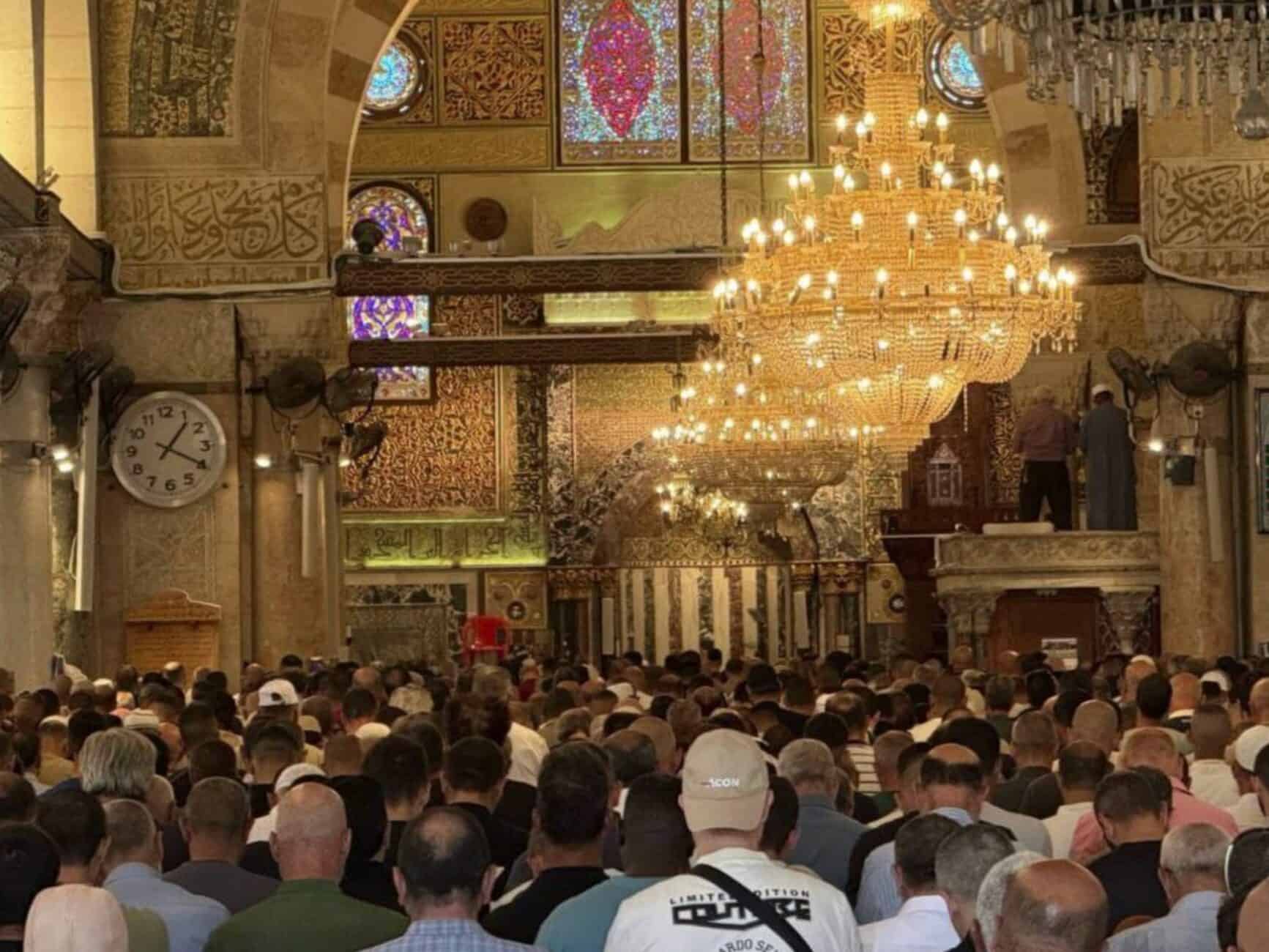
After nearly two weeks of closure due to the Iran–Israel conflict and emergency restrictions, Al-Aqsa Mosque reopened its gates to tens of thousands. On Friday, approximately 45,000 Muslim worshippers gathered in Jerusalem’s sacred compound, renewing a tradition that had been suspended during back-to-back Fridays of war
A Peaceful Gathering Despite Online Calls
In the days leading up to the reopening, Palestinian activists urged a mass show of presence and protest at Al-Aqsa, framing the closure as politically motivated. However, the event remained calm. According to the Islamic Waqf, no major confrontations occurred, though two individuals were removed by authorities—one a mosque guard and another an unidentified young man
مشاهد من صلاة الجمعة في المسجد الأقصى المبارك بعد أسبوعين من إغلاق الاحتلال لأبوابه. pic.twitter.com/xs6wwtteJy
— شبكة قدس الإخبارية (@qudsn) June 27, 2025
The Mufti’s Sermon: Al-Aqsa Has Its Protectors
During the Friday sermon, Jerusalem’s Grand Mufti Sheikh Muhammad Hussein spoke of spiritual guardianship. He described the worshippers as “descendants of those who protected Al-Aqsa” and warned against forces seeking to corrupt the site
To them we say: your threats have no power here. Al-Aqsa has a guardian and those who will sacrifice for it, he declared
Marking the Islamic New Year in a Sacred City
The prayers coincided with the first Friday of Muharram—the start of the Islamic year 1447. Al-Aqsa director Sheikh Omar Kiswani led a special address marking the occasion. In Islamic tradition, Muharram is a holy month, historically forbidden for warfare. It also recalls the Prophet Muhammad’s migration (Hijra), a foundational moment in Islamic history
(Life Returns to the Western Wall – with Water and Tears)
Faith Beyond Conflict: The Rhythm of Jerusalem
For Jerusalem’s Muslim community, the sight of Al-Aqsa full once again was not just a religious moment—it was an emotional one. Amid war, fear, and tension, the return of collective prayer reflected the city’s resilience. As one worshipper was overheard saying, “This is how we begin again—together, in prayer