lims around the world marked today, Friday, the first day of Eid al-Fitr, celebrated immediately after the end of the month of Ramadan. Al-Aqsa Mosque on the Temple Mount in Jerusalem remained closed once again, and hundreds of Palestinians who did not accept the situation gathered from the early morning hours in the streets near the gates of the Old City and held the holiday prayer there, while violating Home Front Command instructions prohibiting large public gatherings amid missile fire from Iran.
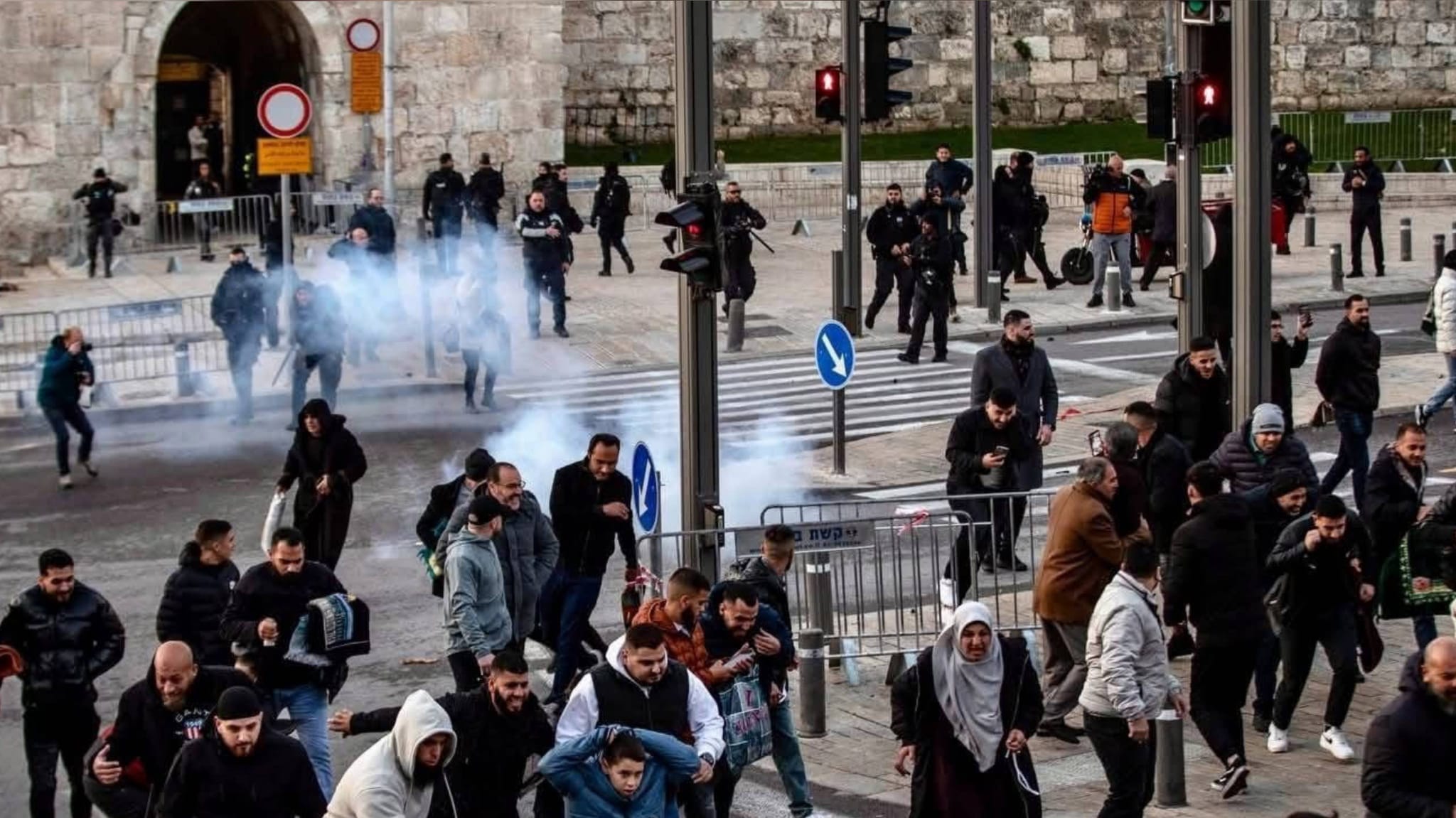
Jerusalem District police officers acted to disperse the gatherings. In some locations, officers were forced to use crowd control measures, including the use of tear gas.
How unusual is this event historically on the Temple Mount?
Palestinian media and social networks note that this is the first time in the past 60 years that the Al-Aqsa compound has remained closed during Eid al-Fitr (except during the coronavirus period). Today’s entry ban joins the past three weeks, most of the days of Ramadan, during which the Temple Mount compound remained closed due to missile fire from Iran. This has sparked significant anger and frustration among Palestinians. In their view, these are not security measures intended to save lives, but rather a cynical exploitation of the situation by Israel to establish Jewish hegemony on the Temple Mount and push them away from Al-Aqsa Mosque.
In recent days, a call spread on Palestinian social media urging worshippers not to comply with the ban on gatherings and to come in large numbers to the closest possible point to the mosque and hold the holiday prayer there. The call was accompanied by a fatwa issued by Sheikh Ikrima Sabri, head of the Supreme Islamic Council and former Mufti of Jerusalem, mandating the closure of all mosques across Jerusalem on the holiday and directing worshippers toward Al-Aqsa Mosque.
Indeed, many responded to the calls. From the early morning hours, hundreds of worshippers streamed toward the gates of the Old City and the surrounding streets. Most of the gatherings were near Lions’ Gate, Damascus Gate and Herod’s Gate. Worshippers spread prayer mats on sidewalks and roads and began the holiday prayer, which became not only a religious act but also an act of protest and defiance against Israeli authorities and the rules imposed on the Palestinian public.
Jerusalem District police, who had prepared in advance for this possibility and were deployed across the sites, began dispersing the gatherings. In places where the crowd delayed dispersing, especially near Herod’s Gate, officers were forced to use force, including batons and tear gas. One person was also arrested during one of the confrontations.
פיזור מתקהלים באזור העיר העתיקה בירושלים, 20.3.2026 pic.twitter.com/JpO4CuPiec
— jerusalem online (@Jlmonline) March 20, 2026