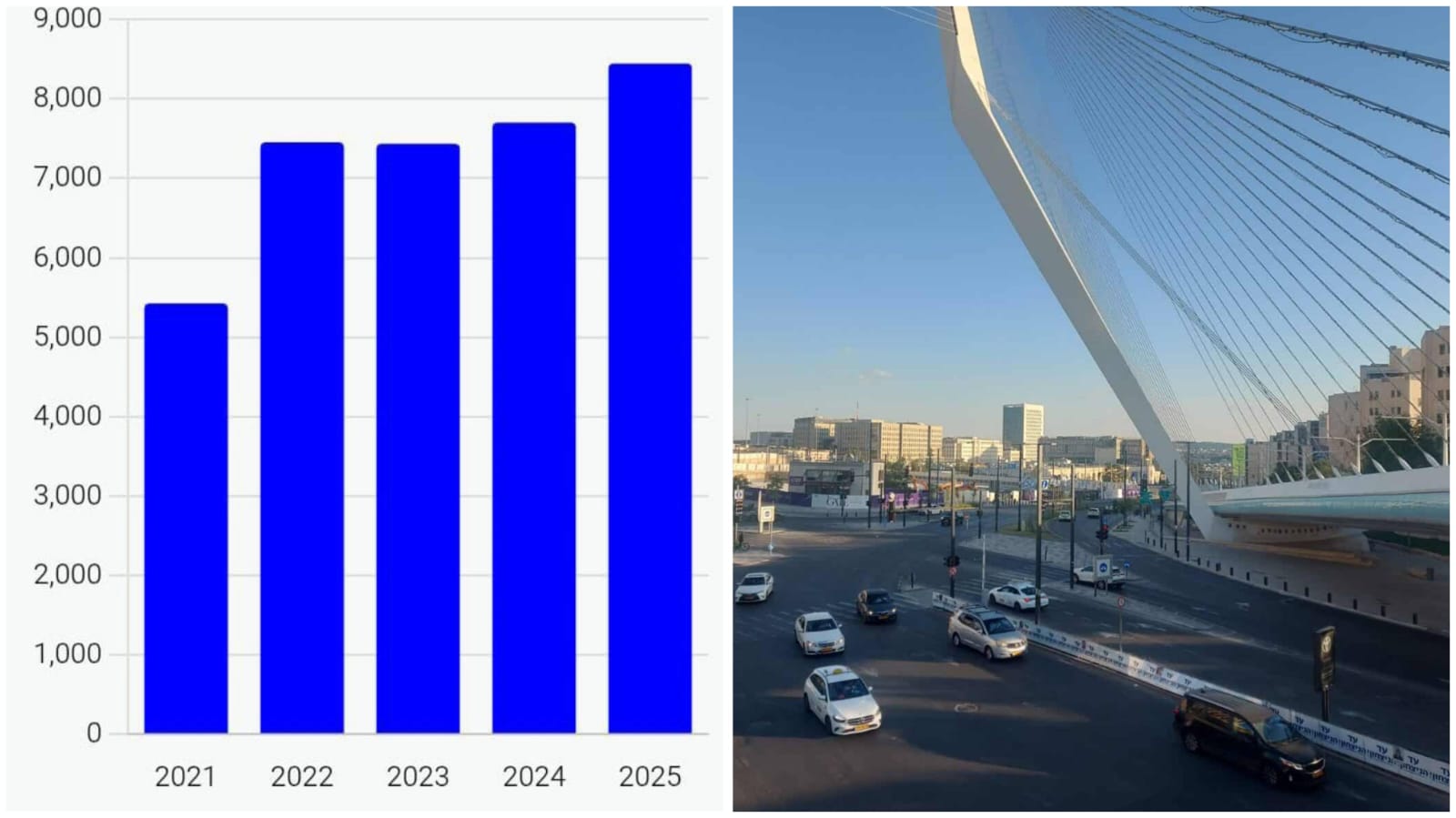
Jerusalem closed 2025 with a figure that redefines the scale and pace of urban development in the capital. The Jerusalem Municipality approved building permits for 8,445 new apartments during the year – the highest number ever recorded in the city and a clear increase compared to previous years. The milestone positions Jerusalem as Israel’s leading city in terms of approved residential construction and signals a deep acceleration in planning and licensing policy.
Behind the surge stands a combination of streamlined approval processes, reduced bureaucracy, and a deliberate push for large-scale urban renewal. Of the apartments approved in 2025, 4,092 were part of urban renewal projects, primarily evacuation-and-rebuild schemes. This marks a sharp rise compared to 2024 and reflects a strategic shift toward intensive development within existing neighborhoods rather than outward expansion. Today, urban renewal processes are underway in 31 neighborhoods across Jerusalem, including Kiryat HaYovel, Gilo, Arnona, Kiryat Menachem, Gonenim, and Talpiot.
Looking at the broader picture, the last five years underline the scale of change. Between 2021 and 2025, permits were approved for more than 36,000 housing units in Jerusalem – an achievement that places the city at the forefront nationwide. For comparison, until 2019 the annual average stood at roughly 2,500 housing units. At present, around 23,000 housing units are actively under construction across the city.
How Did Jerusalem Become Israel’s Leader in Building Permits?
The momentum is not limited to residential construction. In 2025, building permits were also granted for office developments totaling approximately 142,000 square meters, including major projects in Kiryat HaLeom and Malha, as well as additional excavation and construction permits within the Hebrew University campus. Alongside this, permits were approved for the construction of 738 new hotel rooms, reinforcing Jerusalem’s role as a growing center for employment, tourism, and business.
The construction boom is also reflected in municipal revenues. Income from betterment and paving levies reached NIS 1.123 billion in 2025, compared to NIS 1.078 billion in 2024. These funds are earmarked for further investment in urban development, infrastructure upgrades, and improvements to public spaces throughout the city.
Jerusalem Mayor Moshe Lion welcomed the figures and noted that “the revolution continues. Over the past year we achieved an unprecedented record on the path toward addressing the housing challenge and building the city’s future, more than any other city in Israel, while making optimal use of land and preserving green and open spaces. Urban renewal together with vertical construction are the central tools for expanding housing supply in Jerusalem. This achievement will help attract a strong population, support young couples in building their future here, and raise the quality of life for all residents. We will continue on this path, which is a central pillar in Jerusalem’s growth.”