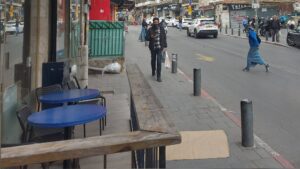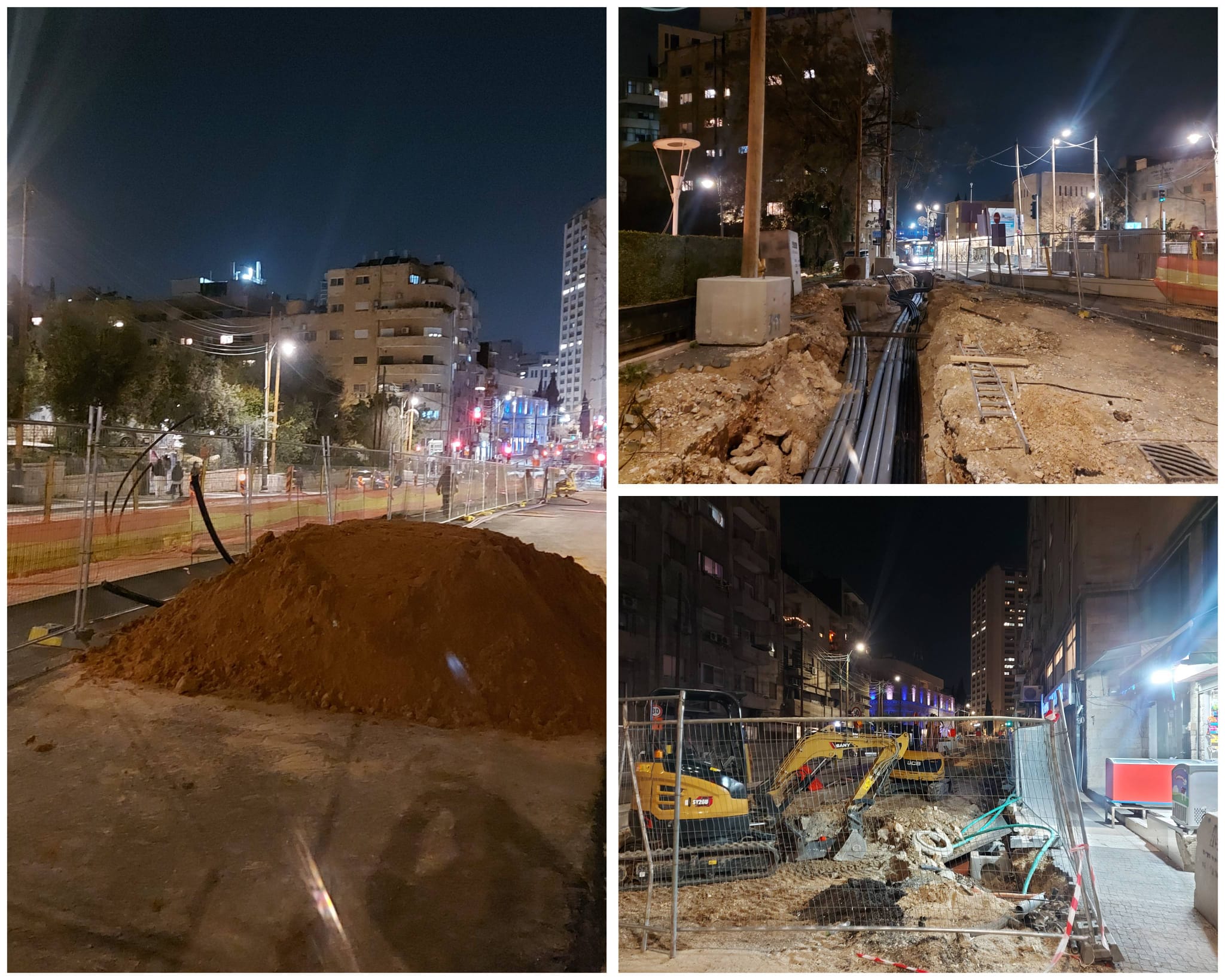
Jerusalem in recent years feels like one long construction site. Streets open and close, trenches are dug again and again, metal fences line major routes, and a simple walk through the city has turned into an obstacle course. Between the noise, dust and traffic, it’s hard not to ignore the sense that public space is shrinking, and with it, something deeper – the feeling of belonging to the city itself.
Construction is only accelerating. Towers rise quickly, neighborhoods fill up, density increases. But alongside this growth, a kind of sameness takes over. The same blocks, the same lines, the same architectural language repeating itself. The Jerusalem stone is still there, but often reduced to a surface – a symbol rather than a living part of a broader design.
Who was architect Andoni Baramki – and what kind of Jerusalem was he trying to build?
Against this backdrop, it’s hard not to ask how the city once looked when it was shaped by a different vision. One figure who captures that contrast is Andoni Baramki – an Arab Christian architect born in Jerusalem, who, during the British Mandate period, tried to create an architectural language that bridged local tradition with international modernism.
Baramki studied in Athens, where he absorbed both classical foundations and modern European ideas. When he returned to Jerusalem in the 1920s, he didn’t simply import what he had seen – he adapted it. The stone remained, but the form evolved: cleaner lines, wider openings, and a stronger relationship between structure, light and garden. The result was an architecture that felt both local and outward-looking at the same time.
In the 1930s, he became one of the most sought-after architects among the city’s elite. In neighborhoods like Talbiya and Katamon, he designed villas that were more than homes – they were cultural statements. Red Mizzi stone, refined arches, open balconies facing gardens – all combined to create a Jerusalem that felt connected, elegant, almost European, yet unmistakably its own.
How did Andoni Baramki’s home in Musrara become a frontline position in Jerusalem?
Baramki’s story did not remain within the realm of aesthetics. It took on a dramatic historical dimension through the house he built for himself in Musrara in 1932 – a space intended for culture, conversation and hospitality, which within years became something entirely different.
After 1948, his family was forced to leave, and the house turned into a fortified position known as “Turjeman Post”. A place once designed to host intellectuals and diplomats became a point of observation, tension and fear along a divided city. The stone remained, but its meaning changed completely.
Later, following the reunification of Jerusalem, the building did not return to its original purpose. Instead, it became the Museum on the Seam – an institution that deals precisely with the themes embedded in its walls: borders, identities, conflict and connection. Even today, traces of the past remain visible, alongside contemporary attempts to create dialogue within the same space.
Jerusalem today continues to move between these poles. Expansion and development on one hand, and on the other, a quiet longing for a different scale, a different language, a more human connection between people and place. Baramki’s story is not just about architecture – it raises a question that still feels relevant: in the rush to build, do we still know how to build an idea?