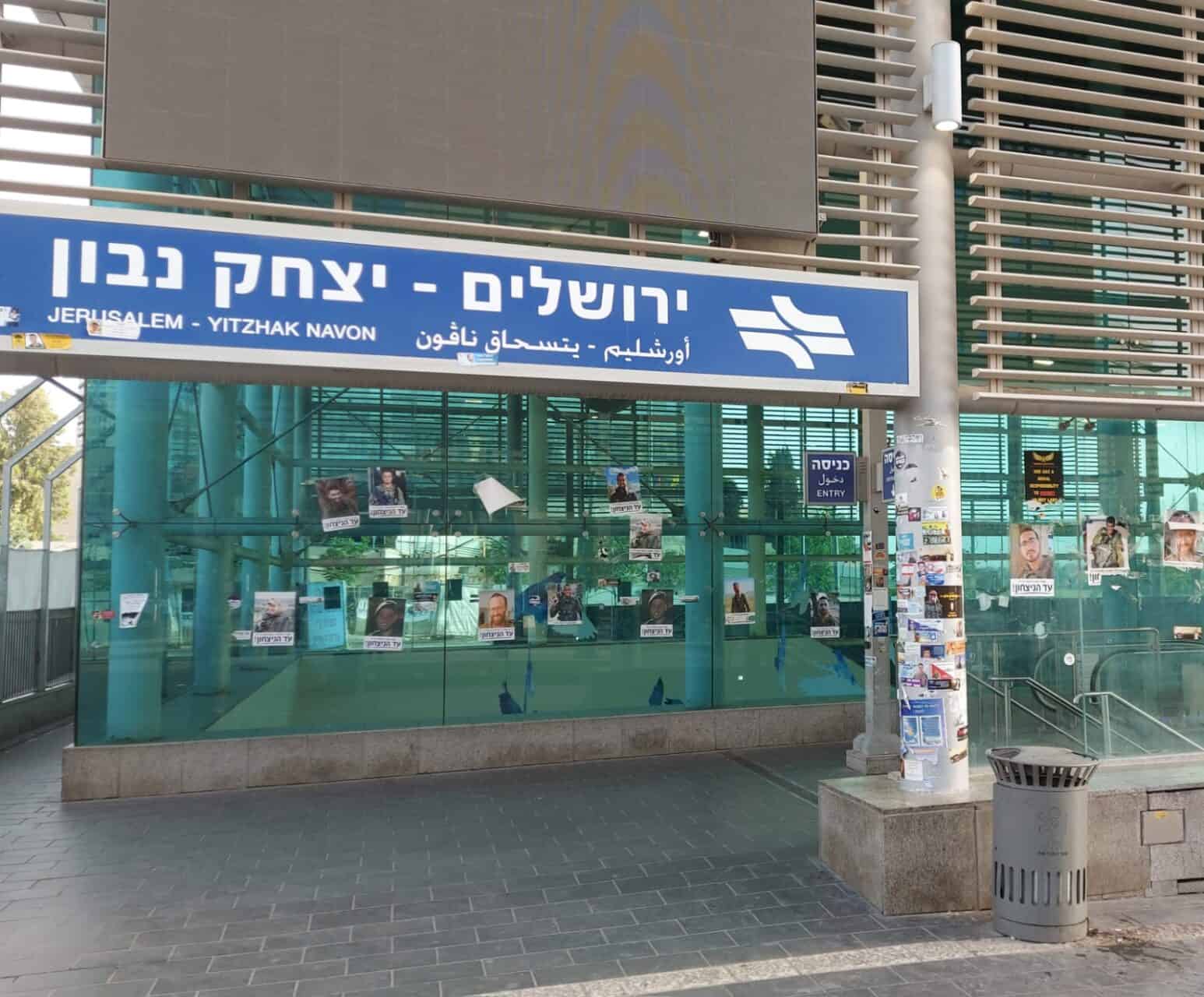
In most countries, central train stations are vibrant spaces. They display posters for concerts, ads for new tech, and smiling tourists moving in and out. But at the heart of Jerusalem, Yitzhak Navon Station offers a radically different welcome: not commerce, not culture – but collective memory
Since the beginning of 2024, the station’s main glass wall has turned into a silent wall of mourning. Instead of transit signs and branding, it’s lined with printed portraits: fallen Israeli soldiers, civilians still held hostage in Gaza, personal notes, taped stickers, and names of the dead. It’s not a formal memorial. It’s not curated by a museum or government office. It just happened – and never went away
Visitors stop. They look. Many are silent. Some snap a photo and move on. But all leave changed
A space that no longer tries to move on
Environmental psychologists warn that when grief symbols dominate daily public space, they can freeze time. People feel emotionally stuck. And in Jerusalem, nothing feels more stuck than this station. The faces don’t rotate. The display never fades. In a country where trauma pulses through every street – Navon Station feels like a national pulse check
It’s unclear whether the Israeli Ministry of Transportation or Israel Railways authorized this growing memorial. No official signs address it. And perhaps that silence says it all: nobody wants to be the one who takes it down. Not yet. Maybe not ever
Across the globe, cities rebuild after tragedy. Train stations return to schedules and tourists. But here – grief became infrastructure
Jerusalem’s entrance, once a sleek monument of modern Israel, is now something else: a station that doesn’t move. A place that doesn’t forget