Alongside the joy and relief expected at the sight of hostages returning home, Israel is bracing for the painful cost of the agreement: 250 convicted militants, men responsible for the blood of countless Israelis and sentenced to multiple life terms, will walk free from prison gates and return to their communities to be welcomed as heroes.
One of them is Ashraf Kader Husin Hajajra, now 50, from the Dheisheh refugee camp near Bethlehem. In March 2002, in what became known as the “Black March” of the Second Intifada, Hajajra played a central role in a horrific suicide bombing in Jerusalem’s Beit Yisrael neighborhood that left 11 people dead outside a synagogue. After serving less than 24 years of the 12 life sentences imposed on him, he is returning to his camp as a celebrated figure.
The Beit Yisrael suicide bombing
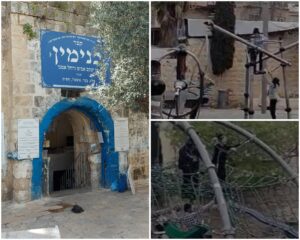
On the evening of Saturday, March 2, 2002, dozens of women, children, and infants gathered in the heart of Beit Yisrael, Jerusalem, near the Machaneh Yisrael yeshiva for returning Jews. They were waiting for worshippers to leave the synagogue at the end of prayers.
Among them were members of the Hazzan and Hajaj families and their guests, celebrating a bar mitzvah in Jerusalem. Shortly before 7 p.m., a man disguised as an ultra-Orthodox Jew arrived, drawing suspicion. Moments later, the bomber detonated the explosive device strapped to his body in the midst of the crowd. Ten people were killed instantly, and another died of wounds days later. Sixty more were injured, many severely.
Eight members of the Nachmad family from Rishon Lezion, who had come for the celebration, were among the victims. Six children and infants were killed, the youngest only seven months old. A pregnant woman survived but lost the twins she carried.
(Night Blast: Another Score Settled in Jerusalem Attack)
Al-Aqsa Martyrs Brigades and the Second Intifada
The Al-Aqsa Martyrs Brigades, the military wing of Fatah, claimed responsibility for the bombing. It was Ashraf Hajajra who drove the suicide bomber to Jerusalem’s Beit Yisrael neighborhood. For this, he received 4,000 shekels, later telling the court he acted out of personal and family hardship after being expelled from his home by his father.