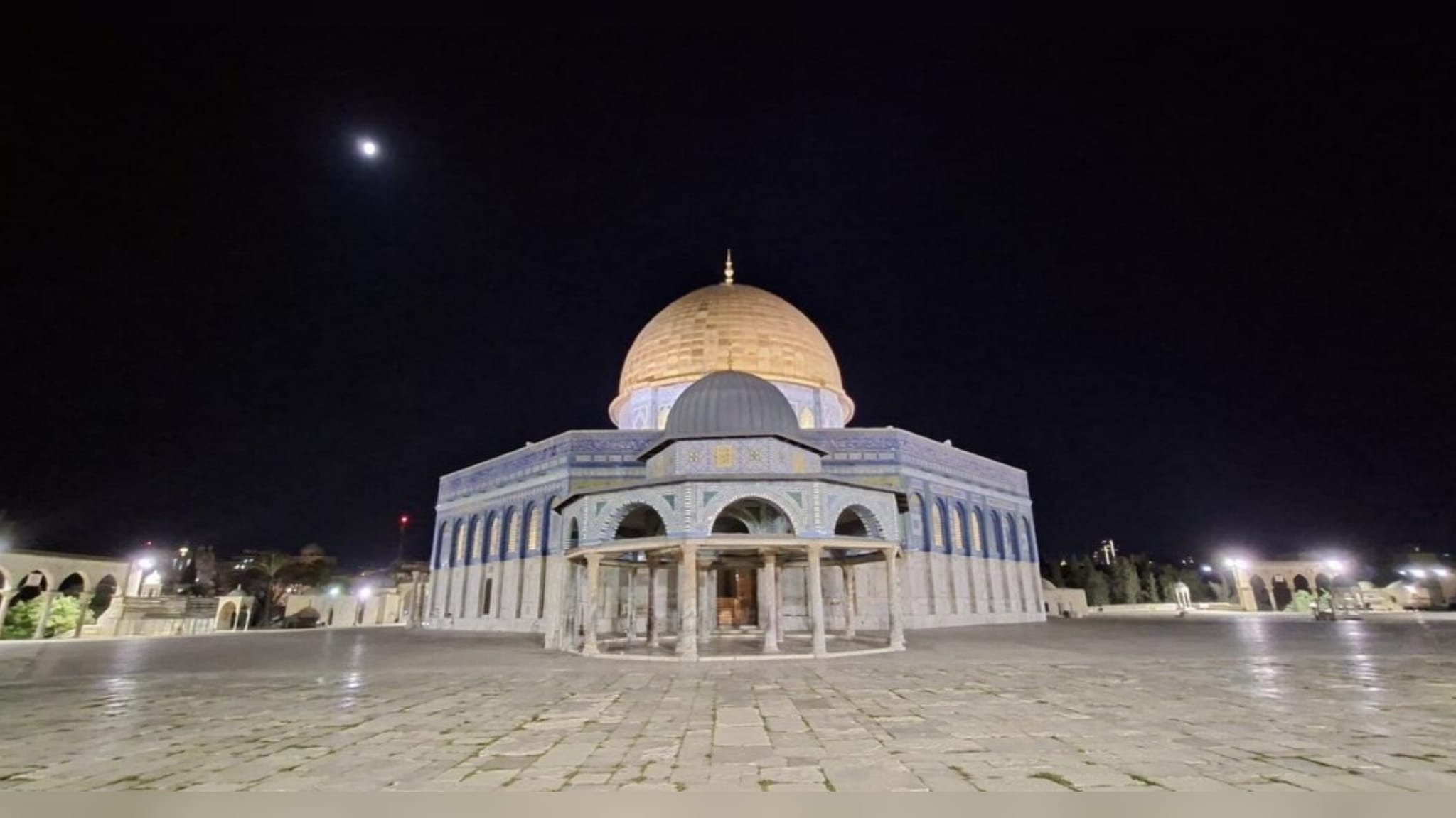
Millions of Muslims around the world mark today the last Friday of the month of Ramadan. This is the 14th consecutive day that Al-Aqsa Mosque on the Temple Mount in Jerusalem has been closed to worshippers, and the first time the mosque has been closed on this day since the Six-Day War in 1967, except during the coronavirus pandemic when the compound was closed for health reasons with the agreement of the Waqf authorities.
The inability to pray at Al-Aqsa on what is known as “Orphan Friday” has sparked deep frustration among Palestinians. Calls are circulating in Palestinian media and on social networks urging people not to obey instructions to avoid gatherings and instead to reach the closest possible point to the mosque and pray there.
What is “Orphan Friday” in Ramadan?
The last Friday of the month of Ramadan is metaphorically known as “Orphan Friday” (Al-Jum’ah Al-Yatimah), because it is the final Friday of the month and therefore has no “brothers” – no additional Fridays that follow it before the end of the fast. The day is considered the spiritual peak of Ramadan.
In normal years, the day brings tens – sometimes hundreds – of thousands of worshippers to Al-Aqsa Mosque, arriving from across the West Bank, Jerusalem and Arab communities inside Israel. It is a day of farewell to the holy month, accompanied by last-minute shopping in the markets of Jerusalem’s Old City ahead of the upcoming Eid al-Fitr – a festive atmosphere mixed with sadness over the end of Ramadan.
The closure of the compound also comes as Palestinians have been unable throughout the last ten days of Ramadan to observe the practice of I’tikaf – staying overnight in the mosque for extended prayer and devotion – a restriction that has increased anger and frustration.
From the Palestinian perspective, this is not a measure driven by security concerns to protect lives amid the backdrop of Operation “Roaring Lion,” but rather a cynical exploitation of the situation intended to strengthen Jewish control over the Temple Mount and push Palestinians away from Al-Aqsa Mosque. Palestinians also argue that similar steps were not taken against Jews celebrating the holiday of Purim in large public gatherings.
Calls are spreading across Palestinian media and social networks urging people not to follow Home Front Command instructions to avoid gatherings, and instead to gather at the nearest possible location to the mosque and pray there. As is known, last Friday hundreds of worshippers gathered on the street near Damascus Gate and held prayers there.
What is “International Quds Day” marked on the last Friday of Ramadan?
The last Friday of Ramadan is also “International Quds Day,” an annual anti-Zionist protest day. The day was established by Ayatollah Ruhollah Khomeini in 1979 shortly after the Islamic Revolution in Iran.
It is dedicated to expressing solidarity with Palestinians and opposition to Israeli control of Jerusalem, and includes organized street demonstrations in Iran and across the Muslim world. It is doubtful whether this year Mojtaba Khamenei, the current ayatollah who was recently chosen and is reportedly hiding somewhere while wounded, will have either the desire or the ability to mark the day.