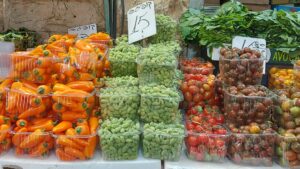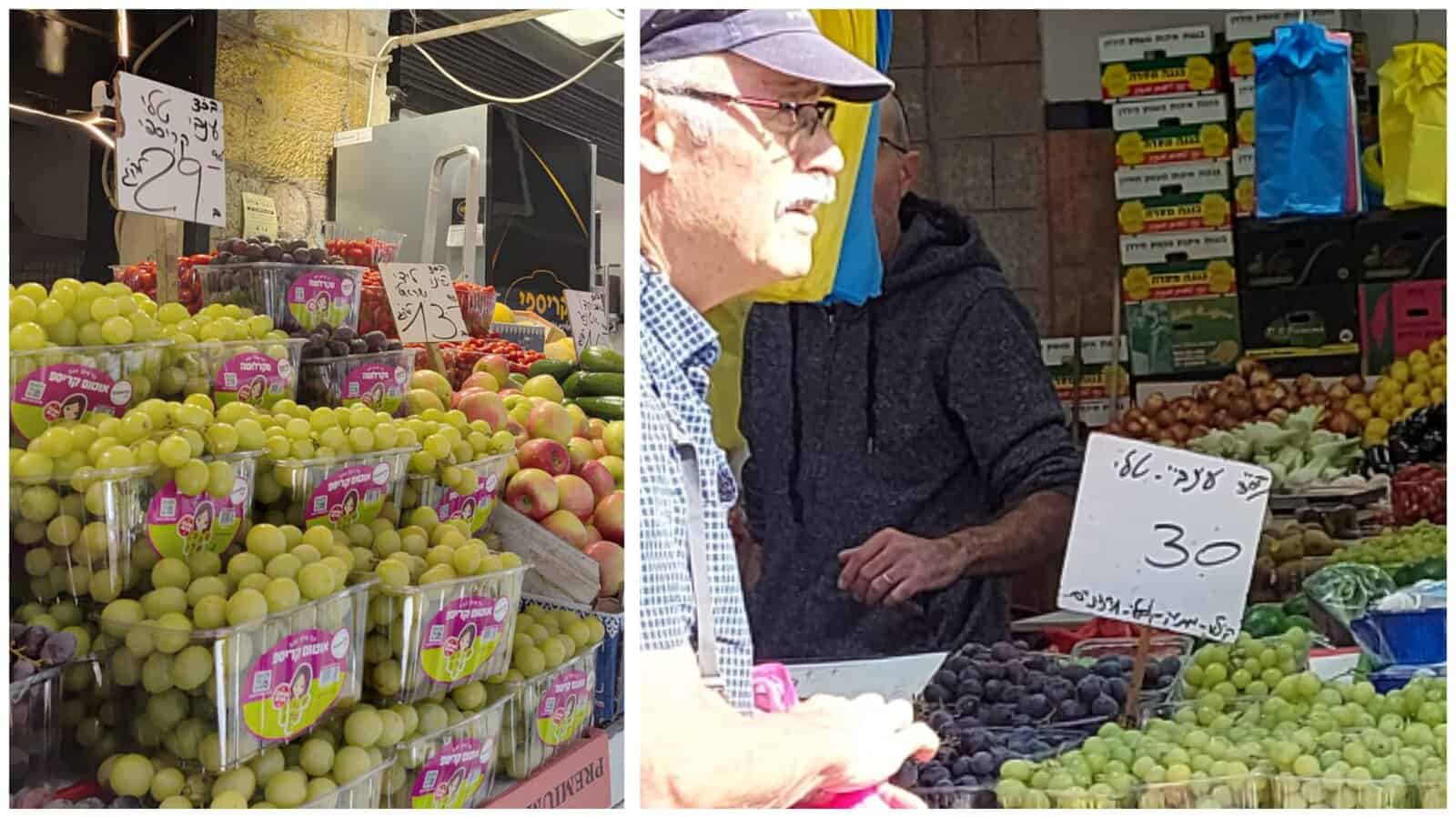
Craving grapes? At Jerusalem’s Mahane Yehuda Market, prices have reached around 30 shekels per kilo, and shoppers prefer to pass. Meanwhile, in nearby neighborhoods such as Nahlaot, Mekor Baruch, and Zikhron Moshe, remnants of a once-iconic Jerusalem scene still survive: ancient vines climbing iron fences, tendrils curling around stone balconies, and the faint shade of “grape ceilings” that once covered courtyards in summer.
Clusters of grapes once hung above the heads of Jerusalem families sitting on their balconies – a sweet chandelier of the season.
Today, most of those vines are gone, and so are the juicy grapes once found in every home. At Mahane Yehuda, stalls overflow with seasonal fruits, but few buyers reach for grapes.
Those who do often pluck a single grape from the netted box, taste it – and walk away, leaving the box behind.
Mahane Yehuda grapes – prices driving buyers away
This is how grape-eating looks in Jerusalem at the end of 2025: a quick, nostalgic, fleeting taste. “Around 30 shekels per kilo,” one shopper says. “Who’s buying that?”
Most Jerusalemites ride the light rail back to Pisgat Ze’ev or Neve Yaakov, or take buses to the city’s western and northern neighborhoods – with no grapes in their bags. The exaggerated prices, and the trick of writing “grapes 15 shekels” in bold and “per half kilo” in tiny letters, pushed many to buy other fruits instead.
Behind these prices lie harsh realities: war, a scorching summer, water shortages, lower yields, and high transport costs from vineyard to stall. Growers in the Judean Hills have already abandoned large table-grape areas, switching to wine grapes with higher economic value.
From Jerusalem’s vine to a national symbol
The vine, an ancient symbol of abundance, continues to appear in scripture and folklore – “each under his vine and fig tree” – a vision of peace and rest. The old fable of “the fox and the vineyard” still resonates.
Years ago, Jerusalemites rolled vine leaves with rice, spread grapes to dry on flat rooftops, and prepared homemade wine as part of the autumn routine.
The vine, one of the seven species, held a special place in elementary schools. Children learned to recognize vine leaves, draw grape clusters, and understand how wine is made for Kiddush. It was taught as both a plant and a moral lesson – persistence, rootedness, humility.
Vineyards in Israel spread across the Galilee, the Golan Heights, the Judean Hills, the Ella Valley, and even the Negev and Lachish. Their growing needs are modest: hot summers, cold winters, rocky terraces.
Perhaps that’s their beauty – giving so much while demanding so little. Even when grapes sit lonely and unsold, they remind Jerusalemites of what once was. The expensive grapes, cherished despite their price, carry a quiet nostalgia. People look into the boxes, remember drawing grape clusters as children, recall the sweet juice that soothed their throats – and learn again from the vine: humility, modesty, generosity, and giving that carries no price tag.