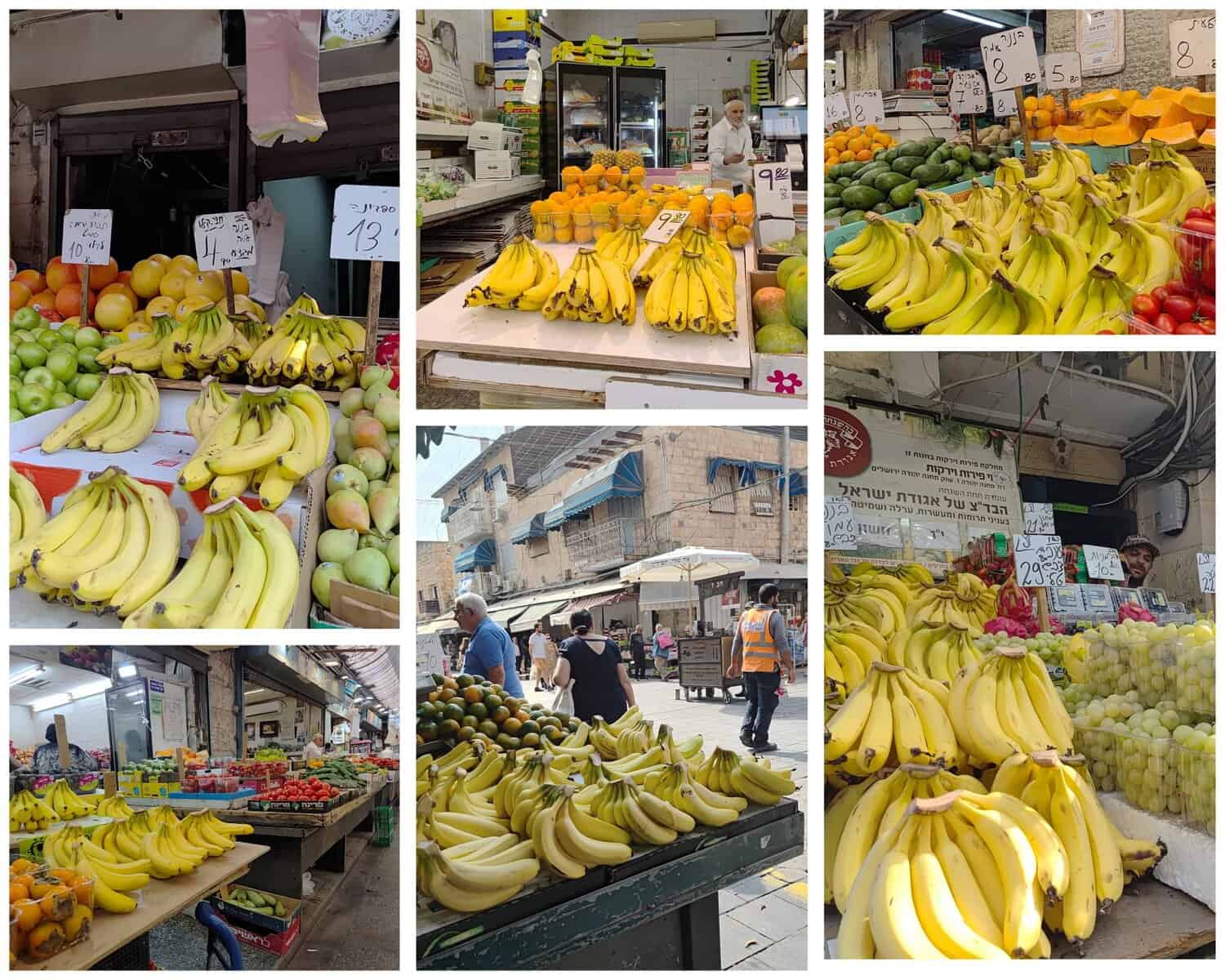
In Jerusalem’s Mahane Yehuda Market, bananas rest in neat yellow lines, polished and unbruised, stacked like a regiment ready for inspection. Yet the familiar reach of a hand pauses mid-air.
“Ten shekels per kilo,” one seller says, almost apologetically. A raised eyebrow, a polite nod, and the shoppers move on. Bananas – once the most ordinary fruit in Israel – have turned into an unexpected luxury.
Rising fruit prices in Jerusalem
Until recently, bananas cost around three to five shekels per kilo. Today, ten has become standard, and in some stalls even more. For generations, Jerusalemites bought bananas in bundles, hung from metal hooks in shop entrances. Children carried them to kindergarten, adults sliced them into cakes, milkshakes, and banana-split desserts on Shabbat afternoon. The fruit was simple, cheap, and always available.
Now, Israel’s long drought, extreme weather, higher water costs, and a shrinking agricultural workforce due to the war have reshaped the market. Farmers from the Jordan Valley and Carmel Coast – who turned the banana into a national success story – are struggling. Jerusalem, which has known rain, drought, and miracles, feels the change more than most.
Jerusalem cost of living and food prices
The result is visible in every stall: fewer bananas per basket, careful selection by customers, and smaller quantities placed in shopping bags. Locals admit it openly – this is no longer a cheap fruit. Some joke that bananas have become a middle-class treat.
Yet Jerusalem has a habit of turning challenges into creativity. A café near the market now sells “banana slush with raw tahini” – a sweet-salty combination that surprises first-timers and delights regulars.
Banana slush with raw tahini
Families still bake banana cakes, students grab bananas before class, and tourists walking through the market wonder how such a familiar fruit became a symbol of rising living costs.
In a city that survives through memory, faith, and humor, the banana remains a small comfort: peeled slowly, eaten on a bench in the alley, tossed into a smoothie on a warm afternoon. Jerusalemites may pay more today, but they haven’t given up the fruit that once defined simple everyday happiness.