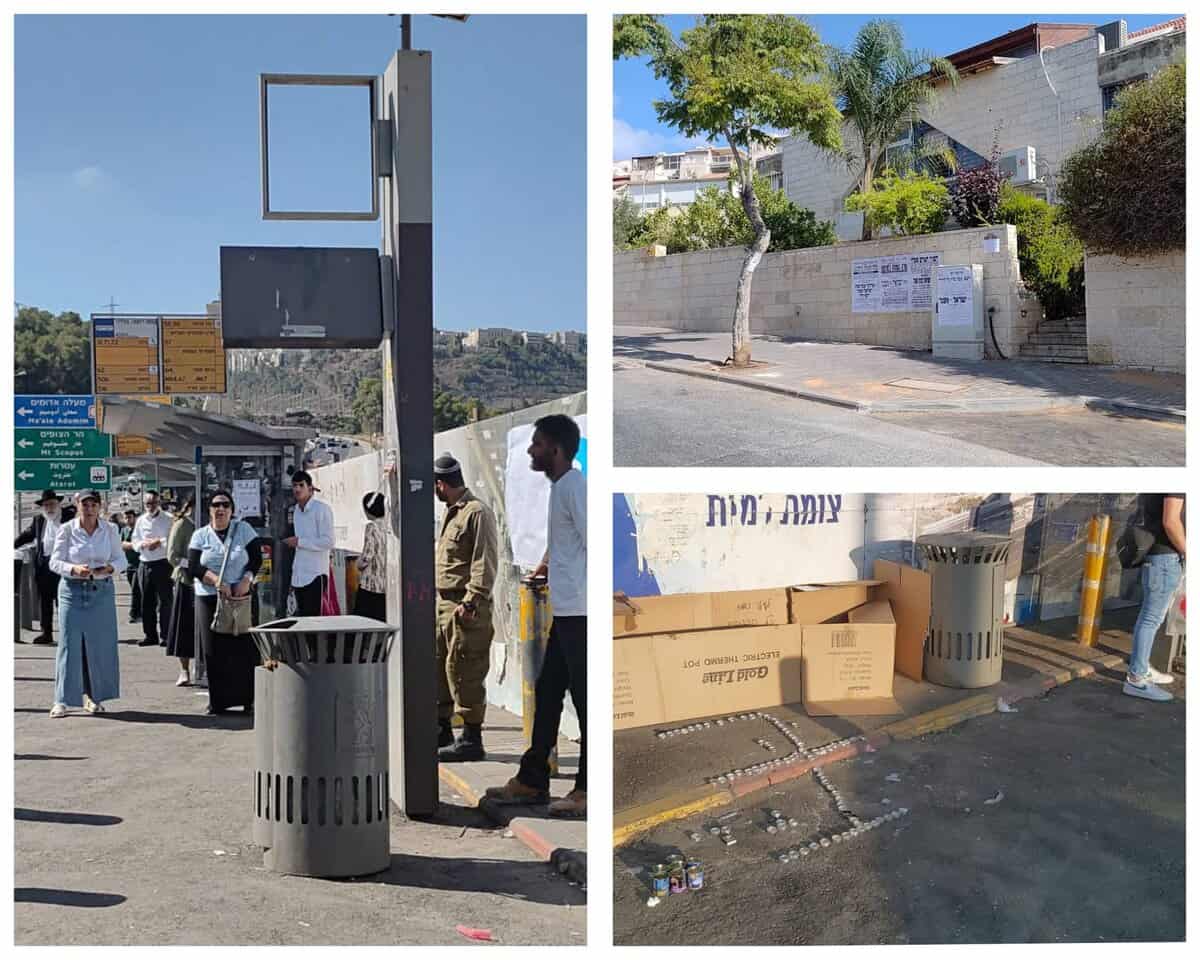
Between mourning posters and memorial signs, an entire neighborhood in Jerusalem carries grief in its heart and on its walls. At Ramot Junction, every bus stop and home façade has been covered with announcements of the deaths of three local residents – Rabbi Mordechai Steinzag, Yosef David, and Yaakov Pinto – among the six people murdered in the recent shooting.
Jerusalem terror attack at Ramot Junction
On Yigal Street in Ramot, a photo of Ori Danino, abducted and murdered in Hamas captivity, still hangs. Nearby, on Tsondek Street, the image of fallen soldier Noam Aharon Masgadayan reminds passersby of another life lost in Gaza. Loudspeakers echo across the streets with broken voices announcing the funerals. A bustling neighborhood suddenly feels as though death has walked too close.
Ramot neighborhood in Jerusalem – from secular to religious
Ramot, one of Jerusalem’s largest neighborhoods, was in the 1980s a young and secular hub – home to journalists, artists, civil servants, and entrepreneurs. Ramot G’ school alone held 1,200 students, and the area pulsed with modern ambitions. Over time, however, the character shifted. Families became increasingly religious, and bus rides filled with Psalms and prayers. Against this backdrop, the deadly shooting struck a harsh blow to the heart of the community.
The junction, a main transit point linking residents to work, studies, shopping, and bases across Jerusalem and Israel, turned into a scene of bloodshed. Six lives were cut short – each of them part of the neighborhood’s very breath. Private mourning quickly became collective grief, layered upon the faces of heroes no longer among the living.
Community prayers after the Jerusalem attack
Out of the tragedy emerged resilience. Spontaneous street prayers gathered neighbors, Israeli flags were raised, and residents embraced each other. In synagogues, prayers for the souls of the victims were recited, and blessings over food and drink echoed alongside tears.
On Jerusalem’s bus line 62, daily chatter became a mixture of pain and prayers – for the hostages to return, for the war to end, and for the Jewish New Year to bring hope. It felt like the body of the city itself was wounded, refusing nonetheless to stop breathing.
(Jerusalem revives an ancient ritual – by water pits)
Golda Junction trauma in Jerusalem
Golda Junction in Ramot still bears scars. Memorial candles, an un-repaired bus stop, and restless commuters mark the site. The digital timetable continues to flash, but trauma hangs in the air.
Yet, at the very place where innocence ended, determination for life is reborn. Residents cling to each new day with persistence. Hearts beat faster or slower, carrying grief but also the stubborn will to move forward.
As the Jewish New Year approaches, a prayer rises: for Jerusalem, for Israel, and for Ramot – that the neighborhood may find strength in the shadow of sorrow.