On a hot Sunday afternoon in Jerusalem, reality came knocking on the quiet streets of Bet HaKerem. A peaceful protest outside a cabinet minister’s home, the sudden detention of a respected local academic, and claims of humiliation inside a police station — all unfolding against the backdrop of a national war
The line between civil dissent and state enforcement blurred quickly
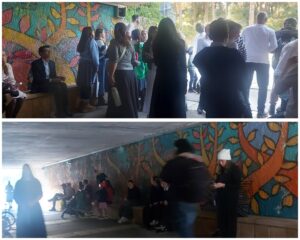
On June 22, a group of residents — mostly retirees, parents, and children — gathered on HaMeyasdim Street. Their target: Economy Minister Nir Barkat, who lives in the neighborhood. Protesters held signs and sang, calling on him “not to forget the hostages in Gaza
(A Piano in Jerusalem Waits: Alon Ohel Still Missing)
Then came the incident
Dr. Renana Keidar, an academic and longtime neighborhood resident, was reportedly not participating in the protest but simply standing nearby. She was detained by Jerusalem District police. Later, she described the experience using one word: humiliation
But this incident is only a symptom
The real story is much older — and harder to reverse
One Neighborhood Against an Entire City
Founded in 1922, Bet HaKerem was once the model of secular Zionist urbanism: stone houses, tree-lined sidewalks, high academic values. Professors, authors, public intellectuals — the neighborhood represented Jerusalem’s liberal Ashkenazi identity
But Jerusalem changed
And Bet HaKerem was left behind
(Jerusalem Residents Demand Action Against Muezzin Noise)
The Battle for the City Was Lost Quietly
Demographically, Jerusalem no longer belongs to the old elite. Each election confirms the trend: the city’s ultra-Orthodox and religious-nationalist populations continue to grow, while secular residents decline both in influence and in number
From Givat Shaul to Ramot, from Har Nof to Pisgat Ze’ev — the city transforms. Slowly, but irreversibly. Bet HaKerem, meanwhile, remains a kind of enclave. Its struggle to maintain a secular character now borders on tragic — and often feels disconnected from political reality
Researchers Warn: The Tipping Point Has Passed
Multiple studies from the Jerusalem Institute for Policy Research, Israel’s Central Bureau of Statistics, and independent academic centers all point to the same trajectory: Jerusalem is becoming a religious-majority city — and fast
The ultra-Orthodox population maintains one of the highest birthrates in Israel, while secular families face low birthrates and high rates of out-migration. Each year, thousands of secular Jews leave the city, while roughly the same number of religious and Haredi families arrive
By 2030, Haredim are projected to become the city’s largest demographic. In the public education system, secular enrollment has already fallen below 20%
(Suspected Arson Arrest Deepens Fear in Jerusalem)
As researchers conclude: the cultural contest for Jerusalem is not ongoing — it’s over. Today, neighborhoods like Bet HaKerem, Rehavia, the German Colony and Talpiot stand as cultural relics, surrounded by a rapidly changing urban landscape
Barkat Was Just the Spark
Minister Nir Barkat — a former mayor of Jerusalem — symbolizes much of this shift. He was the first to brand the city as “united” and to promote policies that subtly but steadily deepened the religious-nationalist character of public life
For residents of Bet HaKerem, the protest outside his home was more than a political message. It was a moment of deep alienation. A protest not just against a minister — but against a future already set in motion
The Street Sign Still Stands
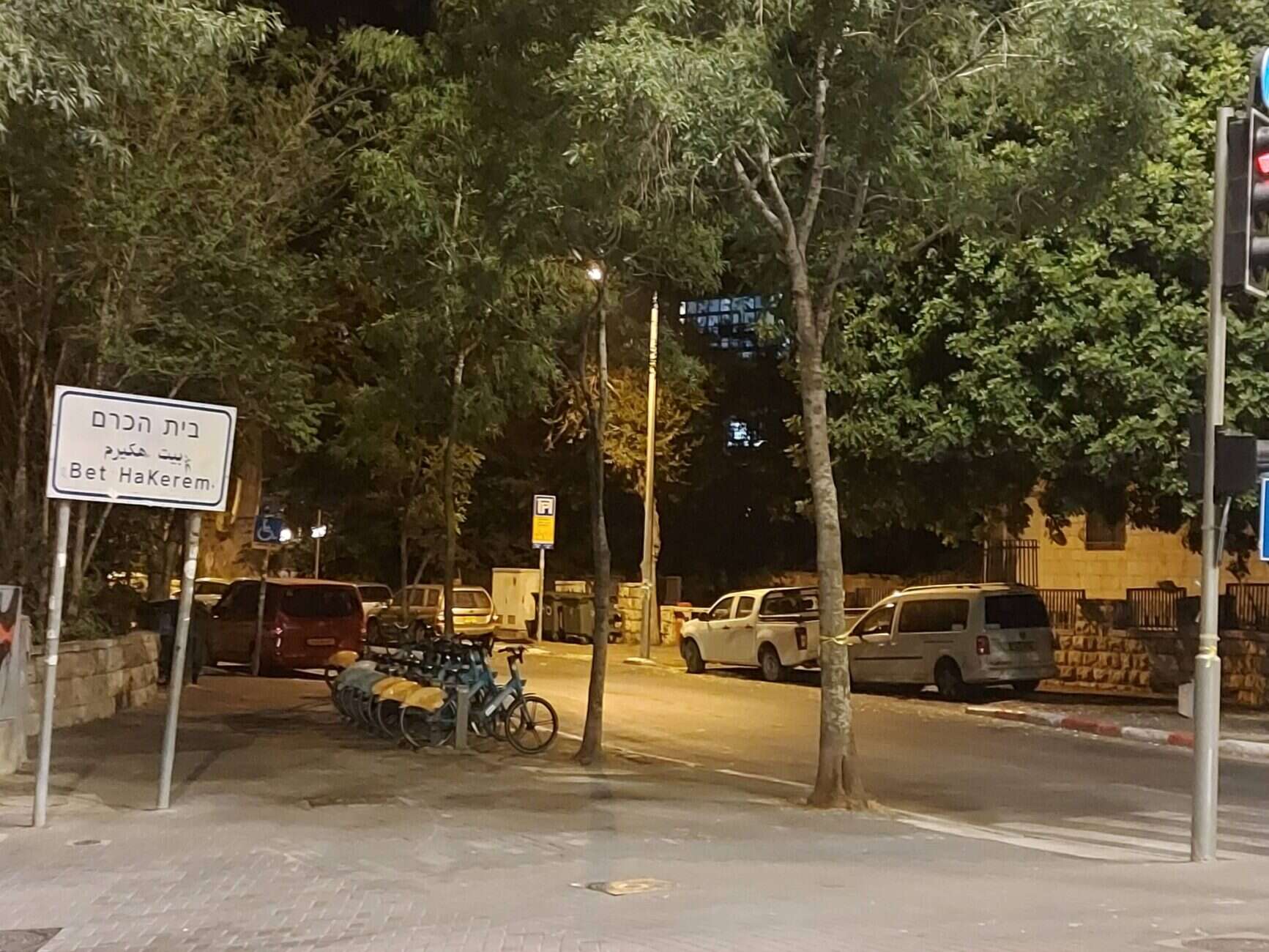
In the photo attached to this story, a simple sign reads “Bet HaKerem.” It stands quietly by a bike rental station, under a shaded tree, lit by the last of the afternoon sun
It’s a reminder of history — of a neighborhood that helped shape the identity of a city now slipping from its hands
The sign remains.
But fewer people are asking where it points.