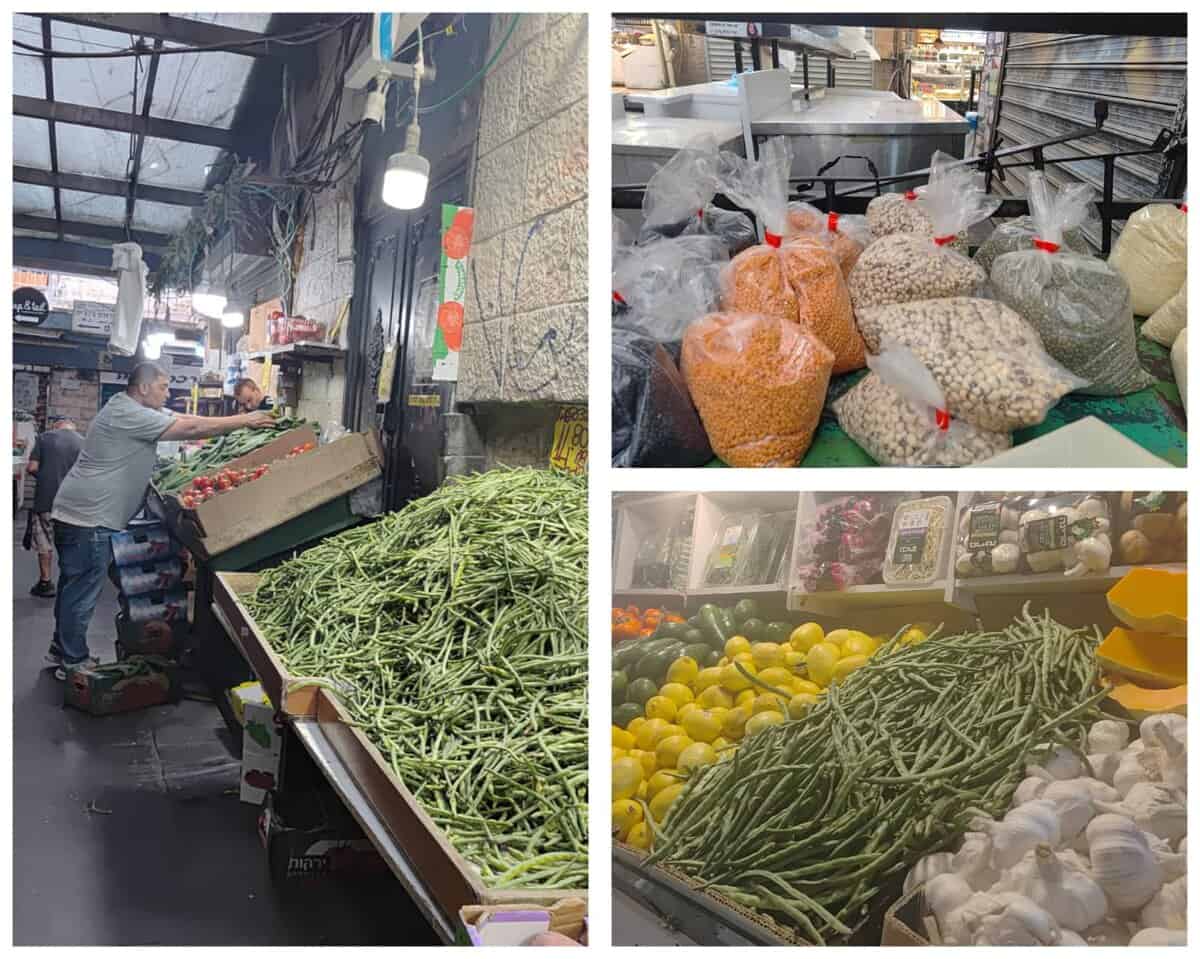
The loubia, also known as the black-eyed pea, in Mahane Yehuda Market, between Jerusalem’s pain and the blessing of a good year
On Monday morning, Jerusalem woke up to a difficult event. A shooting attack at the Ramot junction claimed lives of people on their way to work and school. The grief still hovered in the air, but a few hours later, in Mahane Yehuda Market, the sound of the light rail on Jaffa Street was heard again, and the hum of life returned. Streams of visitors flowed into the market’s alleys. Jerusalemites from Pisgat Ze’ev and the Bukharan neighborhood, alongside students from Osishkin and Agripas, wandered among the stalls in search of the black-eyed pea, also called loubia or rubia
Loubia as a Sign for the New Year
This vegetable is a blessing for Rosh Hashanah, symbolizing abundance, good deeds, and prosperity
At Abu Ahmad’s stall in “Pri Etz” alley, piles of fresh green loubia were sold at 24 shekels per kilo, quickly snatched up by shoppers. Jerusalem continued to hold on to life and the hope of a better year. “My mother sent me in the 1970s to buy loubia in the Iraqi Market,” recalled one shopper, while filling a bag with pods. “She always cooked it with small cubes of meat. It was a delicacy
In our home, my mother cooked dry loubia for the holiday. We waited for the moment when my father would bless it after the apple in honey, the pomegranate, and the other symbols. Loubia warm and comforting, soft and delicate with a taste of more
Holiday Shopping Tradition in Jerusalem
“There’s loubia at the supermarket near our home in Har Homa,” one shopper told his friend, “but I prefer to take the bus, then the light rail to Mahane Yehuda, just to return with fresh loubia, pomegranates from the tree, and a giant leek. The heart pulls me here – it’s part of the holiday preparations
“You’re right,” replied his friend. “Luckily, there was space at the market’s parking lot, so I arrived without trouble
Beyond its price and symbolism, loubia is considered a superfood. It is rich in plant protein, iron, and fiber. The dry beans are reminiscent of white beans, but with a subtle sweetness. The fresh pods resemble green beans, also abundant at the stalls
(Pomegranates in Mahane Yehuda Market: Jerusalem’s Blessing)
Superfood with a History
Loubia, also known as black-eyed peas, originated in India and wider Asia. In Israel, it grows in the Golan, the Jordan Valley, the Hula Valley, and the coastal plain. Farmers warn that cultivation is disappearing along with the vanishing wetlands – habitats that preserve water quality
And how to cook it
You can freeze it with soy after blanching, sauté it with garlic, lemon, and herbs, or cook it with meat, fried onion, and tomato paste
Loubia is humble yet moving. It connects ancient Jerusalem memory with a festive symbol of renewal. This year, against the backdrop of loss and grief, terror and war, the Rosh Hashanah table and the empty chairs waiting for the hostages – small green pods will carry not only tradition and blessings but also a simple message: despite everything, Jerusalem continues to exist. With the hope for a better and quieter year