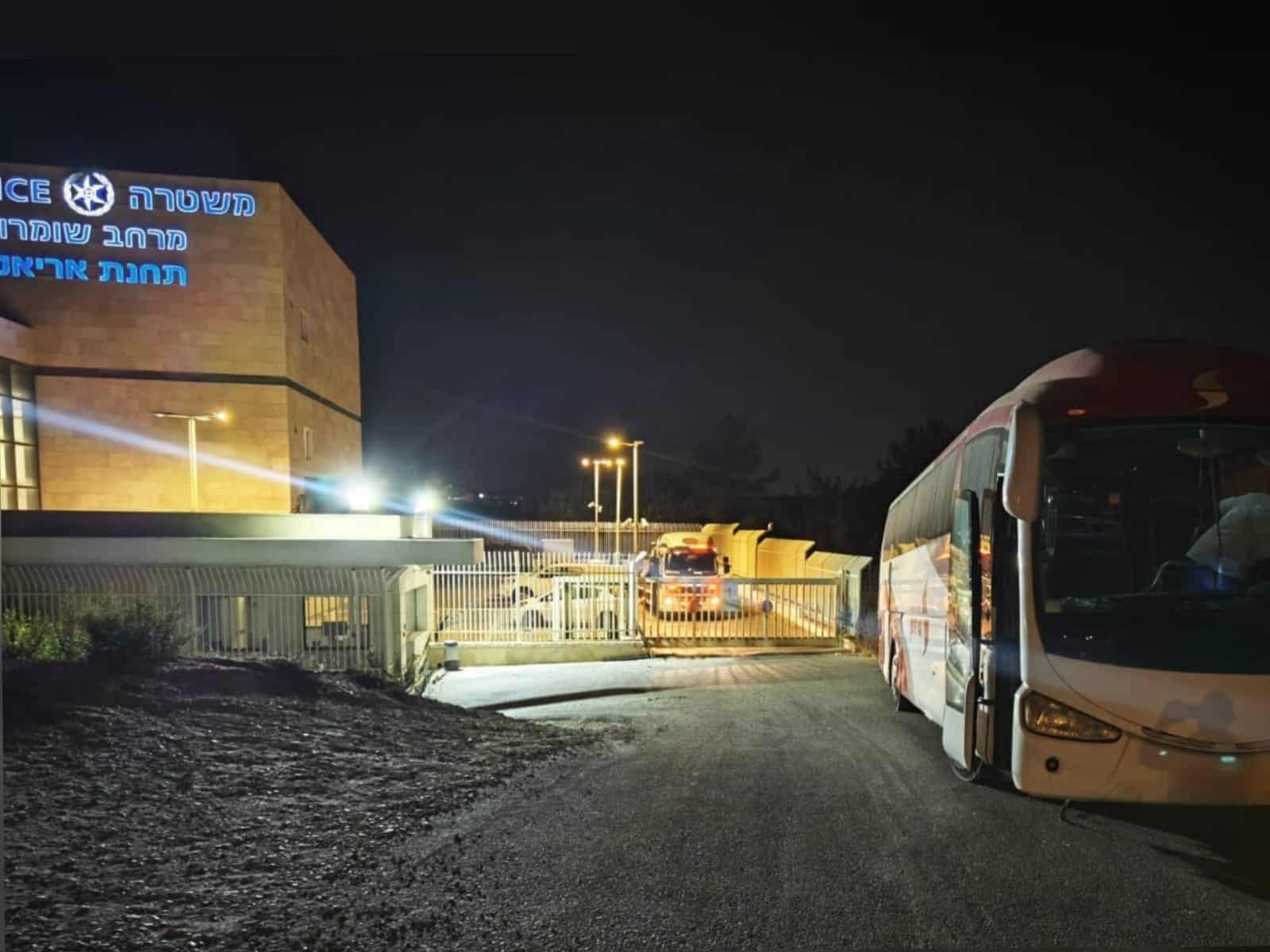
In recent days, a bus carrying around 50 Israeli civilians entered the city of Nablus—part of Area A, where Israeli presence is prohibited by law. The journey, made without coordination with security forces, ended with the vehicle found parked in the East Jerusalem neighborhood of Beit Hanina
Acting on intelligence from the Ariel police station, officers from the Samaria District located the bus, arrested the head of the transportation company—an East Jerusalem resident—and impounded the vehicle for 30 days under a new military order
New Enforcement Tool: Vehicle Seizure for Unauthorized Entry
This unprecedented step was made possible by a recently signed IDF general’s order, allowing authorities to seize vehicles used to enter Area A illegally. The move marks a shift in enforcement policy, targeting not only drivers but also logistical infrastructure enabling such activities
(Lion cub found in East Jerusalem, illegal trade thrives)
Police officials described the new policy as “a crucial tool to deter dangerous incursions that risk lives and divert forces from counter-terror operations
Jerusalem’s Seam Line Heats Up Again
To many, the Beit Hanina arrest reflects more than a transport violation. It’s another flashpoint in the unresolved tension simmering across Jerusalem’s seam line—where identity, mobility, and authority collide on a daily basis
That the journey originated from East Jerusalem once again raises the question: where does the city’s true boundary lie—not just geographically, but psychologically
In an era of heightened friction and mutual distrust, every action in Jerusalem carries symbolic weight. This seizure may be the first sign of a tougher Israeli stance—but also a warning of further local unrest
Arrests, Investigations, and Fallout
Five Israeli citizens—residents of Jerusalem—were detained during the operation. Four were released after questioning, while one with a prior offense was placed under court-ordered restriction from the West Bank
(Jerusalem’s Public Transit Is on the Verge of Collapse)
The driver involved in the journey is known to authorities and is expected to be brought in for questioning. Police and IDF sources reiterated that entering Area A is illegal, dangerous, and considered a criminal offense
Jerusalem – Where Policy Meets the Street
That this enforcement happened within the municipal boundaries of Jerusalem—far from the West Bank highways—signals a tightening of rules. What was once a gray zone is now being marked with red lines
As the city’s symbolic and strategic role intensifies, Jerusalem once again becomes a stage for national policy and legal experimentation