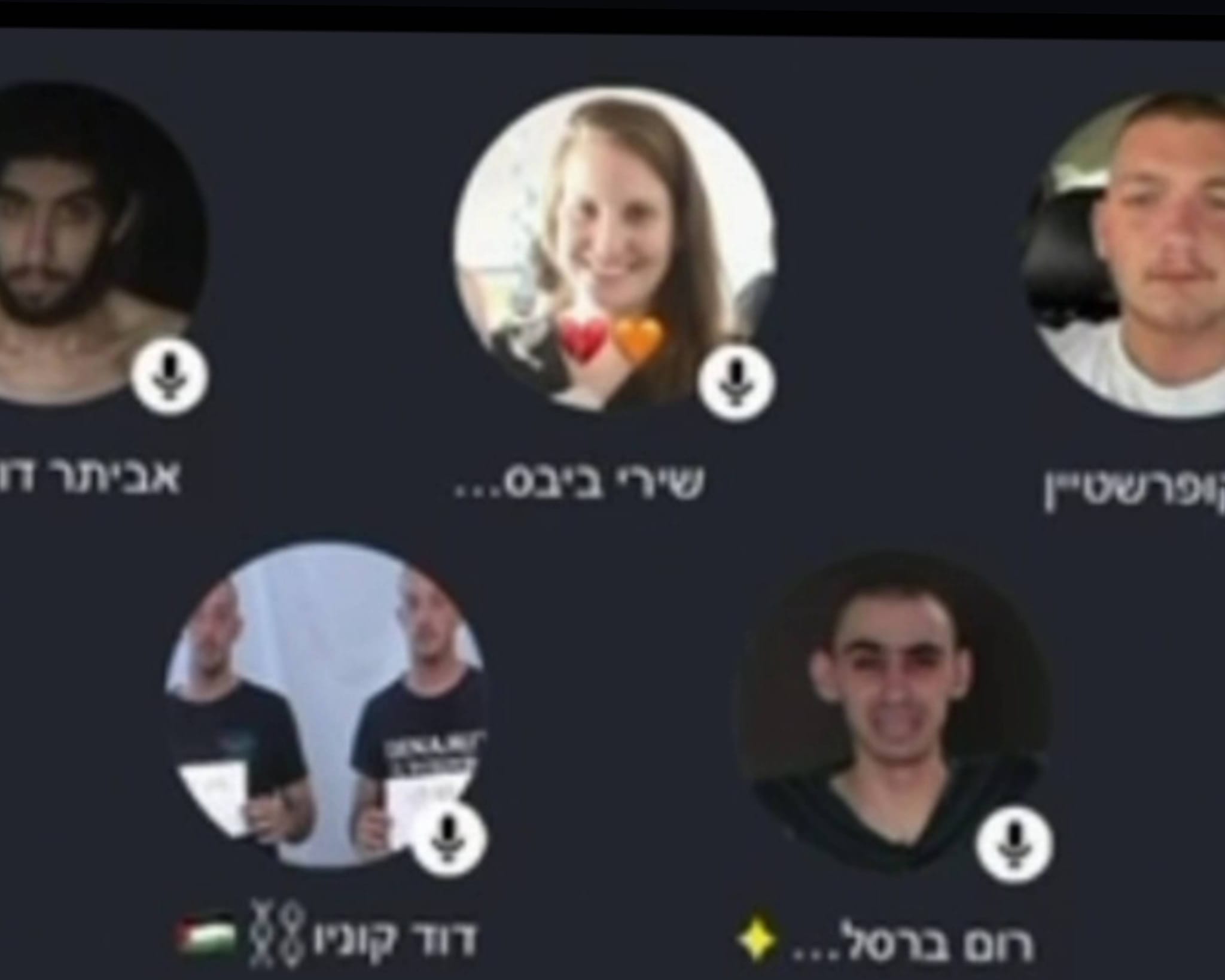
In an anonymous app that hosts multi-participant voice chats, images of hostages and captivity survivors have appeared in recent days alongside mocking conversations led by teenagers. The images are displayed on screen in real time, while the discussions unfold around them.
Inside the chat rooms, jokes are made about hunger and food shortages. Participants repeatedly refer to canned food, nearly empty tins, peas and beans, and make remarks about thin or weakened physical appearance. Some imitate sounds of distress, others respond with laughter, and the tone remains unchanged, without interruption or objection.
Among the names mentioned in these conversations is Jerusalem captivity survivor Rom Braslavsky, alongside other survivors. The references are not made in a factual or news-related context, but as part of casual, sometimes openly derisive talk, conducted while the images remain visible on screen.
Even when images of Shiri Bibas and her two sons, Kfir and Ariel, who were killed in captivity in Gaza, appear on the screen, the conversations continue in the same manner.
Anonymous App and Mockery of Captivity Survivors – Why Do Teenagers Laugh at Trauma?
The phenomenon is neither accidental nor limited to a single platform. Anonymity removes much of the sense of responsibility. When there is no name, no face and no immediate consequence, extreme speech becomes easier, and moral boundaries are quickly pushed aside.
Among some teenagers, emotional numbness also plays a role. Prolonged exposure to war, abductions and death does not always deepen empathy. In some cases, it leads to detachment, with cynicism becoming a coping mechanism.
Group dynamics further intensify the behavior. In large voice chats, escalation is rewarded. Those who go further attract attention, while those who hesitate or attempt to restrain the tone are drowned out. Over time, mockery becomes normalized, even when real people and real suffering are displayed on screen.
There is also an element of power. Mocking individuals who endured extreme helplessness offers a brief sense of superiority. This pattern is well documented in group behavior, even when it takes place in a digital rather than physical space.
The app itself does not invent the cruelty, but it enables it. Without moderation, intervention or adult presence, national trauma connected to captivity in Gaza becomes material for everyday conversation, and the line between free expression and outright cruelty quickly blurs.