Between routine calm and sudden shouting, chaos and violence, one Jerusalem street exposes the tension of living on the edge of a dormant volcano.
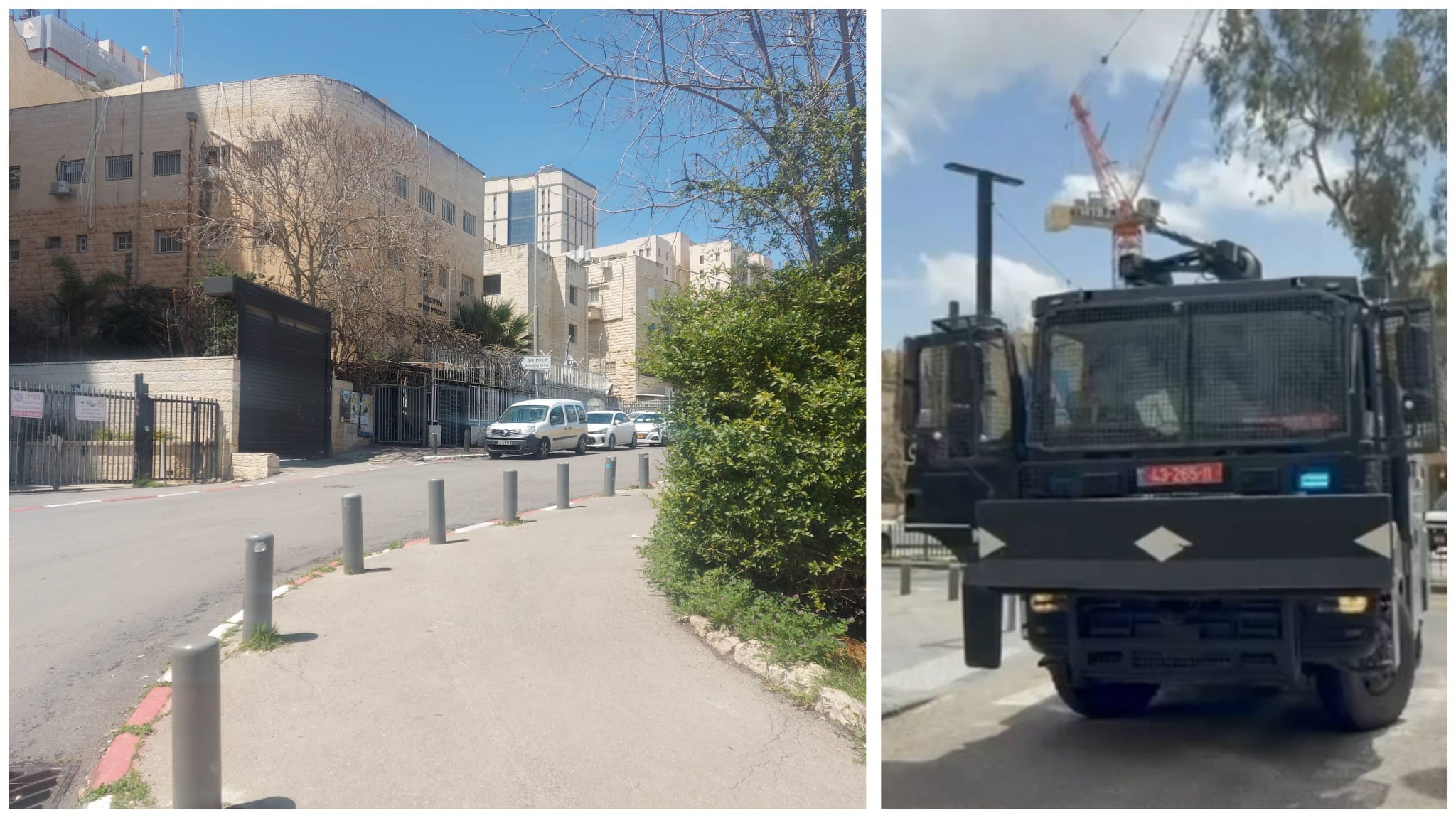
In the heart of Jerusalem, Rabbi Shlomo Yitzhaki Street – Rashi – named after the 11th-century French Jewish scholar renowned for his commentaries on the Bible and Talmud, begins at the lower end of Pins Street in the east, crosses HaTturim and Tachkemoni streets, and reaches one of the city’s main arteries, Sarei Israel Street, at its western end.
Its buildings are old, balconies narrow and stacked above one another. Laundry lines stretch between patched-up homes, like layers of life built one upon another.
This is usually a quiet, inward-looking place, perpendicular to Yosef Ben Matityahu Street, named after the Second Temple-era historian who documented wars and destruction, and continuing toward “Bridge of Life” Street – a symbolic passage leading to the military recruitment office. Three streets, three narratives: interpretation, documentation, and life itself.
How did Rashi Street in Jerusalem become a flashpoint over the draft law?
But every so often, the “dormant” awakens and the lava erupts. Ultra-Orthodox protesters stream toward the recruitment office and to an address synonymous with clashes, arrests and handcuffs – 103 Rashi Street. Chants such as “We will die before we enlist” echo through the area as the space turns into a battleground of tension and confrontation.
סביבת לשכת הגיוס בירושלים, רחובות רש"י והטורים pic.twitter.com/FBsUzQfc1D
— jerusalem online (@Jlmonline) April 7, 2026
Rashi Street, usually a closed and protected community space, suddenly becomes a center of unrest, flooded with reinforced security forces, onlookers and media.
Here, in a part of Jerusalem that has grown increasingly ultra-Orthodox over the years, the gaps are especially visible. For some residents, military conscription is perceived as a direct threat to a deeply rooted religious way of life. For others, in the broader civic sphere, it represents a fundamental duty and the principle of equal burden-sharing. When these worlds collide, the clash is harsh, forceful and devoid of dialogue.
The protests are not merely reactions to a single event. They reflect accumulated pressure – a community that feels its boundaries are being breached and a sense that the state seeks to alter long-standing religious norms. This is a battle of worldviews. One that Rashi might have interpreted, Yosef Ben Matityahu might have recorded as another internal conflict, and the “Bridge of Life” somehow attempts to connect.
Between interpretation and reality, between documentation and the present, a difficult story emerges – both immediate and seemingly timeless – in which each side is convinced of its own justice. An internal struggle within one society, containing different worlds, struggling to reconcile tradition with changing realities.
The mass ultra-Orthodox protests arriving from across Jerusalem and Israel are not just a passing wave. In such demonstrations, the goal often justifies the means. Violence spills over – against soldiers, police, vehicles and anything in its path. These protests carry echoes of historical religious devotion in Europe, where communities clung to faith at any cost, sometimes even sacrificing their lives. A distant, unsettling resonance that continues to challenge each generation.
רחוב רש"י בירושלים, לשכת הגיוס pic.twitter.com/hvOWjNFgd2
— jerusalem online (@Jlmonline) April 7, 2026