In Jerusalem, the growing controversy surrounding Eurovision 2026 in Vienna is being closely watched. Over the past year, amid the war in Gaza and the international debate over Israel’s conduct, the Eurovision Song Contest has increasingly become part of a wider political discussion in Europe. When that discussion turns to Israel, it often converges on one symbolic place: Jerusalem.
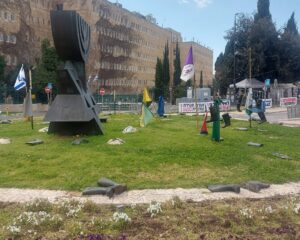
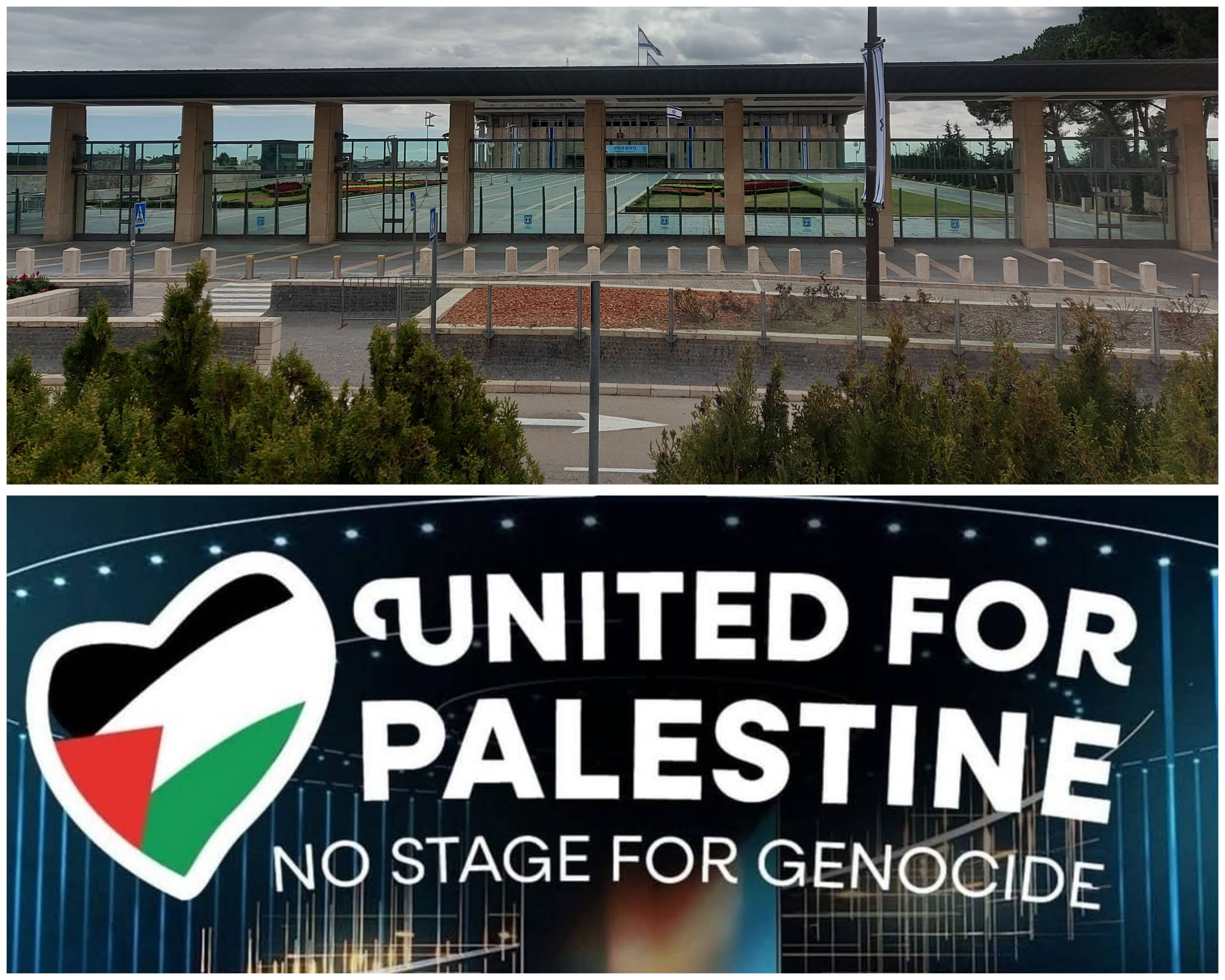
Jerusalem again appears in the background of the conversation around the contest. While Israel is often associated internationally with Tel Aviv in cultural or tourism contexts, political debates about the country almost always point back to Jerusalem – Israel’s capital and the seat of its parliament. As a result, international campaigns against Israel frequently use imagery connected to Jerusalem itself.
Austria is preparing to host the 70th edition of the Eurovision Song Contest after its victory in 2025. The Austrian public broadcaster ORF together with the European Broadcasting Union (EBU) present the event as a celebration of music, diversity and cultural exchange. At the same time, protest initiatives across Europe are attempting to challenge Israel’s participation.
Could the protest event in Belgium affect Eurovision in Vienna?
One of the most visible initiatives has emerged in Belgium, where several organizations have announced a parallel protest event under the title “United for Palestine”. The event is planned for May 12, the evening of the first Eurovision semi-final.
Organizers present the gathering as an alternative cultural event promoting solidarity and human rights. However, the initiative has also sparked criticism and debate, with some observers pointing to the gap between political slogans and the complex realities of the Middle East.
How did Jerusalem become part of the Eurovision story?
Despite controversies surrounding Israel’s participation, Jerusalem remains one of the cities most closely associated with Eurovision history. The city hosted the contest twice and left a lasting mark on its musical legacy.
In 1979 Eurovision took place in Jerusalem following Israel’s victory with “A-Ba-Ni-Bi”. That year the song “Hallelujah” by Milk and Honey became an international anthem later performed in dozens of languages around the world.
In 1999 the contest returned to Jerusalem. That edition is remembered especially for Dana International’s victory with “Diva”, widely seen as a milestone moment of openness and cultural change within the competition.
Why does Jerusalem appear in Eurovision songs from other countries?
Jerusalem has appeared in Eurovision not only as a host city but also as a cultural symbol referenced in songs from different countries. In several cases the city served as a metaphor for spiritual journeys, peace or historical longing.
For example, the German entry “Journey to Jerusalem” in 1999 referred to the city as a meeting point of cultures. In other songs Jerusalem was mentioned alongside major European capitals such as Paris and London as a place of deep historical and cultural meaning.
And what is the connection between Israel’s 2026 representative and Jerusalem?
This year Israel’s representative Noam Betan is expected to arrive in Vienna with the song “Michelle”. Although the contest itself will take place in Austria, references to Jerusalem continue to accompany Israel’s story around the event.
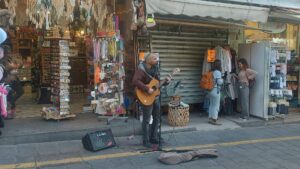
Images released ahead of the competition show Betan photographed in Jerusalem. The song deals with the search for light and faith during difficult times – a metaphor that often resonates with the broader symbolism associated with Jerusalem as a city of renewal and hope.