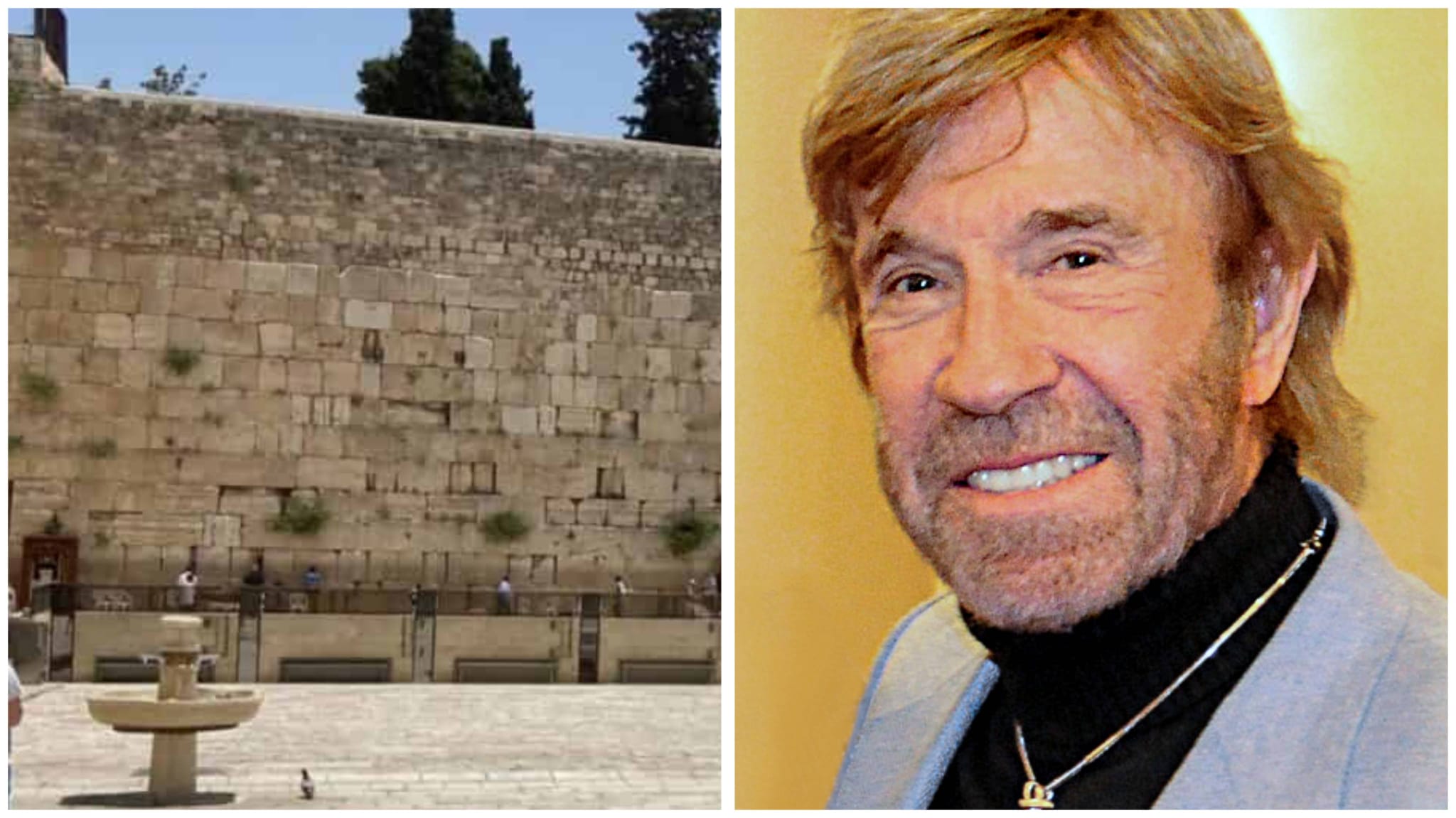
The death of actor and martial artist Chuck Norris at the age of 86 marks the end of a significant era in global pop culture. Beyond the tough on-screen persona that made him a worldwide symbol, Norris was also a man in search of meaning – and he found some of it in Jerusalem.
Born Carlos Ray Norris in 1940, he rose to prominence in the 1970s and 1980s as one of the most recognizable action stars. His appearance alongside Bruce Lee and later the “Delta Force” films established his image as a figure of strength and discipline. Yet alongside his career, he developed a quieter, more personal connection to places with spiritual depth.
How did Chuck Norris’ connection to Israel and Jerusalem begin?
His connection to Israel dates back to the late 1970s, when he first visited as part of his martial arts activities. During the 1980s, at the height of his fame, he returned several times – some visits public, others more private.
Over time, those visits took on a more personal character. Jerusalem was no longer just another destination, but a place he chose to return to. People who met him described genuine curiosity and a desire to understand the city beyond headlines.
What drew Norris specifically to Jerusalem?
In the 1990s and early 2000s, his visits to Jerusalem became more focused. He spent time in the Old City, walked through its narrow alleys, and engaged with its layered history.
Jerusalem, where religions, cultures and centuries-old stories intersect, left a lasting impression on him. For Norris, it was not just a place to visit, but a place to reflect.
Why were his visits to the Western Wall so significant?
One of the places he returned to repeatedly was the Western Wall. There, away from cameras and public image, Norris appeared different – quieter, more introspective.
He would spend long moments in prayer and place notes between the ancient stones. According to those around him, these were deeply personal moments of reflection and connection.
Did Norris also express views about Israel?
Alongside his visits, Norris openly expressed support for Israel over the years. He spoke about the country’s right to defend itself and voiced appreciation for the policies of its leadership, including Prime Minister Benjamin Netanyahu.
Still, this support was not rooted in personal political ties, but rather in a broader worldview.
What did Norris find in Jerusalem that he didn’t find elsewhere?
Known worldwide for physical strength and screen presence, Norris seemed to find in Jerusalem something entirely different – quiet strength, depth, and resilience.
His walks through the Old City, encounters with people, and time at the Western Wall revealed a lesser-known side of him. Less myth, more human.
Norris’ passing marks the end of an era, but also highlights a lesser-told story – the connection he formed with Jerusalem, far from film sets and public attention.
In Jerusalem, he was not just a star. He was a visitor who kept returning – until the city became part of his story.