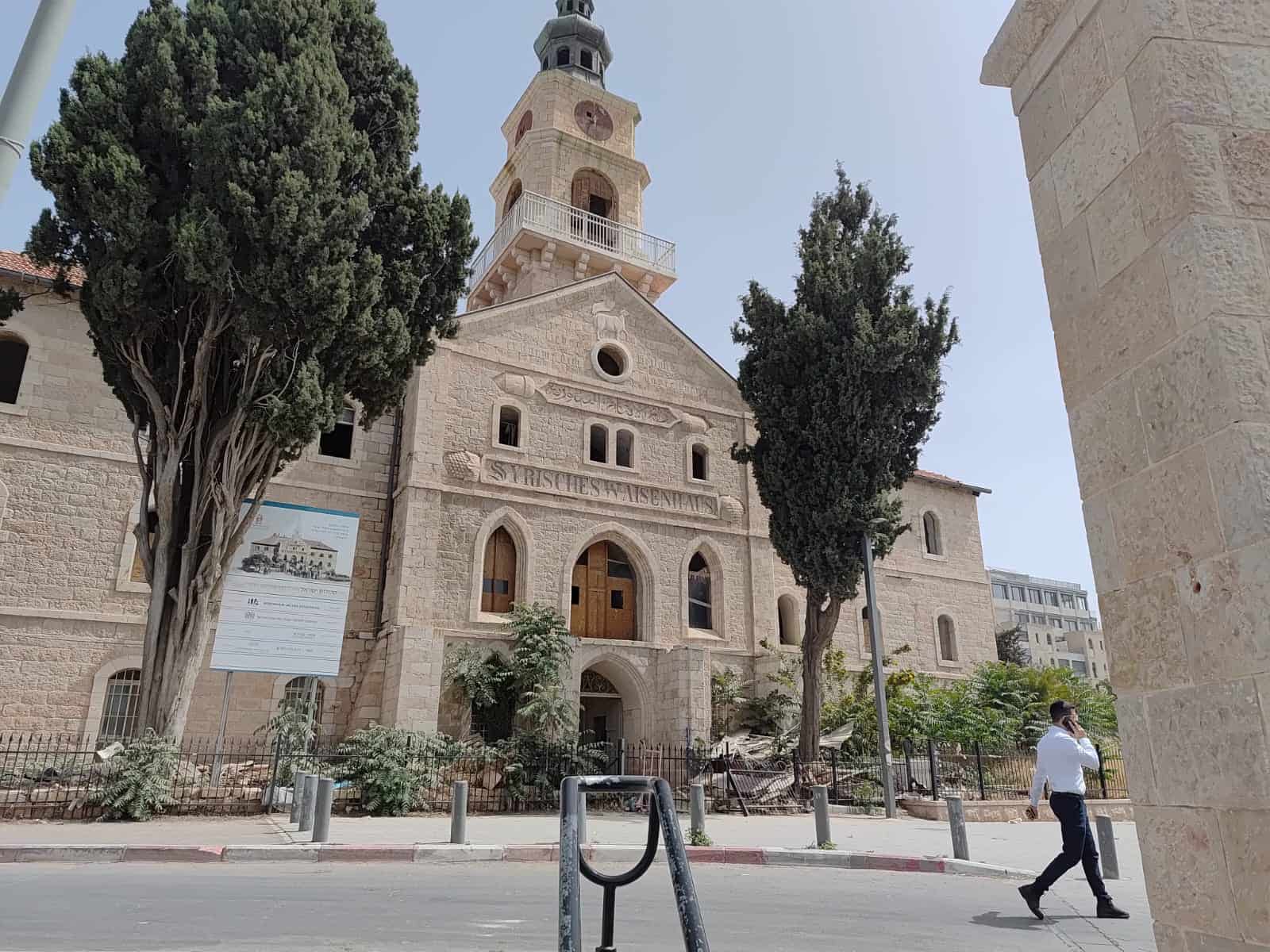
In the heart of Jerusalem’s HaNeviim Street, just across from the old Bikur Cholim Hospital, a stone structure rises above the sidewalk — elegant, weathered, and until recently, forgotten. The building’s inscription reads St. Ephraem Syrians, and its facade hints at a faded past. For decades, it stood silent, closed to the public and barely noticed. Now, with scaffolding, city signage, and a growing buzz among architecture enthusiasts, it appears something may finally be stirring
Built in the late 19th century, the church was originally home to Jerusalem’s Syrian Orthodox community. Over time, as the community diminished, the building was abandoned. Though official restoration plans have not been publicly confirmed, recent physical signs — including conservation barriers and a municipal sign — suggest that the city is preparing to reclaim and preserve this hidden landmark
A Street That Carries Its Own Memory
Walking along HaNeviim Street today feels like flipping through pages of a forgotten book. The tall cypress trees, iron gates, and aging facades carry a quiet gravity. Here, time slows down — and visitors feel more like listeners than tourists. It’s a part of Jerusalem that whispers, rather than shouts
HaNeviim Street itself has long carried a unique charm: a corridor of hospitals, consulates, old-world villas, and forgotten histories. In recent years, cultural spaces and boutique clinics have emerged, giving new life to the area. And now, this church — with its ornate arches and quiet dignity — may soon rejoin the city’s living heritage
As Jerusalem prepares for the festival of Shavuot and thousands make their way to better-known holy sites, this quiet corner invites a different kind of visitor — one who listens for stories in stone and finds holiness in stillness