Against the backdrop of Operation Roaring Lion, with sirens sounding in Jerusalem and across Israel and interception debris landing in parts of the city, protest has also reached one of the most sensitive locations in Jerusalem.
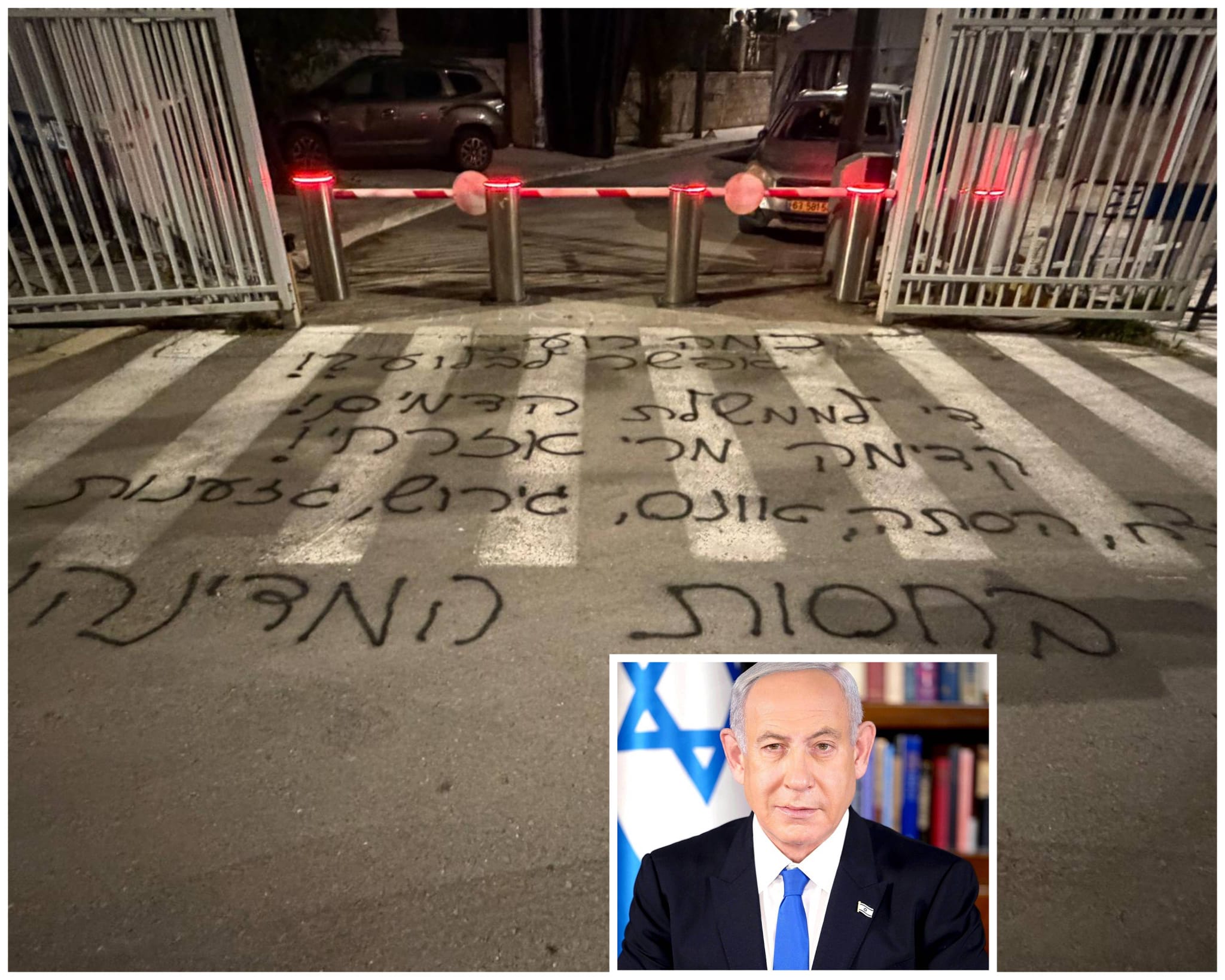
Jerusalem District Police said that on Tuesday evening, officers responded to a report of graffiti sprayed on the road near the entrance to the Prime Minister’s residence in Jerusalem, the official residence of Prime Minister Benjamin Netanyahu.
Moriah police officers, guided by the district command center, quickly arrived at the scene and located three Jerusalem residents suspected of carrying out the act. A spray can believed to have been used in the incident was found in their possession.
The suspects were detained for further questioning.
Jerusalem District Police said: “Upon receiving the report, police forces acted quickly with the assistance of the command center, located the suspects and detained them for questioning. We will continue to act decisively against offenses that harm public order and security.”
Have protests near leaders’ homes occurred during wars before?
The incident in Jerusalem reflects a broader historical pattern: during wartime, public protest often moves closer to decision makers, sometimes reaching the private or symbolic spaces of national leaders.
During the Vietnam War, protests and anti war messages were directed toward the White House and other government sites in the United States. In the United Kingdom, during the Iraq War, demonstrators gathered near the Prime Minister’s residence on Downing Street, bringing protest directly to the center of power.
More recently, amid the war between Russia and Ukraine, protest messages and symbolic actions have appeared near government institutions, as part of efforts to pressure leadership during active conflict.
Is protest in Jerusalem moving closer to the center of power?
In Jerusalem, where government institutions carry both political and symbolic weight, such actions take on added significance. During the ongoing conflict with Iran, protest is not limited to public squares or online platforms, and at times reaches the immediate surroundings of national leadership.
The case raises a broader question: does protest during wartime shift its boundaries, and where is the line between freedom of expression and disruption of public order?