Long before modern packaged snacks, “Hamla Malana” – roasted chickpeas – were the snack of Jerusalem’s children in the 1960s,
especially in the spring just before Passover. And now, as every year, the “Hamla Malana” returns to the stalls of Mahane Yehuda Market.
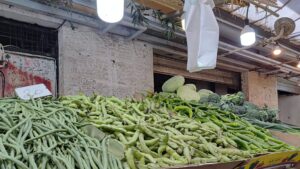
It is a small and very green Jerusalem memory. Not candy, not a modern snack. A green pod that sends Jerusalem back-back in time. Between fresh fava beans and green peas, transparent plastic boxes filled with small green pods can be seen these days at market stalls.
Yet not everyone knows what they are. Some pass by without noticing, but those who grew up in old Jerusalem stop immediately and, for 15 shekels a box, enjoy moments they once loved and that have almost disappeared.
What exactly is Hamla Malana appearing again at Mahane Yehuda Market?
These are individual green pods of chickpea, young chickpeas. In Arabic it was once simply called Hamla Malana, meaning “carrying a load”. A hint to the fullness of a pregnant woman, described in Arabic as “hamel”.
Just seeing it on a stall at Mahane Yehuda Market in Jerusalem is enough to bring back childhood feelings two generations back. Before the abundance of tempting snacks lining the shelves of kiosks and supermarkets today, Jerusalem’s children enjoyed something else: a green grain that peels easily, a young pod of the chickpea plant.
In those days, on our way to our grandparents’ home in the Zichron Tuvia neighborhood, passing through Mahane Yehuda Market, we would stop by Zaki, the owner of a small cart stall. He would pluck a handful of green pods, roll them into a small cone made from newspaper, and hand them over. No bag, no brand, just fresh pods from the soil with a little salt. For hours we would sit, peel and munch the chickpeas, with the taste of a field – or maybe with almost no taste at all.
How did a tiny chickpea pod become a Jerusalem memory for an entire generation?
That was Jerusalem. A city of simplicity that made both young and old appreciate small things. The story of Hamla Malana emerges from a market that is also a living archive of culture. At its stalls one can sometimes see how layers of time exist side by side – an ancient culinary tradition alongside a new reality. Young people filming stories on their phones, while older residents recognize the small pod and suddenly smile, their wrinkled faces lit with the taste of the past.
In kitchens of the past, housewives used to fry them in olive oil and season them with salt. In this way families enjoyed a good and inexpensive source of iron and protein, eaten much like sunflower seeds. Hamla Malana – a small green chickpea capable of offering a lesson in modesty and in understanding that even in the most modern era, the essence of real life is built from what remains stable, remembered and reminding.