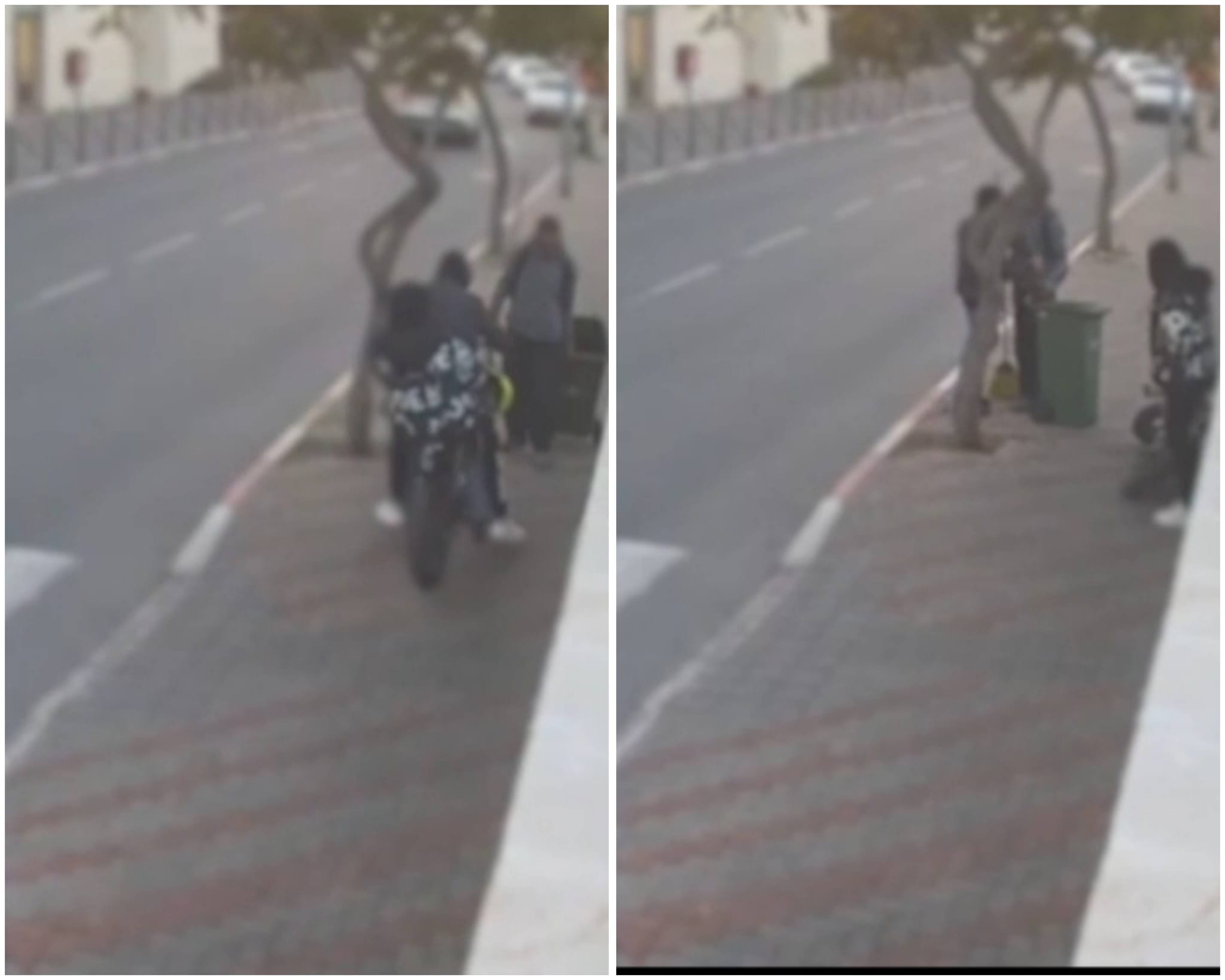
Over the weekend, a disturbing picture of violence in Jerusalem once again surfaced from the heart of the city. In the Ramot neighborhood, a sanitation worker and a public bus driver were violently attacked while going about their daily routines. The incidents, documented on street cameras, go far beyond a routine police report and point to a deeper erosion of boundaries, authority and civic norms.
The attacks did not take place late at night or in a remote corner of the city. They happened in broad daylight, on an active street, with visible hesitation absent. The sanitation worker was assaulted and required medical treatment, while the bus driver was also attacked and the public vehicle was damaged. The harm was not only physical – it sent a wider shock through the sense of urban safety.
Why is violence in Jerusalem becoming more frequent?
Violence in Jerusalem is no longer an isolated occurrence. In recent years, reports of assaults in Jerusalem have increased, particularly incidents with no prior dispute or personal motive. When violence unfolds randomly and publicly, it signals a breakdown in restraint and a normalization of aggression as expression.
The issue is not the personal identity of those involved, but an urban culture that increasingly tolerates violence. Weak authority, blurred red lines, and delayed consequences create an environment where such incidents repeat themselves.
Why are public workers targeted in attacks across Jerusalem?
Attacks on a bus driver in Jerusalem and assaults against sanitation workers are not random choices. These are visible representatives of everyday order – people who keep the city functioning. Targeting them sends a clear message: public service no longer commands automatic respect or protection.
When violence reaches public workers on the street, it damages not only the immediate victims but also public trust in the city’s ability to safeguard ordinary life.
Is Jerusalem beginning to resemble violent cities abroad?
The comparison to Harlem is not geographic but structural. Cities that experienced long-term educational failure, weakening community frameworks, and reactive policing followed similar trajectories. Harlem in New York, certain suburbs of Paris, and parts of London became symbols of urban violence only after early warning signs were ignored.
Jerusalem is not there. But when violence is recorded openly in the city’s core, the pattern is familiar to those who have studied how cities lose control, step by step.
Can police enforcement alone stop crime in Jerusalem?
Jerusalem District Police said: “Upon receiving the reports, officers acted swiftly and decisively to locate the suspects, using all available resources. Both suspects were arrested, transferred for questioning, and their detention was extended by the court. Police will continue to act firmly against any display of violence in the public space, particularly against public workers.”
Enforcement matters, but it deals with outcomes rather than causes. Crime in Jerusalem will not be reduced through arrests alone. Without restoring education, clear boundaries and civic responsibility, violence will continue to press in on the city’s public space.
Jerusalem now faces a quiet but decisive question: will boundaries shape the street, or will the street continue to shape the city?
Assault on a sanitation worker in the Ramot neighborhood in Jerusalem pic.twitter.com/OwcmCte9DC
— jerusalem online (@Jlmonline) December 7, 2025