In recent years, Jerusalem has increasingly focused its development momentum on the city’s strategic gateways. Urban planning policy now places clear emphasis on strengthening entrances to the city, integrating public transportation with dense mixed-use development, and creating active urban environments that connect residential neighborhoods with employment centers. Within this broader vision, northern Jerusalem has emerged as a key arena for transformative change.
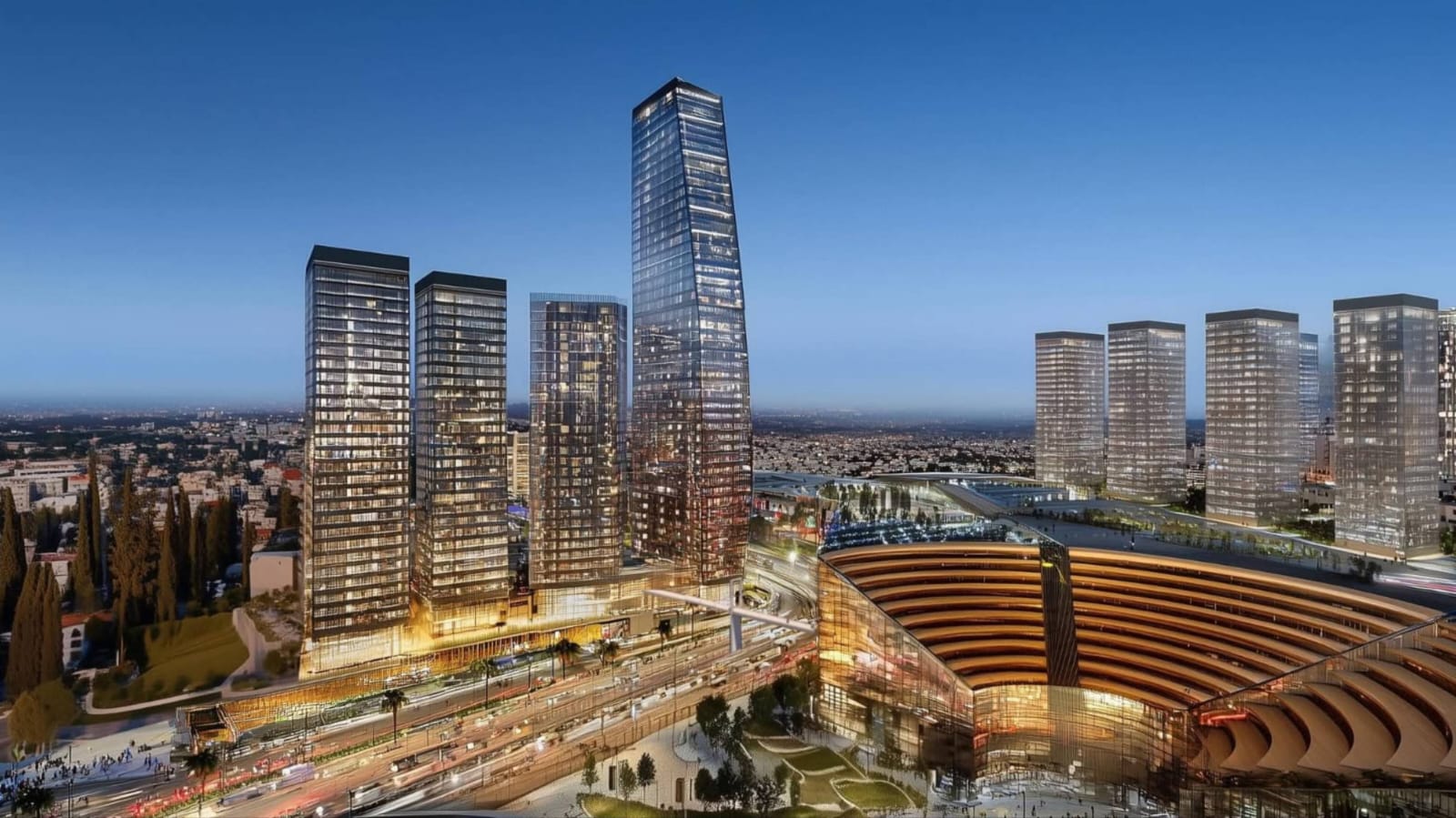
As part of this approach, Jerusalem’s Local Planning and Building Committee has recommended advancing a large-scale construction plan at the French Hill Junction, one of the city’s main northern entry points. The proposed project aims to redefine the area between the French Hill neighborhood, Pisgat Ze’ev and Yigal Yadin Boulevard, creating a new mixed-use urban district that combines residential buildings, commercial activity, employment spaces and public facilities, directly adjacent to the light rail line and a major park-and-ride hub.
How could the French Hill Junction project reshape northern Jerusalem?
According to the planning framework, the project includes the construction of residential and employment towers rising up to 35 stories, alongside an active urban square, public buildings and open public spaces. The emphasis is placed on walkability, seamless access to public transportation and strong physical connections between the new district and surrounding neighborhoods. City officials view the plan as part of a wider effort to strengthen Jerusalem’s northern entrance, reduce reliance on private vehicles and establish new urban centers that support long-term growth and quality of life.
Jerusalem Mayor Moshe Lion said: “Jerusalem’s housing revolution is beating at full force through its very heart – urban renewal that is changing the face of streets, neighborhoods and communities. Urban renewal brings social, economic and environmental justice. I am proud that we are leading this field in Israel, while preserving the historic and unique character of the capital.”