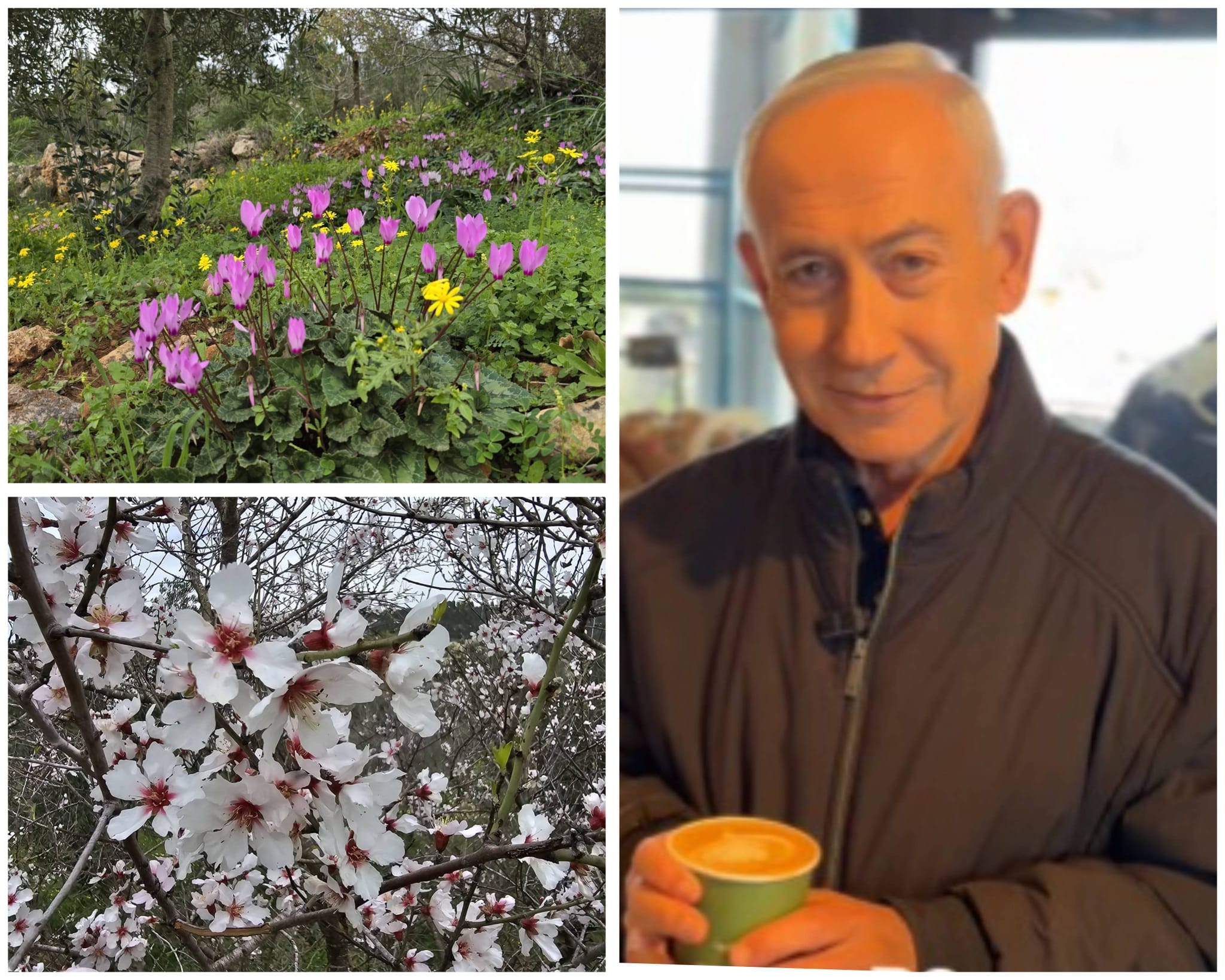
In recent days, a brief moment of sipping turned the Sataf area in the Jerusalem hills into one of the most talked-about places in Israel. Prime Minister Benjamin Netanyahu stopped there for a cup of coffee at the small local café and even filmed a short video, casting a spotlight on a quiet corner of nature in the Jerusalem hills – a place where the usual sounds are the wind moving through olive trees and the footsteps of hikers on the trails.
Yet the Sataf is far more than just another stop for coffee.
What stood here before the Sataf became a hiking site near Jerusalem?
Until the mid-20th century, a small mountain village stood here. Stone houses clung to the steep slope, with narrow paths winding between them alongside water cisterns and agricultural terraces. The residents cultivated the land using an ancient technique: building stone steps that allowed olives, figs, and almonds to grow along the mountain slopes.
After the establishment of Israel, the village was abandoned. Its houses gradually crumbled, and the terraces filled with wild vegetation. For many years the site stood almost silent, a quiet remnant of the ancient agricultural landscape of the Jerusalem hills. But nature – and people – eventually returned.
How did the Sataf become one of the most popular nature sites near Jerusalem?
In recent decades the site was restored by the Jewish National Fund and turned into one of the most beloved hiking destinations in the region, especially for travelers heading toward Jerusalem who are looking for a stop in nature. The ancient springs were cleaned, the terraces were rebuilt, and the trails filled with hikers, families, and cyclists.
Within this landscape a small café also opened, offering pastries, sandwiches, and of course coffee overlooking one of the most beautiful views in the Judean hills. Located in the heart of the site, the café quickly became a favorite stop for visitors exploring the trails and springs.
Why did a single cup of coffee at the Sataf attract so much attention?
On ordinary days, most visitors arrive after hiking along the mountain paths. But the prime minister’s brief stop for a sip there reminded many just how unusual the Sataf’s story is: a place that was once a quiet, abandoned village and is now a lively site filled with visitors, the smell of fresh pastries, and the laughter of families.
Perhaps that is why the governmental cup of coffee enjoyed there this week sparked such wide curiosity. Because at the Sataf, even a small sip carries the story of a place – one of an ancient agricultural past, abandonment and restoration, and new life growing among the old stones.