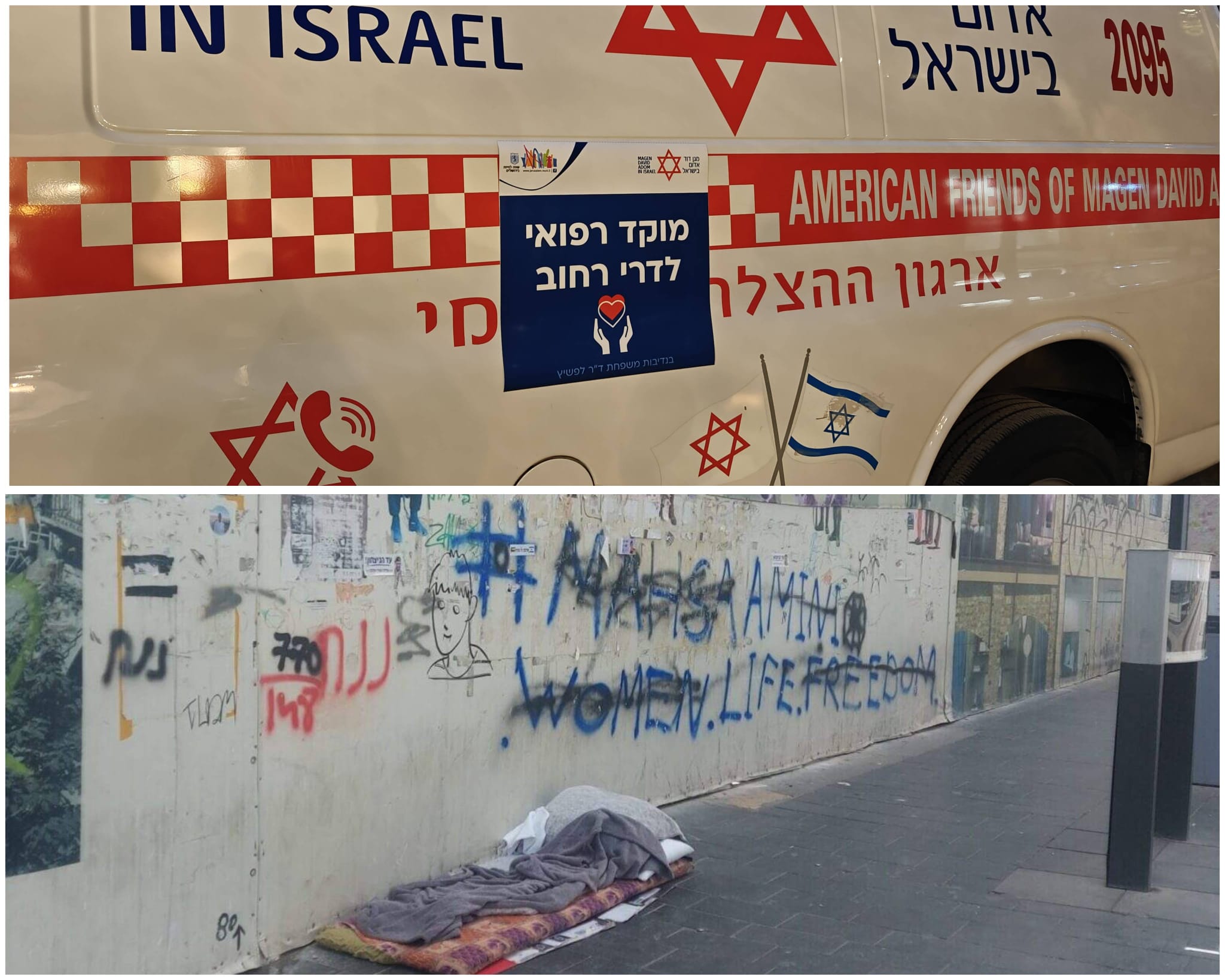
In Jerusalem, a city defined by symbols, history and sharp contrasts, there is also a daily reality that rarely commands attention: the lives of people living on the streets. Between park benches, bus stations and alleyways, many face not only isolation and instability but also serious medical conditions, sometimes life-threatening. For them, access to healthcare is often not just physically distant but emotionally out of reach, shaped by fear, past experiences and deep mistrust of formal systems.
A new municipal initiative is attempting to reverse that equation. Instead of expecting people to seek medical care, the care now comes to them. The Jerusalem Municipality, in partnership with Magen David Adom and volunteer physician Dr. Lifshitz, has launched a dedicated mobile medical unit as part of its outreach to the homeless population across the city. The service operates weekly in different locations throughout Jerusalem and is designed specifically for those who do not seek medical help on their own.
The mobile unit provides basic medical examinations, first aid, wound care, prescriptions and health guidance, alongside referrals and accompaniment to community services and the broader healthcare system. In more complex cases, the medical team escorts patients to hospital, working patiently to build trust through consistent presence and direct, respectful engagement.
This medical outreach is part of the broader, year-round work of the municipality’s unit for people experiencing homelessness. The unit conducts day and night patrols, offers individual support, assists with access to social rights, operates emergency shelters and leads community initiatives such as personal lockers, street football programs and shared holiday events. During the winter months, when risks increase, field activity is expanded to include locating people in extreme conditions, offering shelter and distributing winter equipment.
What Does Medical Care for the Homeless Look Like Outside the Clinic?
At the heart of the model is continuity. One recent case involved a man living on the streets who suffered from an advanced illness but repeatedly refused medical intervention. Dr. Lifshitz returned to see him again and again, monitoring his condition and calmly explaining the risks of untreated disease. Only after several encounters, supported by social workers, did the man agree to be evacuated by ambulance for life-saving treatment, preventing further deterioration.
Jerusalem Mayor Moshe Lion framed the initiative as a reflection of the city’s moral responsibility: “The first candle of Hanukkah reminds us of the power of bringing light into the darkest places. This municipal effort expresses responsibility, human dignity and mutual solidarity toward people living on the streets of Jerusalem.”
Former Israeli President Reuven Rivlin, who attended the inauguration of the mobile unit, emphasized its broader significance: “This is not merely the launch of a vehicle, but the launch of a mission. The understanding that we must reach every person, especially those at the margins of society, lies at the heart of a humane community.”
Ultimately, the project aims to reduce barriers to healthcare, promote preventive treatment rather than emergency-only responses, and strengthen connections between people living on the streets and community-based medicine. In Jerusalem, healthcare is stepping out of the clinic and onto the bench.