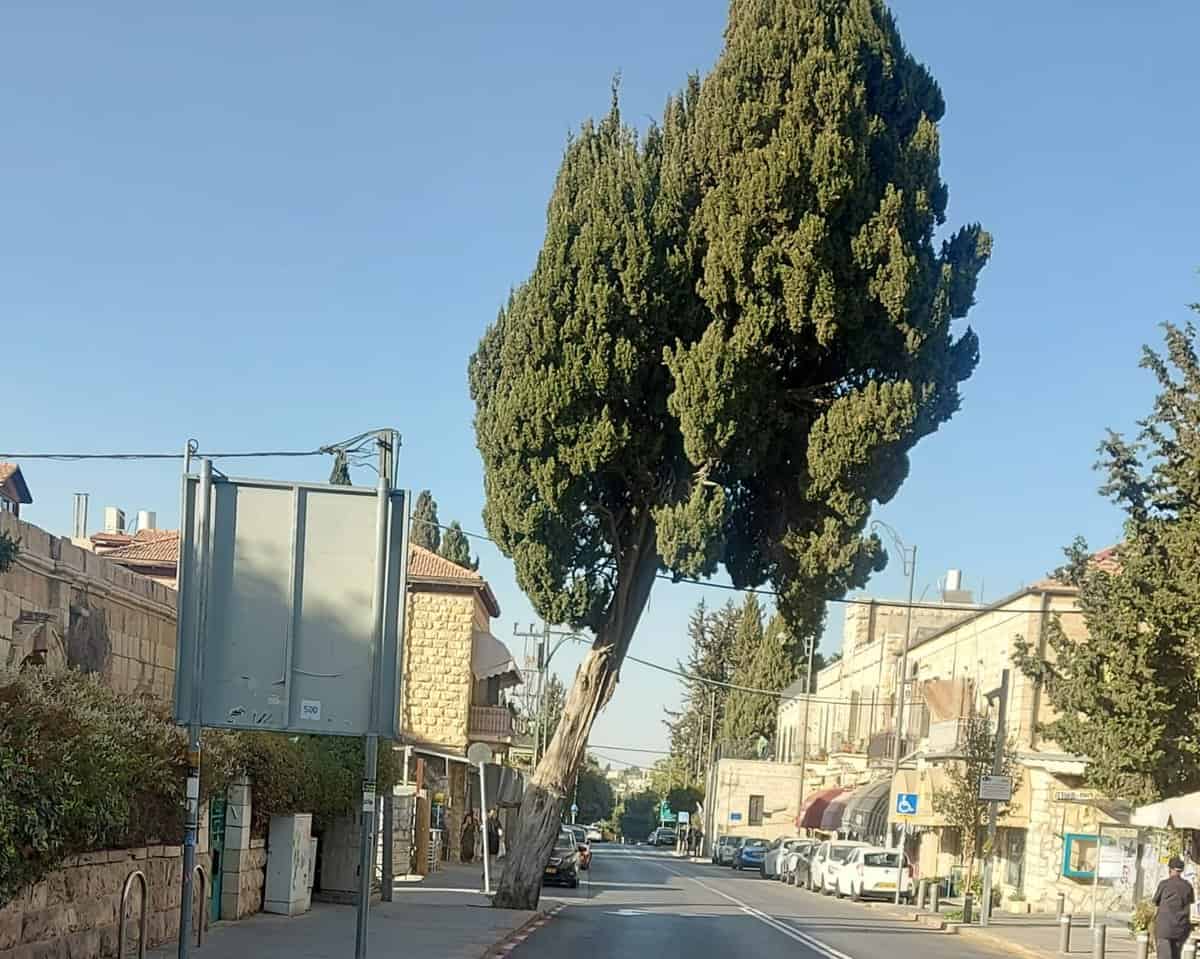
On Derech Beit Lehem in the Baka neighborhood of Jerusalem, a towering cypress leans dramatically over the roadway. Passersby often stop to look up: some take photos, others mutter with concern, while many simply carry on. The sight is striking, almost poetic, yet it raises a troubling question – what happens if it falls?
That concern is not theoretical. Just weeks ago, a tree in nearby Emek Refaim Avenue collapsed onto a moving car, leaving the driver moderately injured. The incident jolted Jerusalem residents and underlined how fine the line is between cherished greenery and public hazard. In a city with thousands of mature trees, some centuries old, the dilemma is sharpened: how do you preserve heritage without compromising safety?
Tree safety inspections in Jerusalem
The Jerusalem municipality conducts regular arboricultural checks, identifying signs of decay or exposed roots, and occasionally pruning or removing trees deemed dangerous. According to Israel’s Ministry of Agriculture, dozens of tree collapses are recorded nationwide every year, especially in stormy winter months. Yet even with routine efforts, not every collapse can be predicted. Climate change, sudden weather events, and shifting urban soil conditions all contribute to instability.
This makes it instructive to ask how other cities deal with the same challenge.
Tree collapse prevention in London, Paris and New York
London has launched a digital mapping system that records every public tree, including assessments of root strength and branch health. In Paris, sensors have been installed around historic trees in the Place des Vosges, sending alerts at the first sign of structural weakness. New York City has created a dedicated forest management unit that carries out thousands of preventative prunings each year. These examples show that balancing natural heritage with public safety is possible – but only with sustained investment.
Technology, however, is not the only solution.
(Tree collapses on National Geographic car in Jerusalem)
Community responsibility and reporting unsafe trees
Studies suggest that cities where residents actively report trees that appear hazardous experience significantly fewer collapses. In Munich, a direct reporting hotline fed into the municipal system helped reduce incidents within just a few years. In Jerusalem, where community involvement in civic life is traditionally high, adopting a similar model could strengthen the link between officials and residents.
Thus, the leaning cypress on Derech Beit Lehem becomes more than a curiosity. It is a symbol of a broader urban culture – a blend of beauty, history, responsibility, and the everyday question: is it safe to walk beneath it?
Preparing for future tree safety in Jerusalem
So is it dangerous to sneeze near this tree? Probably not. But the real danger lies in complacency. Mature trees are an inseparable part of Jerusalem’s urban fabric, providing shade, identity and continuity with the past. Yet the Emek Refaim collapse is a warning sign. The challenge is no longer whether another tree will fall, but when – and whether Jerusalem will be prepared.