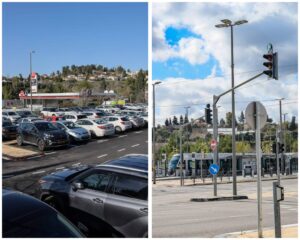
In the quiet hours of the night, fire lit up the streets of Issawiya—one of East Jerusalem’s most politically sensitive neighborhoods. A car, allegedly belonging to Sheikh Wadi’ al-Jaabari from Hebron, was set ablaze. Firefighters battled the flames, and Israeli police launched an investigation. But for those watching the region closely, this was no ordinary arson—it was a direct response to an ideological earthquake shaking Palestinian society
Jaabari has recently emerged as the public face of the “Hebron Emirate” initiative: a plan proposing the separation of the Hebron district from the Palestinian Authority, the full recognition of Israel as a Jewish state, and formal alignment with the Abraham Accords. The initiative—hailed by some as pragmatic and condemned by others as betrayal—has reignited tensions both online and on the ground
مصادر محلية: شبان يحرقون مركبة “وديع الجعبري” في بلدة العيساوية بالقدس، والذي أعلن الاحتلال أنه تواصل معه لتأسيس ما يسمى “إمارة الخليل” pic.twitter.com/uqrsZBrCPt
— شبكة قدس الإخبارية (@qudsn) July 9, 2025
Following its publication in The Wall Street Journal, segments of the powerful Jaabari clan in Hebron distanced themselves from the proposal, signing public declarations denouncing it. Threats soon followed. Residents claiming ties to Issawiya declared Jaabari “unwelcome” and accused him of treason. Now, those words appear to have turned into fire
(Lawyers Raided in Jerusalem During Palestinian Bar Vote)
The “Hebron Emirate” Vision: A Local Peace Proposal with Regional Impact
Unlike traditional top-down negotiations, Jaabari’s proposal promotes a grassroots approach—emphasizing local governance, mutual recognition, and shared economic development. Its core pillars include
-
Full separation from the Palestinian Authority, which the signatories describe as illegitimate and corrupt
-
Recognition of Israel as the nation-state of the Jewish people
-
Commitment to zero tolerance for terrorism
-
Integration into the Abraham Accords
-
Joint industrial zones and expanded Palestinian work permits in Israel
-
Replacement of the Oslo framework with a new model based on mutual benefit
-
Recognition of Hebron tribal leaders as legitimate local representatives
The initiative seeks to redefine the Palestinian future—not through conflict, but through cooperation. Yet in places like Issawiya, such ideas remain explosive
(Journalist Linked to Hezbollah Arrested Near Jerusalem)
Why Jerusalem?
The choice of Jerusalem as the site of retaliation is symbolic. The city, home to both sacred dreams and unresolved tensions, amplifies every political ripple. While Jaabari resides in Hebron, the burning of his car in East Jerusalem sends a clear message: normalization with Israel may be gaining traction in global capitals—but on the ground, resistance still burns