By the mid-2020s, Jerusalem continues to move between contrasts, sacred and secular, past and present, identities that meet and sometimes clash. But in recent years, one gap has become impossible to ignore: the distance between wanting to live in the city and actually being able to afford it.
The housing market in Jerusalem keeps climbing, and recent reports by the Central Bureau of Statistics and the Bank of Israel only reinforce what residents already feel. Central neighborhoods, led by Talbiya, have become nearly out of reach for many locals. Apartment prices resemble those of major European capitals, while local salaries remain significantly lower. Young residents, including educated professionals, are being pushed out, to nearby suburbs like Mevaseret or Modi’in, or simply giving up on the Jerusalem dream.
But Talbiya is not just about numbers. It is also a story.
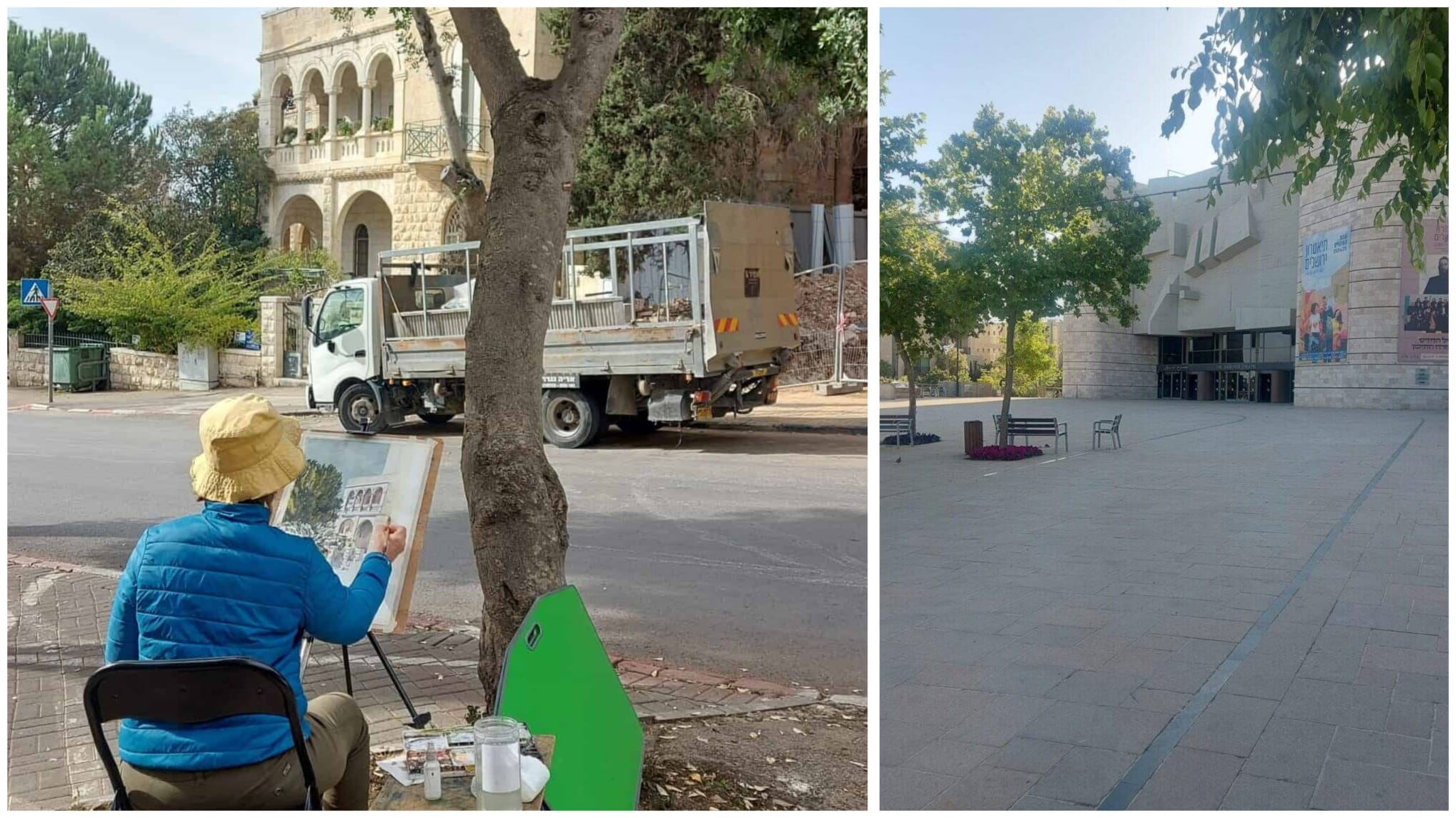
Walking through its streets, the stone stands out, heavy Jerusalem stone, carefully carved, holding an almost European sense of order and stability. Yet behind that surface, something has emptied out. Apartments bought for investment or occasional use remain closed most of the year, lights turn on only from time to time, and streets that look alive do not always feel lived in.
The stone remains. The life, less so.
What was Talbiya neighborhood in Jerusalem like when it was a shared living space?
In the 1930s, Talbiya was not just an upscale neighborhood, it was an idea. Wealthy Christian Arabs, British officials, and Jewish professionals lived side by side, sometimes sharing a cultural language.
The houses here were not just structures. They were a statement. Those who chose Talbiya sought to belong to a modern, open world, one that looked toward Europe while remaining rooted in the region. The architecture, the clean lines, the carefully shaped stone, all reflected a belief in order and in the future.
It was not a place without tension, but it did carry something rare, a real attempt to live alongside one another, not only next to each other but with a degree of human connection.
Back then, the stone was not just material. It was a promise.
What happened to Talbiya after 1948 and how does it connect to housing in Jerusalem today?
Then came the break. The year 1948 was not only a political turning point, it was also a human rupture. Families left, homes changed hands, and the shared space that had formed here dissolved in a short time.
The streets remained. The stone remained. But the story changed.
Talbiya became a different neighborhood, Israeli, diplomatic, quiet, with a very different character from what it once tried to be. Beneath the surface, a sense of loss remained, along with the question of what might have been.
Today, in a reality of extremely high real estate prices, the neighborhood represents something else entirely. It is no longer a place of encounter but of filtering. Not shared life, but economic success that pushes others away. More and more properties are held by people who do not live in the city full time, and the local rhythm continues to fade.
Looking again at the stone, it is hard not to see it differently. It is no longer just architectural detail but testimony. It carries memories of different languages, different lives, and a reality that has disappeared.
In the end, the question raised by Talbiya’s story reaches far beyond the neighborhood itself: who can still afford to live in Jerusalem?
The stone is the same stone. The houses are the same houses.
But the city, and the people within it, are no longer the same.