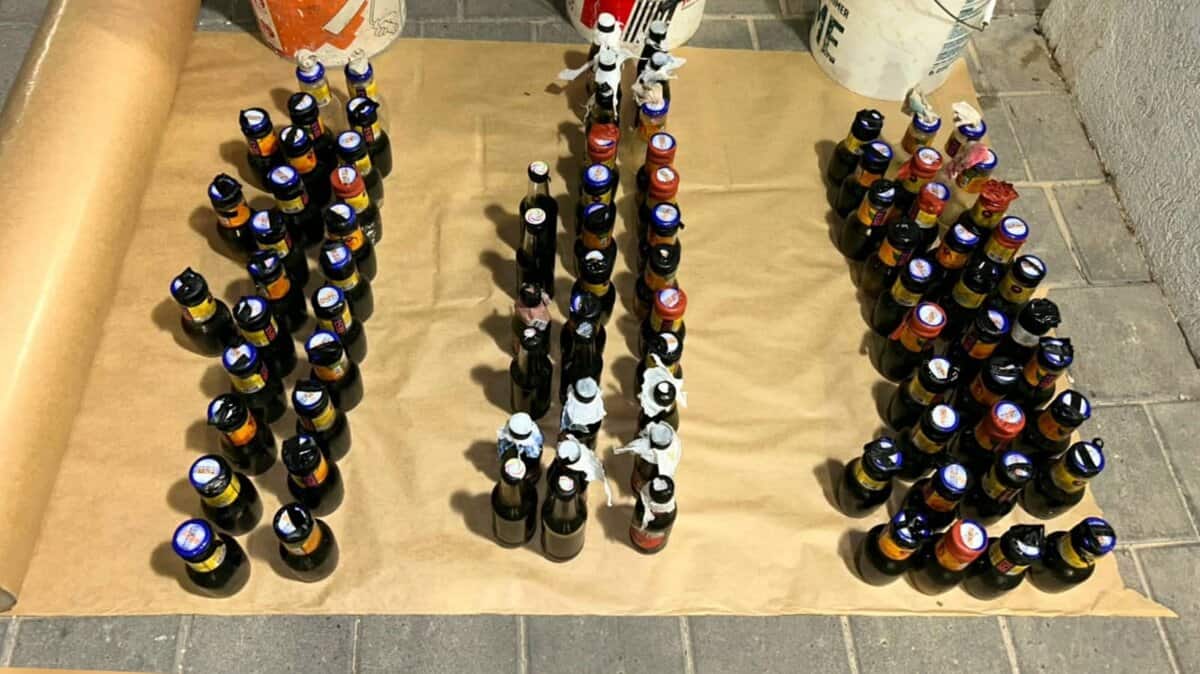
The discovery of dozens of firebombs in Hebron shows once more how the Jerusalem-Hebron axis is not just a line on the map but a corridor where local incidents quickly evolve into strategic threats. In a joint raid by Shomron district police and IDF forces, officers uncovered 90 molotov bottles prepared for use on the rooftop of a house, sharpening the debate over security for residents of the capital.
Molotovs as a concrete security threat
The search was based on specific intelligence. Detectives from Hebron station, supported by soldiers from the Yehuda Brigade, raided a Palestinian home and found 90 fully prepared molotovs on the roof. Two brothers were arrested at the scene and transferred for questioning. Crude but lethal, these devices highlight how low-tech methods remain attractive for militant groups planning attacks.
Proximity to Jerusalem raises the risk
Because the cache was uncovered in proximity to Jerusalem, the implications extend beyond Hebron itself. The axis linking the two cities has long been a source of friction, and when stockpiles emerge near populated routes, the threat becomes strategic. This proximity underscores the urgency of surveillance, interdiction and intelligence sharing to safeguard the capital.
Counterterrorism as a proactive doctrine
Police officials stressed that the operation forms part of a wider preventive approach, coordinated with the IDF and Shin Bet. “We will continue to operate decisively and proactively for the safety of Israeli citizens,” the statement read. Prevention is the central principle: dismantling plans and logistics before they become operational, cutting the chain at its earliest point.
(In Jerusalem protests, hostages seen near the end)
Hebron as a strategic arena
Hebron is not only a religious and historic city but also a contested urban arena where politics, society and security intersect. The fact that such a cache was concealed inside a residential neighborhood illustrates how civilian areas can be exploited as cover for militant preparations. For Jerusalem, the closeness of this discovery turns Hebron from a peripheral concern into an immediate security challenge.
Disruption along the Jerusalem-Hebron corridor
This case joins a series of operations designed to sever preparations for terror attacks before they reach execution. Along the Jerusalem-Hebron corridor, every intelligence lead and tactical move carries strategic weight — shaping deterrence, strengthening investigations, and ensuring that the first bottle never becomes an active weapon in the streets of Jerusalem.