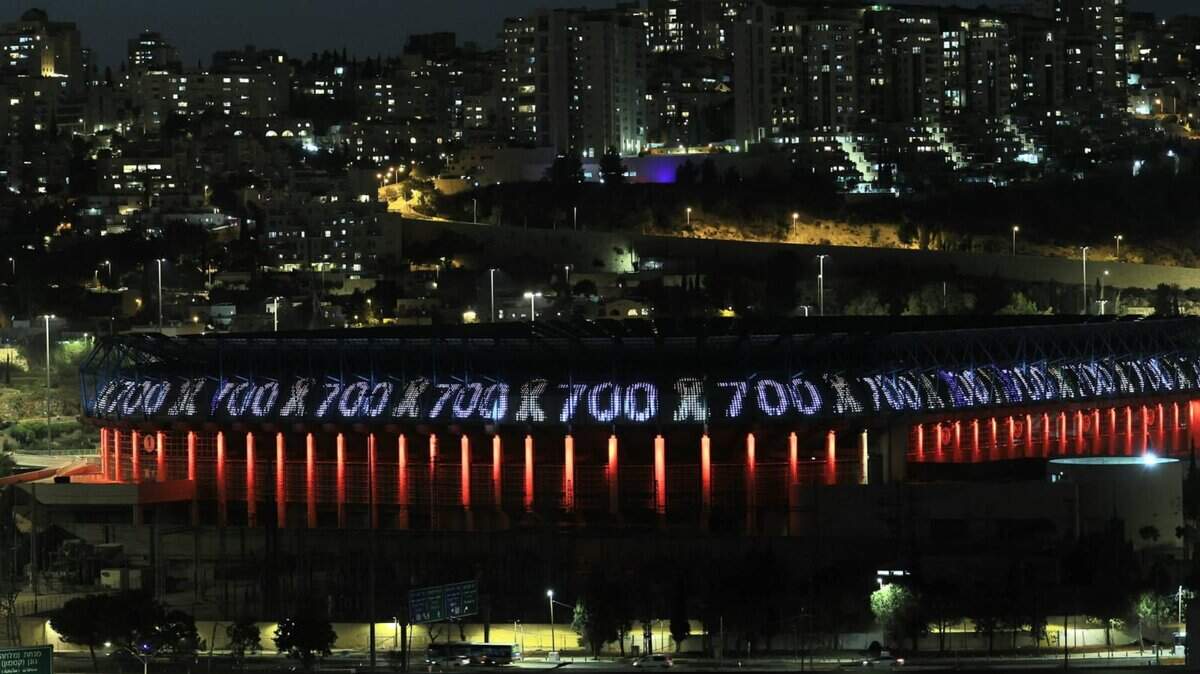
The Jerusalem Municipality lit up the Strings Bridge and Teddy Stadium with the number 700, marking the long days the hostages in Gaza have spent away from their families. Yet behind the symbolic gesture lies a complex reality: many residents of Jerusalem – from ultra-Orthodox communities to right-wing supporters and Palestinians in East Jerusalem – do not necessarily identify with the message or support the idea of a hostage deal
Jerusalem seeks to highlight collective memory
To understand the city’s message, one must begin with the official act itself. On Thursday evening, the Strings Bridge and Teddy Stadium were illuminated with the number 700 and the emblem of the hostages. Mayor Moshe Lion declared: “Since the war began, the people of Israel have endured hundreds of days of pain, longing, and waiting. Jerusalem remembers, prays, and embraces the families of the hostages. By lighting the city’s symbols, we express commitment, hope, and prayer for their return. From the capital rises a clear voice: bring them all home.” At Safra Square, large cubes bearing the faces of 48 hostages were displayed, a striking reminder placed at the heart of the public space
Ultra-Orthodox residents avoid the enlistment discourse
Beyond the municipal stage, Jerusalem’s demographics tell another story. The ultra-Orthodox community, which makes up a significant share of the city’s population, largely rejects the national military narrative. For many, the call to bring back the hostages is tied to the same framework of compulsory enlistment they oppose. As a result, while the city shines yellow symbols of solidarity, many Haredi families remain indifferent, reflecting a deep social gap
Religious Zionists and opposition to a deal
Alongside the ultra-Orthodox, the Religious Zionist sector in Jerusalem voices strong opposition to deals with Hamas. Leaders and community members often argue that releasing prisoners in exchange for hostages would endanger national security and embolden terror groups. This perspective transforms the municipality’s symbolic message of unity into yet another front in the city’s ideological struggles
Palestinians in East Jerusalem – a different narrative
No analysis of Jerusalem is complete without considering East Jerusalem, home to about 40 percent of the city’s residents. For Palestinian communities, the “700 days” narrative is not part of their collective identity. Many view the illuminated symbols as reflecting only one side’s pain, leaving their own reality unacknowledged. This gap highlights how official gestures often fail to bridge the divide
Jerusalem as a demographic laboratory
Taken together, these realities make Jerusalem a demographic and political laboratory. In one city coexist collective memory of the hostages in Gaza, indifference among ultra-Orthodox groups, opposition from Religious Zionists, and a completely different Palestinian narrative. What was meant as a message of unity in fact exposes the divisions that define the capital. Jerusalem, once again, becomes a symbol of both memory and forgetting, solidarity and fracture
(Europe in Jaffa Street? Jerusalem light rail moves forward)