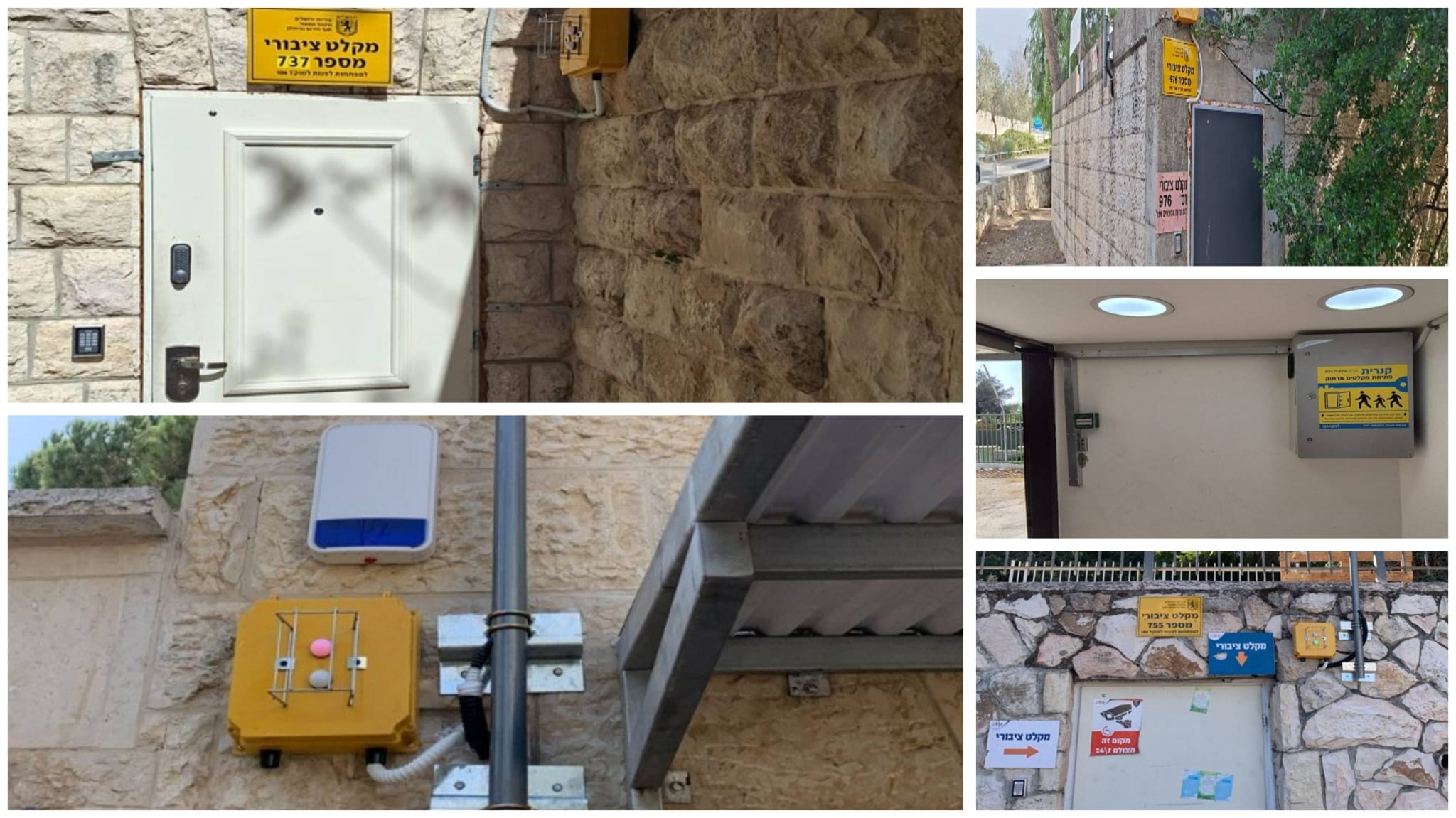
In a city where sirens can sound with little warning, the first seconds matter. Jerusalem is now trying to cut that time to a minimum: a new system enables automatic opening of public shelters immediately upon alerts from the Home Front Command or by a municipal decision. In practice, it means doors open even without anyone physically present.
The system is already active in around 100 shelters across the city, mainly older facilities that still serve entire neighborhoods. City officials point to near-instant availability, aiming to prevent residents from reaching locked shelters at critical moments.
How does the remote shelter opening system work in Jerusalem?
Behind relatively simple doors sits a new technological layer: a dedicated communication network connected to the alert system, alongside control components that allow remote activation. Once a shelter opens, a Wi-Fi network is also activated for those inside – a small detail that reflects an effort to make protected spaces more usable, even under stress.
Officials at the municipal Emergency and Security Division explain: “The ability to open shelters remotely in real time is critical in the first moments of an emergency. The system ensures shelters are accessible within seconds, even without personnel on site”.
How much does the project cost and what’s next for Jerusalem?
The project, carried out in cooperation with Mifal HaPais, is estimated at about NIS 5 million and is expected to expand soon to roughly 50 additional shelters. At the same time, about NIS 13 million have been invested in renovating existing shelters across the city – part of a broader effort to adapt older infrastructure to today’s security reality.
Jerusalem Mayor Moshe Lion notes: “We continue investing in residents’ safety and in the city’s preparedness for any scenario, understanding that the current security reality requires faster and smarter responses. Integrating older shelters with advanced remote-opening technology is not just a technical upgrade – it’s a shift in approach that puts accessibility and availability at the center. This ensures every resident can reach a protected space quickly, even when every second counts”.
Mifal HaPais Chairman Itzik Lari adds: “This is a direct investment in residents’ safety, ensuring fast and secure access to protected spaces at the most critical moments”.
Beyond the shelters themselves, the municipality is also advancing solutions like a “mobile protected office” – field kits that enable immediate, secure work environments at disaster sites. It may sound technical, but in a reality shaped by sirens, intercept debris and constant tension, this is the infrastructure that supports the city after the alarm fades.