Jerusalem is constantly renewing itself. Construction sites, infrastructure upgrades and large-scale development projects have become part of the city’s everyday landscape. But between accelerated development and daily urban life, an increasingly hazardous gray zone has emerged. Sidewalks narrow, heavy machinery moves through residential areas, and pedestrians are often forced to navigate spaces never designed for such intensive work.
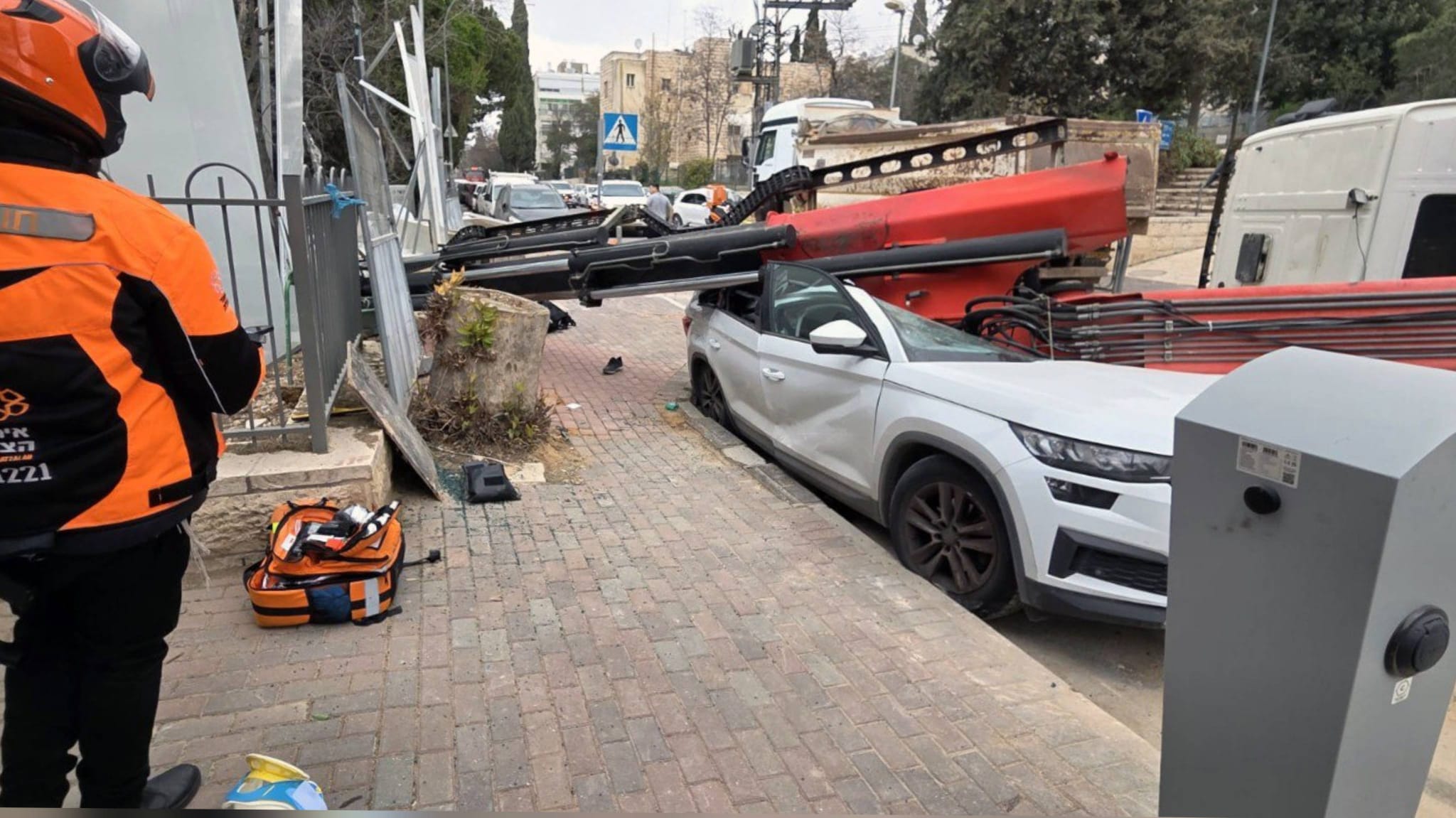
The tragedy that occurred in recent days on Revadim Street in Jerusalem’s Arnona neighborhood illustrates this risk in the starkest terms. A 70-year-old woman walking along the street was struck by a crane truck that overturned during infrastructure works. She was evacuated to hospital, where her death was later pronounced.
United Hatzalah medics Yossi Tauber, Yedida Landsberg and Netanel Levi stated that “we were told at the scene that the woman was struck as a result of a crane truck overturning. We provided initial medical assistance and she was then evacuated for further treatment at the hospital.”
Police said officers from the Oz Station arrived at the scene, detained three suspects linked to the works at the site, and launched an investigation into the circumstances of the incident.
Has Jerusalem Become Dangerous for Pedestrians?
In recent years, Jerusalem has seen an unprecedented volume of infrastructure and construction activity. Light rail projects, roadworks and the construction of thousands of housing units are taking place simultaneously, often in densely populated neighborhoods. Pedestrians routinely find themselves walking alongside crane trucks, heavy engineering equipment and temporary barriers, in an urban environment where safety margins are increasingly thin.
How Do Other Cities Handle Construction in Public Spaces?
In many cities around the world, large-scale works in populated areas are accompanied by strict safety standards. Clear separation between construction zones and the public, continuous supervision and well-defined pedestrian routes are considered basic requirements. In Jerusalem, where the public space is already complex and crowded, maintaining these standards is especially challenging. The tragedy on Revadim Street underscores the ongoing tension between rapid urban development and the need to protect pedestrians moving through the city every day.