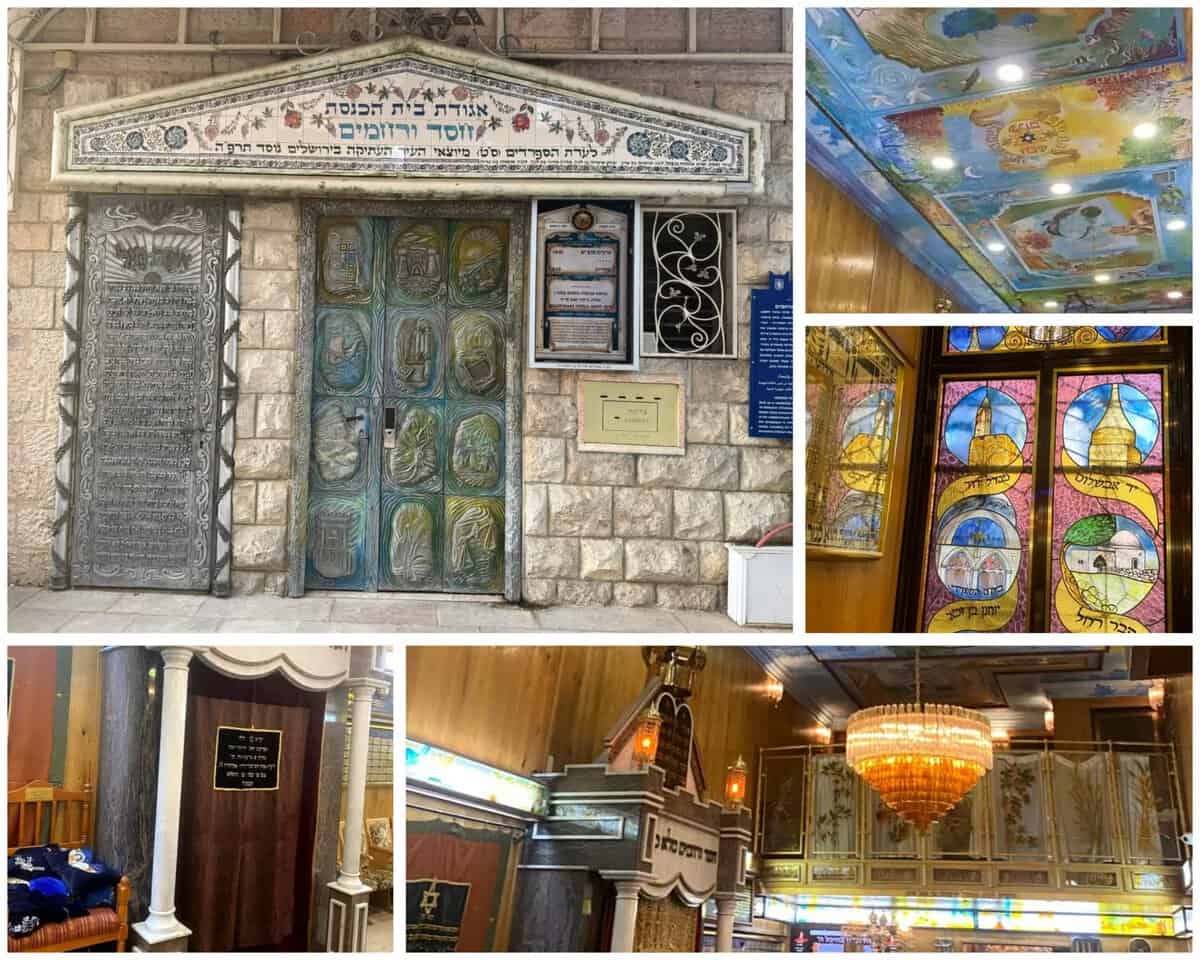
In the Mazkeret Moshe neighborhood of Jerusalem, wrapped in holiness and festivity for Rosh Hashanah, the “Chesed VeRachamim” synagogue on Carmel Street, near Mahane Yehuda Market, has been alive for 100 years. It is a Jerusalem gem, carefully maintained by the Armoza family, one of the city’s most respected families.
Jerusalem synagogue on Rosh Hashanah
This week, as every year, “Chesed VeRachamim” is filled with anticipation for the new Jewish year of 5786. A beautiful curtain will cover the ark, Torah scrolls will be adorned with fine mantles, and the synagogue will shine in honor of the coming year. Guests from across Jerusalem are already expected and will be warmly welcomed.
Rosh Hashanah here is planned to be organized, air-conditioned, and fully prepared for long, heartfelt prayers. Worshippers arriving from Katamon, Arnona, Mekor Baruch, Nahlaot, and even from Ramot in northern Jerusalem know they have reached a special place. Here they will begin the year with pure energy, in a powerful reminder that connects daily Jerusalem life with an eternal biblical story – the Binding of Isaac.
The Armoza family and Jerusalem tradition
After a festive meal of symbolic foods and blessings – pomegranates, leeks, dates, apples with honey, and more – worshippers will gather on the first day of Tishrei to welcome the new year. Men in white prayer shawls and women in new holiday clothing will fill the synagogue, many keeping traditions passed down from their families.
The message is clear: both Mahane Yehuda and Mazkeret Moshe are wrapped in a royal atmosphere that intensifies the spiritual experience. Two full days will be devoted to prayer, accompanied by renowned cantors Ephraim Yehezkel and Avi Itcher, giving the service a timeless Jerusalem character.
Among the founders – David and Yaakov Armoza, their sons Muni and Avichai Armoza, David Armoza the grandson, Chaim Pazuelo, and Netanel Cohen – stand as leading figures and pillars of this spiritual home.
(Western Wall notes in Jerusalem – health and hostages)
Cantors and prayers in Jerusalem
The morning service, opening with Hannah’s prayer and psalms of ascent, will reach its peak with the sound of the shofar. On the second day, the Torah reading recalls the Binding of Isaac – a dramatic moment of fear and faith, anxiety and trust. This is not just a biblical tale, but a symbol of sacrifice, courage, and resilience.
The Binding of Isaac and Israel today
These values directly echo the pain of hostages and their families, the fallen, and the soldiers fighting in Gaza or guarding Israel’s borders. The Binding reminds us of struggles without immediate answers, calling for inner strength and hope. The heavy emotional weight carried by Abraham mirrors the burden on the Jewish people since October 7, 2023 – a weight that will be released in prayer and shofar blasts at “Chesed VeRachamim” and every other synagogue in Jerusalem.
Thus the holiday will conclude – with a cry from the heart and the ram’s horn, with infinite hope and a pledge of peace.
“Our God in heaven, remember us for life, King who desires life, and inscribe us in the Book of Life, for good life and peace.”