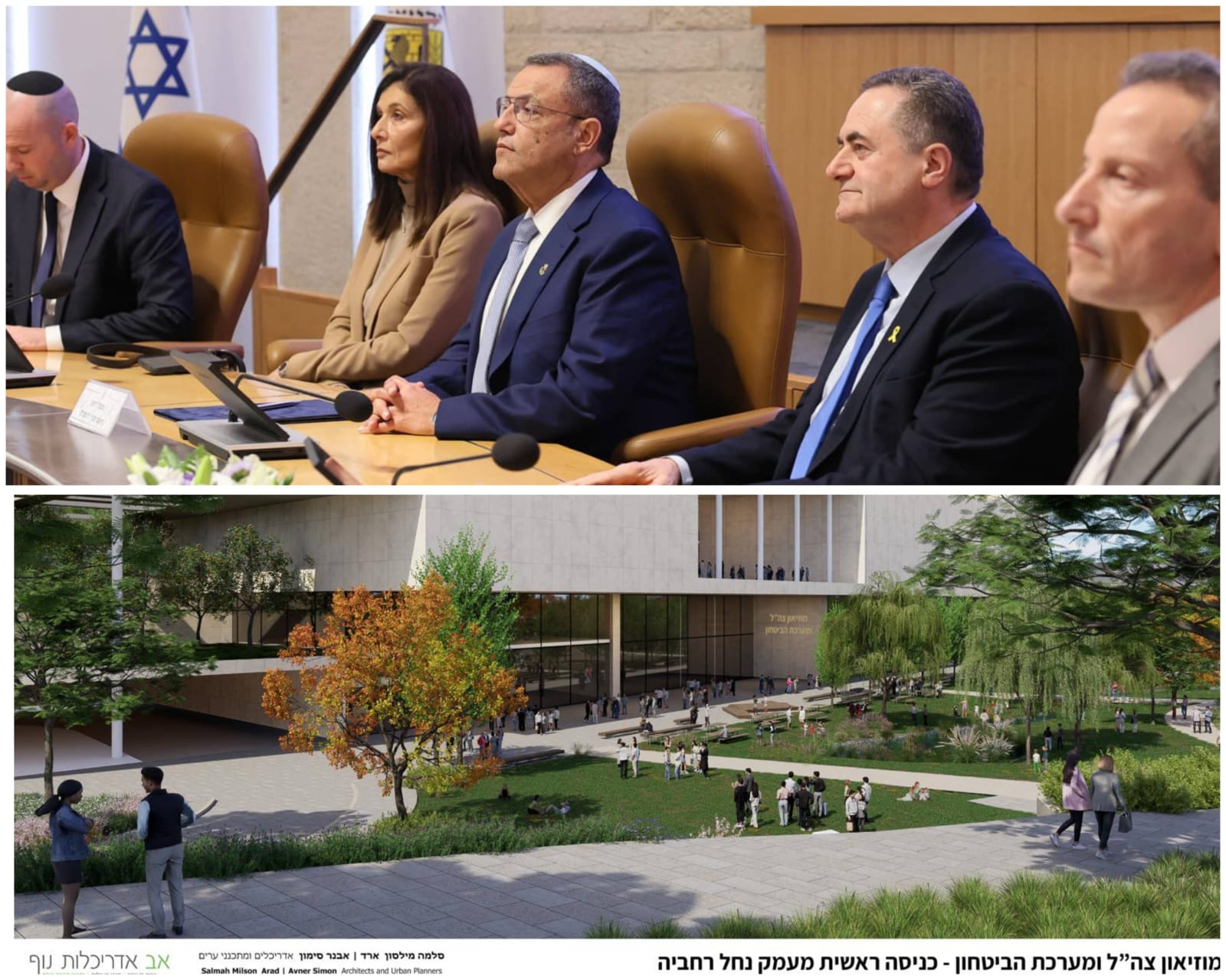
Israel’s Defense Ministry and the Jerusalem Municipality signed an umbrella agreement this week that anchors a long-term shift in the capital’s role as a center of security, technology and civic life. The deal formalizes the relocation of key defense infrastructure to Jerusalem, tying national security needs directly to urban development.
At the heart of the agreement is the establishment of a Defense Ministry branch in the city’s main entrance district, including a facility for the Directorate of Defense Research and Development. The plan also includes relocating the IDF’s military colleges from Glilot to Jerusalem, building an IDF museum near the Mandel Institute, upgrading the city’s recruitment office, and advancing housing projects for career military personnel, including through urban renewal initiatives.
Why is Israel’s defense establishment moving to Jerusalem?
The agreement reflects a strategic approach that views national security as part of the urban fabric rather than something confined to distant bases. Relocating the military colleges to one of Jerusalem’s most accessible areas by public transport is expected to serve hundreds of officers and staff, strengthen surrounding neighborhoods and contribute to the local economy.
Defense Minister Israel Katz emphasizes that the move is rooted in a long-standing commitment to the city. “My deep responsibility to Jerusalem has guided me in every public role,” he says. “The defense establishment is making it clear that Jerusalem is becoming home to our central fields of activity. At a time when voices again call for dividing the city, the government states clearly: Jerusalem will never be divided. This agreement is a clear message – Jerusalem is growing, developing and strengthening.”
What new defense projects are planned in the city?
The agreement includes the construction of an IDF museum as part of an integrated urban development plan that preserves public open space, a comprehensive upgrade of the recruitment office to meet future needs, and the establishment of a new technological branch of the Defense Ministry. In parallel, dedicated housing projects for career personnel are being promoted in cooperation with the IDF’s Human Resources Directorate, with the aim of encouraging long-term residency in the city.
Jerusalem Mayor Moshe Lion describes the agreement as a move with broad national and municipal significance. He notes that establishing defense infrastructure in the capital signals confidence and commitment, and is expected to strengthen Jerusalem’s economy while creating new centers of growth.
Defense Ministry Director General, Maj. Gen. (res.) Eyal Zamir’s successor, Amir Baram, links security directly to the city’s future. “National security also means a strong and developing Jerusalem,” he says, adding that the agreement lays the groundwork for tens of thousands of square meters of new defense facilities across the city. “From here, we move to implementation.”
The umbrella agreement positions Jerusalem not only as a symbolic capital, but as an active hub where security systems, technological development and civilian life intersect – a shift likely to shape the city for decades to come.