There are moments in Jerusalem when it becomes clear the city doesn’t run on a single logic. Not security, not politics, not even daily routine. Different worlds move side by side, sometimes barely intersecting.
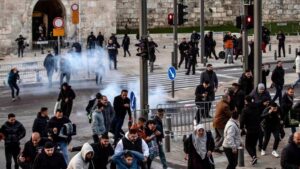
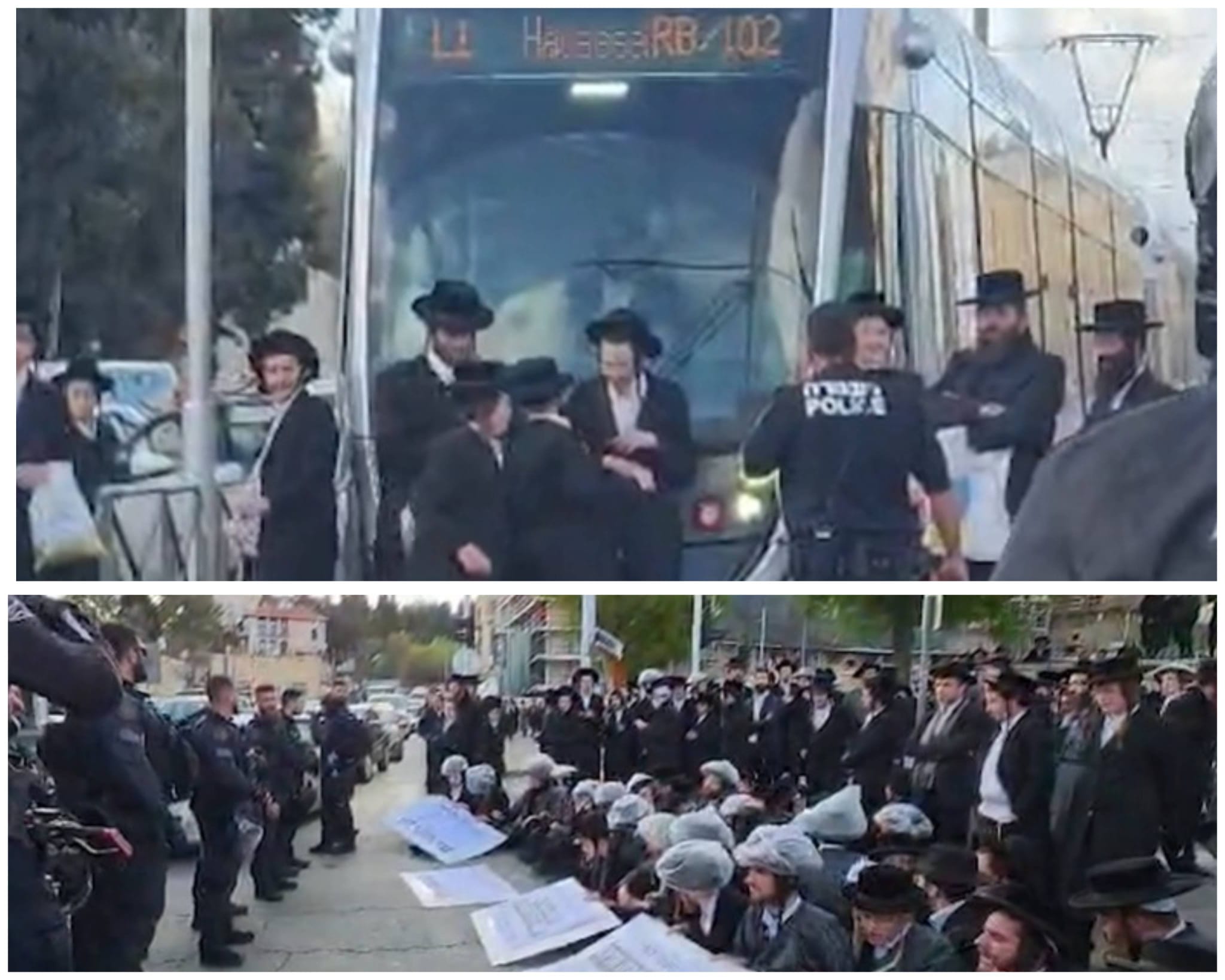
That was evident on Sunday. While most of Israel was focused on the war with Iran, sirens and interceptions, a different reality unfolded along Bar-Lev Boulevard. The arrest of a young ultra-Orthodox man classified as a draft evader quickly drew hundreds into the streets. Traffic was blocked, the light rail was halted, and clashes broke out with police.
Jerusalem District Police said officers and Border Police units acted to disperse the disturbance after protesters blocked both the road and the light rail tracks, adding that those involved “did not comply with police instructions,” and that forces worked to restore order and reopen the routes.
This kind of scene has become familiar. But it points to something deeper that keeps resurfacing, largely unaffected by the wider national situation.
Why does the draft law keep fueling ultra-Orthodox protests in Jerusalem?
The draft law has long been one of the most sensitive fault lines in Israeli society. For decades, yeshiva students were granted broad deferments from military service. It was never fully settled in law, but it became the norm.
In recent years, that arrangement has been challenged. Court rulings struck down previous frameworks, governments have struggled to pass new legislation, and public pressure over equality of service has intensified.
In this environment, many ultra-Orthodox men find themselves in a grey zone: their deferment expires, they are required to report, and they do not. From the state’s perspective, that makes them draft evaders.
Within their communities, however, the label carries a very different meaning. It is seen as pressure to change a way of life centered on religious study. That is why even a single arrest can quickly escalate into a large protest.
הפרות סדר, שדרות בר לב, ירושלים (צילום: דוברות המשטרה) pic.twitter.com/PQf3sSQI6G
— jerusalem online (@Jlmonline) March 23, 2026
Where else in the world do insular communities defy state rules?
Jerusalem is not unique in this sense, but the intensity is different. Around the world, there are communities that operate according to their own internal rules, sometimes clashing with state authority.
In the United States, Amish communities live with minimal reliance on modern state systems, maintaining their own educational and social structures. During national crises, their daily life often continues largely unchanged.
In Europe, ultra-Orthodox communities in cities like London and Antwerp have also seen tensions with authorities, particularly during the COVID-19 pandemic, when some groups followed internal guidelines rather than state restrictions.
There are also non-religious examples – regions with strong local identities where community norms outweigh national directives in everyday decisions.
What makes Jerusalem different is the context. These dynamics play out in the middle of an active security reality. While one part of the city is responding to sirens and missile threats, another is focused on a struggle over military service.
In the end, what happened on Sunday was more than a local protest. It was another reminder that Israel contains multiple social systems operating in parallel, not always aligned, and not always responding to the same priorities.