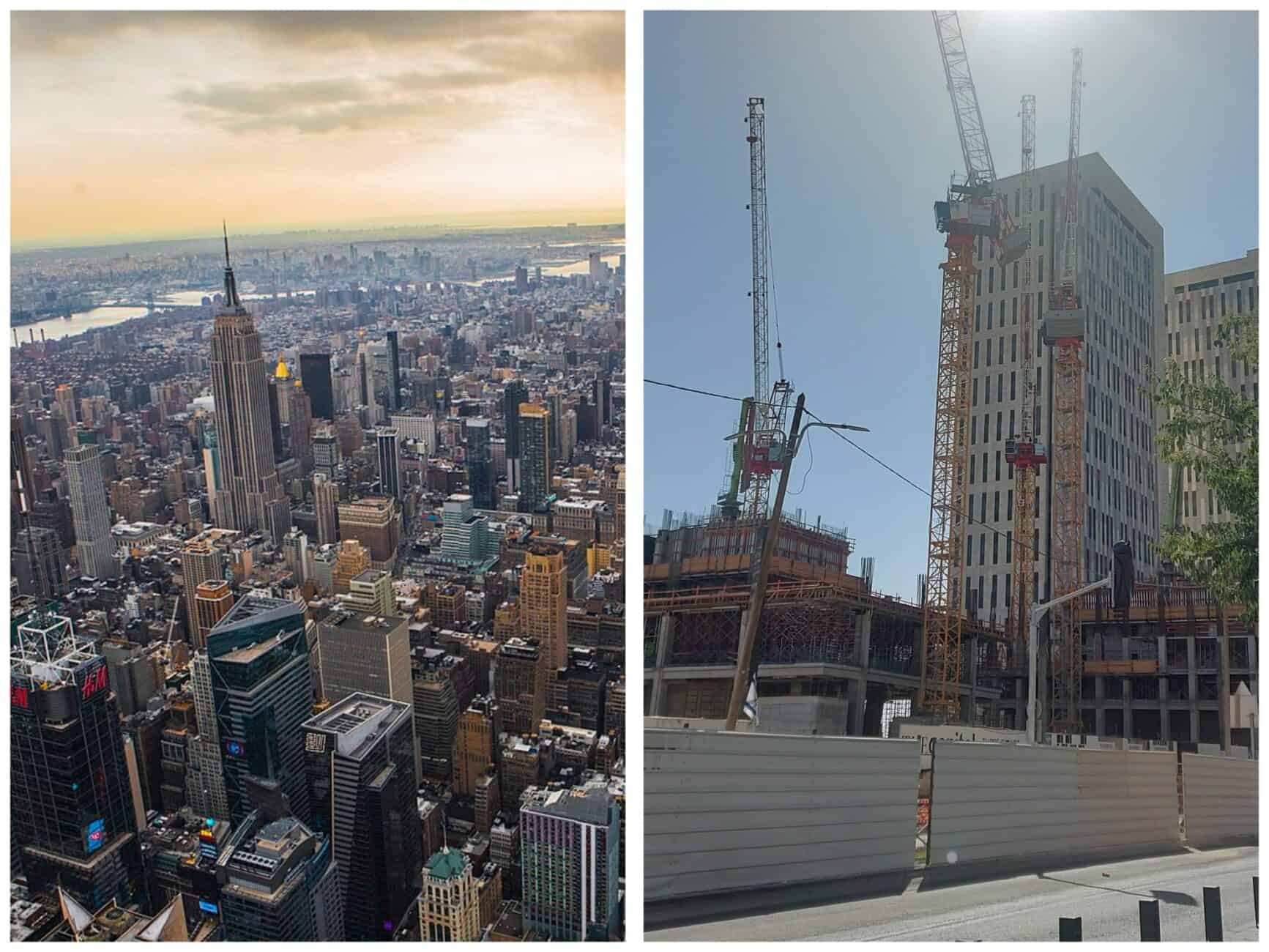
Anyone driving along Jerusalem’s Shazar Boulevard can’t miss the gap between vision and reality. On paper, this was meant to be one of Israel’s most ambitious urban projects: a state-of-the-art business hub, towering skyscrapers up to 40 stories high, a high-speed train terminal, hotels, commerce, and tech. But what residents and visitors see is quite different – construction fences, exposed concrete, and cranes frozen mid-air. The dream of a “Jerusalem Manhattan” still seems far off
The entrance quarter plan spans nearly 300,000 square meters of office space, 60,000 square meters of retail, over 1,300 hotel rooms, and a complex transportation hub. It is backed by Israel’s Prime Minister’s Office, the Ministry of Finance, the Jerusalem Municipality, and Israel Land Authority. First conceptualized in 2010, the project aimed to make Jerusalem a metropolitan center of international standing. Fourteen years later, most of what’s visible is scaffolding
Between Blueprint and Reality: A City on Hold
The official name is “Sha’ar Ha’Ir” – The City’s Gateway – but many locals refer to it as the “Scaffolding Quarter.” The site stretches from Navon Train Station across Jaffa Road to the edge of the Jerusalem International Convention Center. Plans include broad pedestrian avenues, upgraded public spaces, underground infrastructure, and a green deck above the transport lanes
City officials once dubbed it the “Manhattan of Jerusalem,” inspired by the towering skyline of New York’s most iconic borough – home to over 6,000 skyscrapers, including the Empire State Building and One World Trade Center. Manhattan’s development began in the 19th century, supported by centralized urban planning, massive investments, and a strong commercial ecosystem. The comparison was appealing – but as time goes on, the difference in pace, process, and culture becomes painfully clear
The Future Is Delayed – and the City Pays the Price
Meanwhile, residents grow increasingly frustrated. Shop owners report declining foot traffic, locals complain of noise and endless detours, and timelines keep shifting. “They said 2026. Now it’s 2028. At this rate, maybe 2032,” says one longtime resident. In Jerusalem, it seems, the road to innovation is still paved with iron sheets and traffic cones
Economically, the delay is also taking a toll. Investors are holding back, stores remain empty, and property values remain stagnant despite the projected boom. For those hoping to benefit from the rise of a new business district, the promise is still out of reach – and the reality is one big construction zone