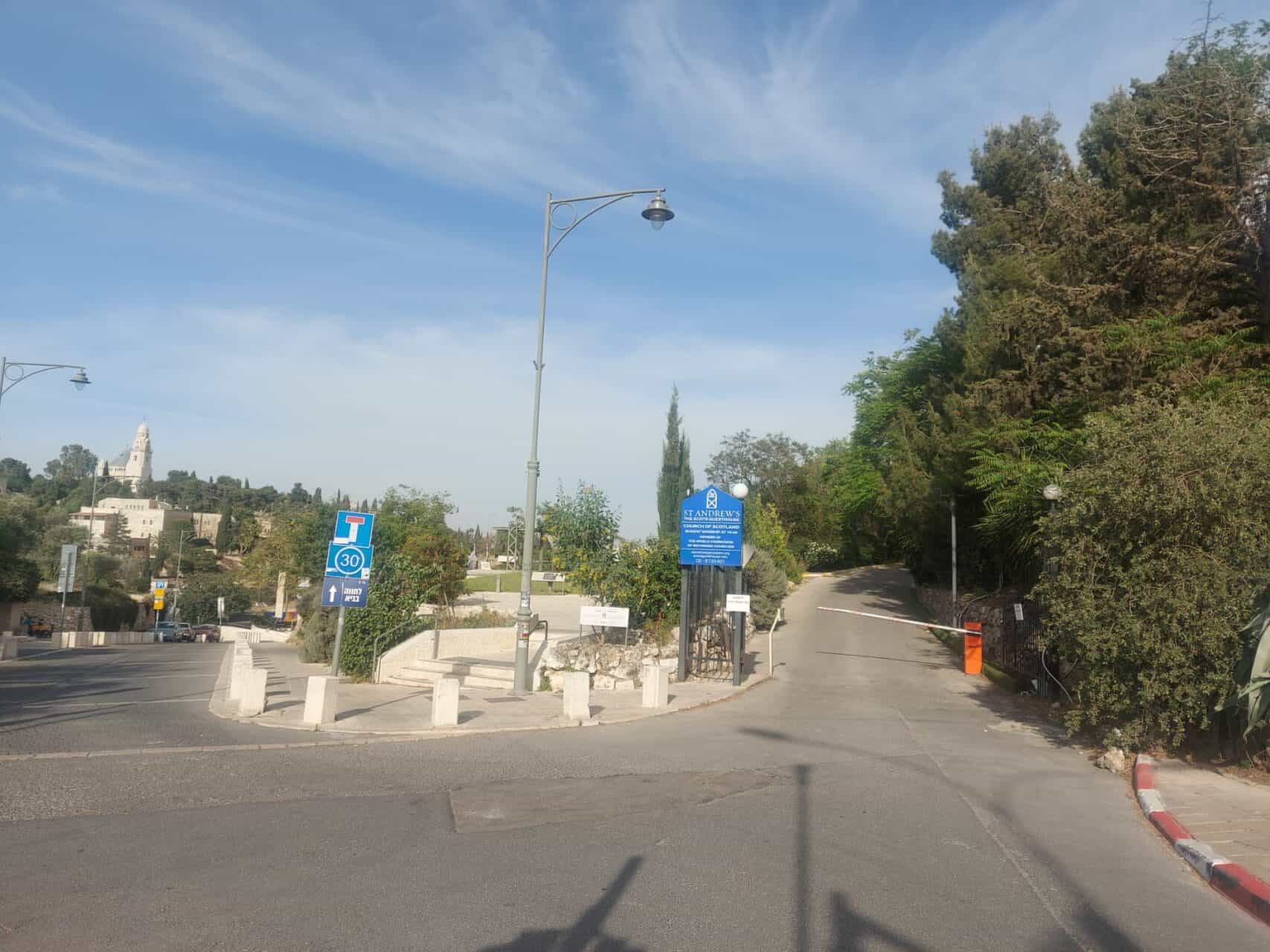
Between Mount Zion and the Valley of Hinnom, in a Jerusalem caught between fear and faith, one alley stands still. Not just quiet—it’s frozen. A small road, an open barrier, a Scottish flag waving gently, and a sense that time has stopped. Just steps from the YMCA and the Western Wall, it feels as though this place has been untouched for decades—perhaps longer. While Israel sweats through a tense summer, this corner doesn’t react. No sounds. No motion. No urgency. And maybe that’s exactly why it matters
There’s something intentional about the silence. Not as protest, not as retreat—just absence. Politics fade, city noise disappears, and a calm, historic presence takes over. It’s not resistance. It’s stillness. A space that seems to choose not to join
A Bubble in a Shifting City
Since the war in Gaza began, Jerusalem has changed—visibly, emotionally, politically. But this corner hasn’t. The Scottish Church remains a quiet transplant from another world: Gothic buildings, English signs, pine trees, and a road empty of people. A space sealed in aesthetic distance, unmoved by local alarms
In a city overflowing with tension and movement, this silence is an anomaly. It doesn’t demand attention. It doesn’t participate. It simply continues, as if nothing has changed
The Contrast That Sharpens the Divide
Now, as Israeli life fractures between anxiety and fatigue, this bubble grows louder through its silence. It doesn’t take sides—it detaches. A reminder that not every corner must be mobilized, not every voice must rise. In wartime, disconnection becomes a message in itself
The road leading here is one-way. No shortcuts, no exits. You walk in—or you don’t. It’s not a path to something else—it’s the experience itself. And that’s the power: it doesn’t pretend. It simply exists. A space where Jerusalem stops reacting—and dares you to do the same