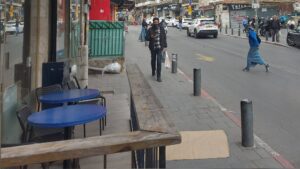
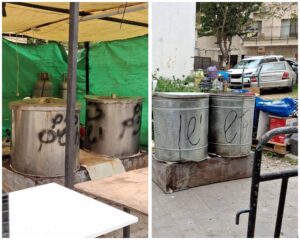
Between low entrances and aging balconies, between neglected and well kept courtyards, the Nahlaot neighbourhood in Jerusalem reveals, at the seam between the heart of winter and the approaching spring, planters that seem to belong to another world. Wooden drawers, recycled buckets, cracked clay pots, a soccer ball retired from its original purpose, beverage cans and old shoes have all become planters, filled with living, breathing green.
The scent of sage mixes with the cool winter air of Gezer Street in Jerusalem, joined by rosemary, za’atar leaves and the shiba plant, also known as shrubby wormwood. All are gathered in a creative planter in the Nahlaot neighbourhood, alongside young bunches of parsley and cilantro growing in a small adjacent container.
How Does Herb Growing Reflect Everyday Life in Jerusalem?
This is an everyday visual, almost invisible, yet it tells a much larger story about a Jerusalem neighbourhood and its residents. It is a story about the human need to touch the soil even without a field. A phenomenon of growing herbs in the Nahlaot neighbourhood, established in the mid 19th century.
Most homes here were built in a communal layout around a shared courtyard and garden. The upheaval that followed the historic move outside the Old City walls was eased by closeness and shared life. Lemon verbena and mint were steeped in communal tea. Za’atar leaves with olive oil soaked into pita, preserving memory. Rosemary infusions were prepared to ease headaches and enrich potatoes. Parsley and cilantro formed the basis of everyday Jerusalem cooking, creating an immediate connection between the small garden, the kitchen and health. Thyme was brewed to treat respiratory issues, basil for digestion, chives as an antioxidant for salads. In short, an entire pharmacy right behind the door.
Why Are Jerusalem Residents Choosing to Grow Herbs in Planters?
Those who choose to grow herbs today are not farmers, nor gardeners. They are renters, retirees, young families, artists and high tech workers returning in the evening to small apartments in the heart of Jerusalem. What they share is a connection to nature, a sense of meaningful action and the knowledge that something is growing because of them.
This form of mini agriculture does not save money and is not meant to impress. It answers a psychological need for slowing down, responsibility and rhythm. Watering in the morning, trimming in the evening, tracking a new leaf and a rising stem. Within Jerusalem’s noisy, dense and often tense reality, the planter becomes a space of quiet and calm.
Growing herbs in planters is an act of belonging to the city, of deepening roots, even if they are in a pot. It expresses the relationship between people and plants through ongoing daily practice. It is a small ritual of hands covered in soil, green scent at the doorway and the feeling that nature can still exist within Jerusalem, without mediation.
The broader insight touches on how people today seek simple meaning. Not a grand ideology, but a green leaf. Not a revolution, but planting. The herb planters of the Nahlaot neighbourhood offer a model of attentive, calm urban living. A standing invitation to grow something, even if it is small, even if it is quiet, and to let it grow at its own pace.