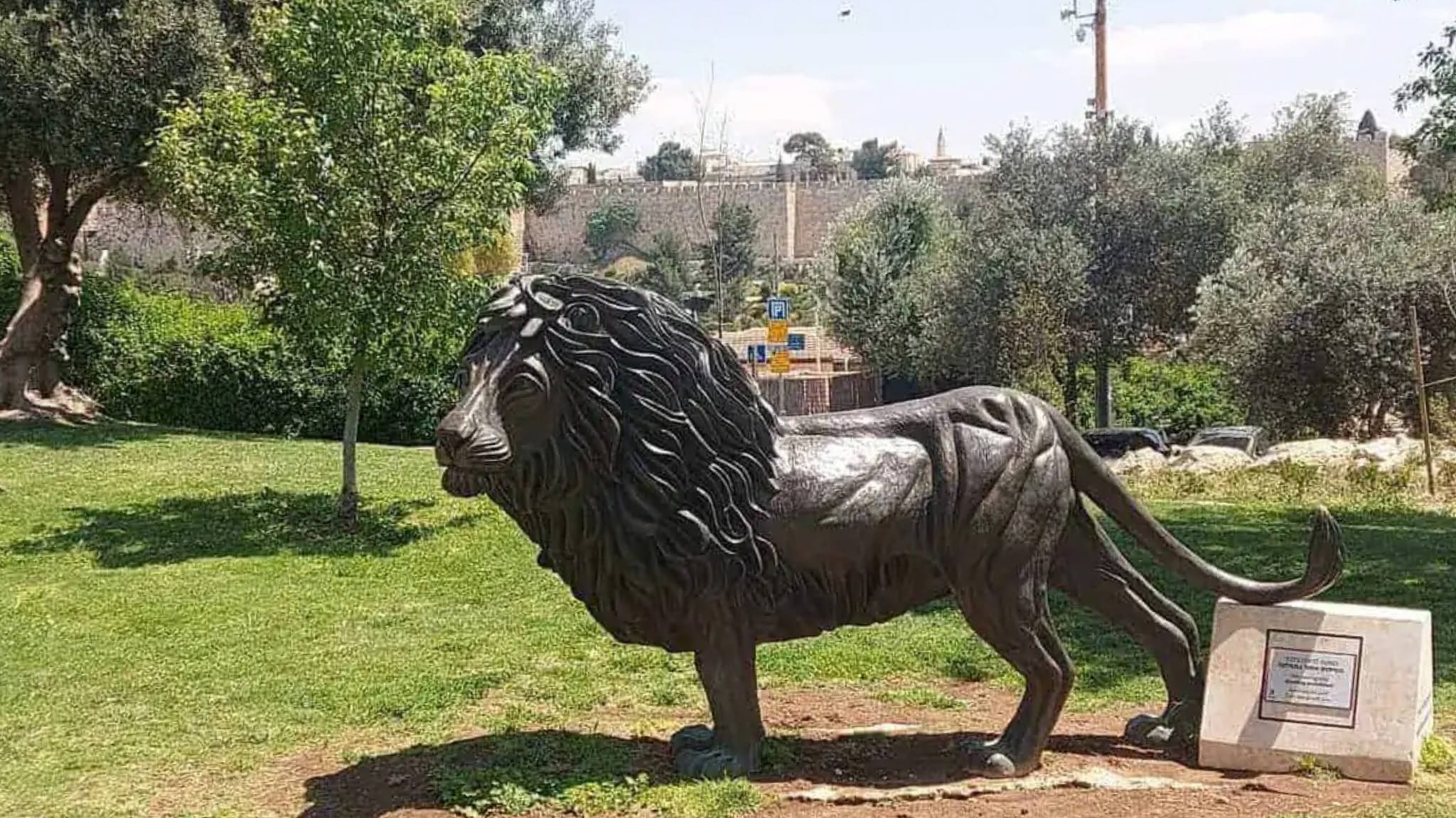
In Jerusalem, the lion is a familiar sight. It appears on the city’s official emblem, in public sculptures and in artistic elements scattered across the capital. For residents and visitors alike, the lion represents strength, history and the enduring character of the city.
These days, against the backdrop of Operation “Roaring Lion” and tensions between Israel and Iran, the symbol takes on a new layer of meaning. The ancient emblem of Jerusalem suddenly echoes another historical symbol – one that comes from Iran’s past.
One striking example stands near the walls of the Old City: a bronze lion sculpture gazing across the Jerusalem landscape. At first glance it seems like a local artistic tribute. Yet behind this image lies a broader historical story that stretches far beyond the city itself.
The same animal – the lion – served for centuries as a central symbol in Iran’s historical emblem.
Why did the lion become the symbol of Jerusalem?
The lion associated with Jerusalem is rooted in the ancient Jewish tradition of the “Lion of Judah”, a biblical image representing strength, leadership and courage.
When the modern emblem of Jerusalem was designed in the 20th century, the lion was placed at its center. Behind it appear the walls of the city, surrounded by olive branches. Together, these elements symbolize both the strength of Jerusalem and the hope for peace.
Over time the lion became one of the most recognizable symbols of the city. Beyond the official emblem, the figure appears in sculptures, public art and architectural elements across Jerusalem.
What was the Lion and Sun symbol in Iran’s history?
For centuries the lion also appeared in Iran’s historic national emblem. Known as the “Lion and Sun”, the symbol was displayed on Iran’s flag until the Islamic Revolution of 1979.
In Persian tradition the lion symbolized royal authority and power, while the sun represented stability and strength. For generations the combined image served as one of the most recognizable emblems of the Persian monarchy.
Even after the revolution replaced the official symbol, the lion remained an important element in Iran’s historical and cultural symbolism.
Why does the same lion symbol carry different meanings in Jerusalem and Iran?
The story of the lion illustrates how a single visual symbol can take on very different meanings.
In Jerusalem, the lion represents heritage, courage and the long historical identity of the city. It is closely linked to Jewish tradition and the biblical narrative of Judah.
In Iran, the same animal historically symbolized royal power and imperial authority.
Looking at a lion statue in Jerusalem today – especially against the backdrop of the Old City walls – reveals more than a local sculpture. It reflects how ancient symbols travel across cultures and acquire completely different meanings shaped by history and politics.