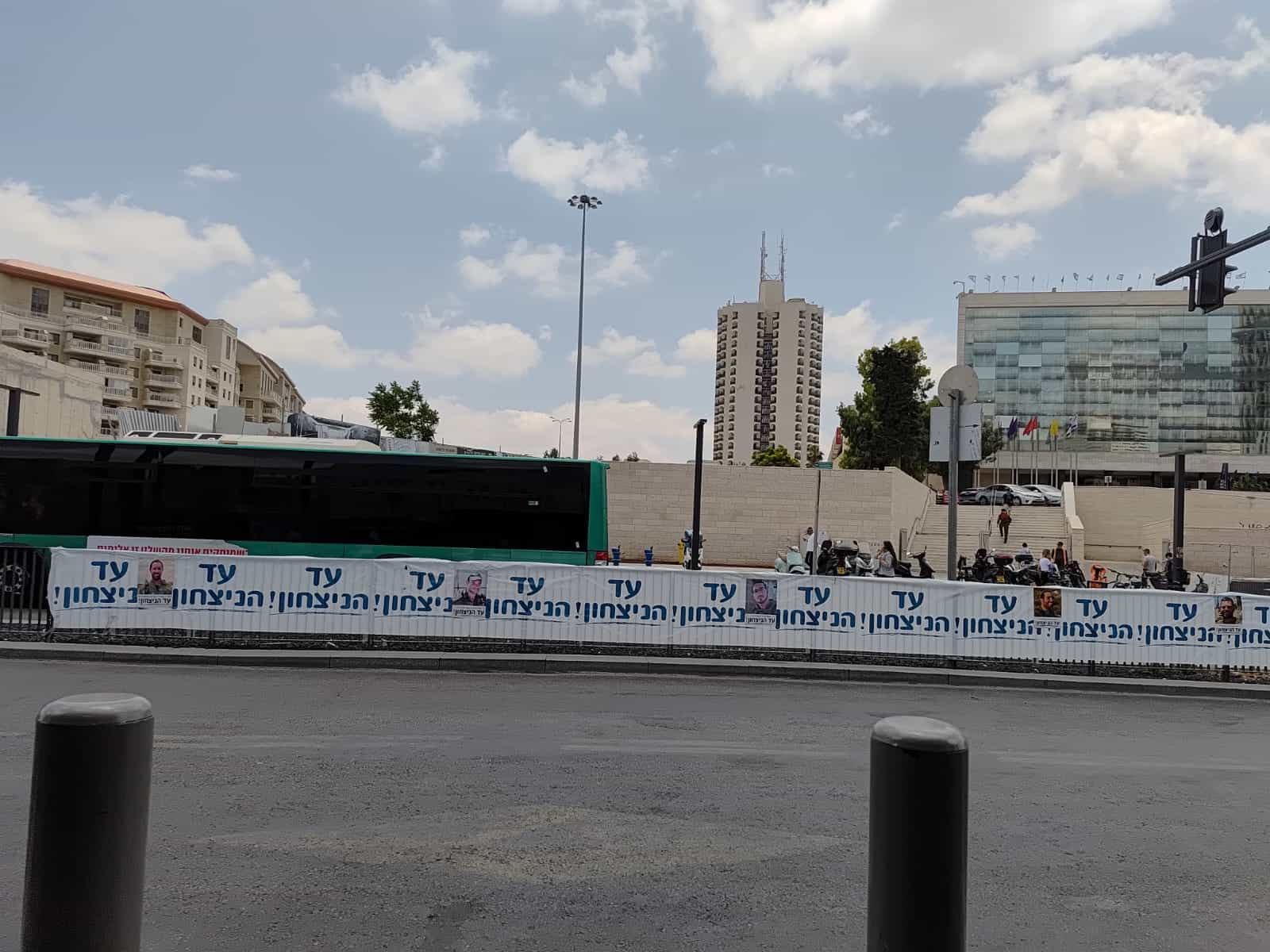
Across from Jerusalem’s Central Station, on a busy pedestrian route toward Binyanei HaUma, a row of soldier portraits appeared this week. These aren’t formal plaques or bronze memorials. These are photographs – laminated, identical in format, and posted one after another like a visual liturgy. Each image is of a soldier killed in the current Iron Swords War. Each one bears the same line: Until victory.
This isn’t an official site of remembrance. It’s a living sidewalk. People pass on the way to the light rail, to hotels, to their daily lives. But death now lives here too – framed, repeating, and stretching onward with every new casualty. This isn’t about closure. This is about a presence that refuses to fade.
Nationalism Above Life?
The decision to exhibit the dead this way reflects a deeper value system – one that has been reshaping Israeli identity, particularly within the religious Zionist movement. In this worldview, the state is not merely a shelter for Jews but a sacred vessel whose preservation may require the ultimate price. Here, the collective overrides the individual. Death is not defeat – it is sacrifice
That view now confronts a Western cultural shift: the prioritization of personal fulfillment, bodily integrity, and emotional well-being over national duty. Most Western societies no longer glorify dying for the homeland. But in Jerusalem, death is not only honored – it is made visible, made present, and normalized.
This Is Only the Beginning
What’s most striking about the strip of portraits isn’t its length – it’s the fact that it’s designed to grow. More names will come. More faces will be added. The sidewalk is open-ended
When public grief turns into visual repetition, a society must ask: what is it choosing to see? And what is it choosing to ignore