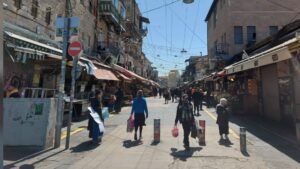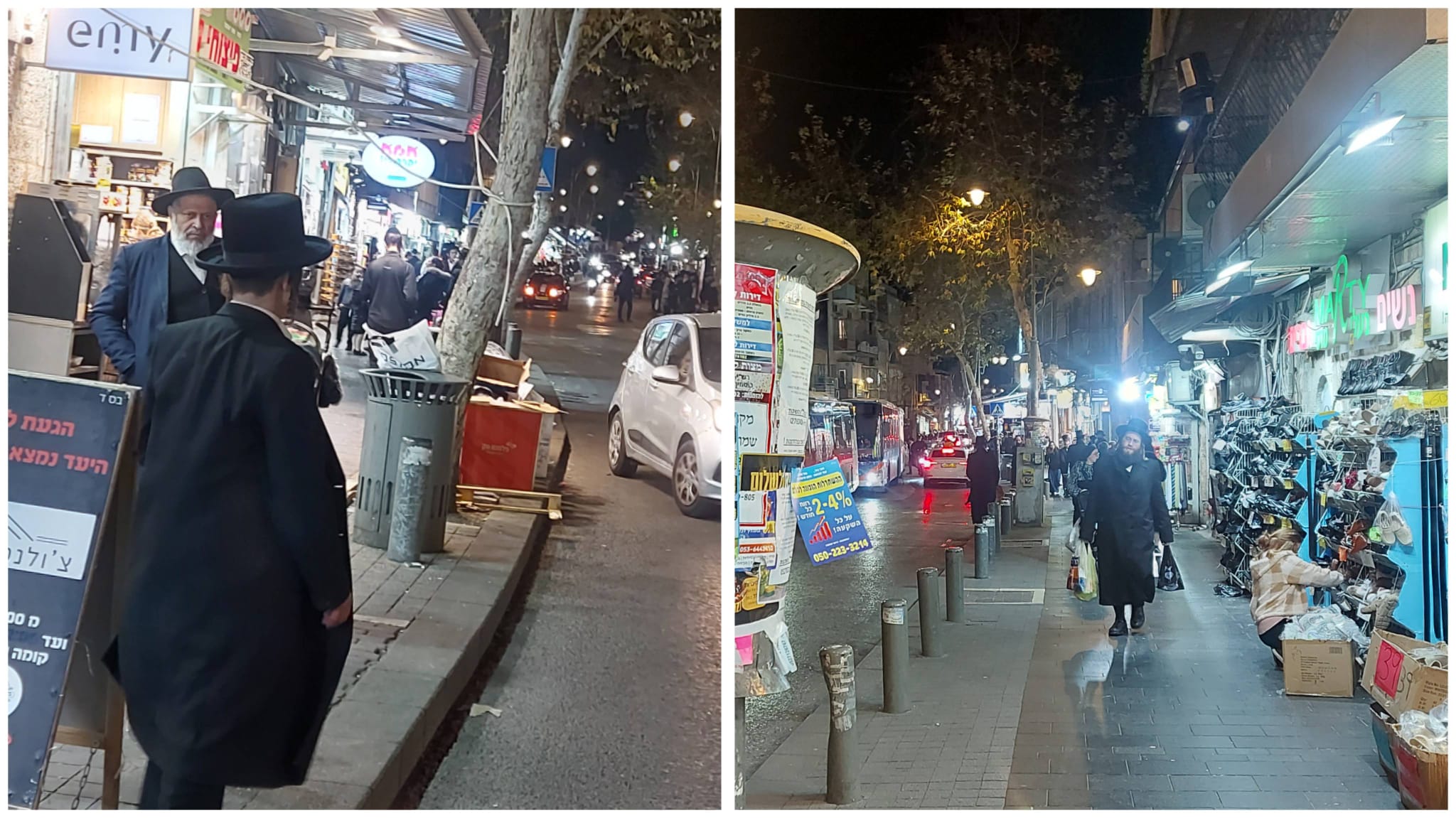
Between the narrow lanes of the Geula neighborhood and the balconies of Mekor Baruch, Jerusalem is moving these days from the carnival of the Purim holiday to the quiet and meticulous operation of cleaning homes and preparing them for the Seder night of Passover.
On Rashbam Street in the city center, remnants of costumes, wrappers and ribbons that decorated Purim gift baskets until recently lie scattered as trash. What was purchased not long ago and chosen as a crown or scepter has now lost its purpose. At the nearby Bar-Giora Street corner, packages of traditional Jerusalem “shmura matzah” are being unloaded at the entrance to a local supermarket. The noisemakers, the gift baskets and the laughter of costumed children were swallowed by the wailing of sirens during Operation “Roaring Lion”, and Jerusalem has shifted phase along with reality. Purim has now faded, and Passover is making its way in.
How do the days between Purim and Passover look in Jerusalem’s ultra-Orthodox neighborhoods?
The days between Purim and Passover are a short period on the calendar, yet in Jerusalem’s ultra-Orthodox streets they feel like a full season of their own. If Purim represents a colorful moment of release, what follows almost immediately is an opposite process: a transition from spontaneity to precise and careful order. Costumes are packed away into boxes and storage rooms, replaced by long shopping lists filled with cleaning supplies and decisions about organizing the home and preparing it for Passover.
Stores begin offering holiday clothing, bedding and new kitchen and tableware for the festive meal. Aluminum foil, cleaning cloths of every kind, brushes and paint rollers for whitewashing walls become the most sought-after items. This is the time when the “pursuit of chametz” is conducted not only through the bread box, but also through the walls of the home, the pockets of winter coats and the children’s school bags. It is not merely a religious rule but a form of labor felt in every home, sidewalk and stairwell.
These weeks unfold as a gradual and methodical process. Carpets are taken out to balconies for airing, curtains go into the washing machine and large cooking pots wait to be koshered. As the Seder night approaches, eating chametz is also pushed outside the home – to the pizza shop in the Geula neighborhood, the burekas bakery or the falafel stand in Mahane Yehuda Market. All of it serves a single purpose: keeping the kitchen free of the most basic food of human life, the bread made from wheat or barley.
Why are Passover preparations in Jerusalem a full family project?
This race toward the holiday reveals something deeper about Jewish life in general and ultra-Orthodox culture in Jerusalem in particular. Preparing for Passover is not merely a household chore but a family project. Children help clean toys and bedrooms, while parents carefully inspect the suitability of every item of food or object entering the home. Even the electrical appliance market awakens during this season: kettles, toasters and mixers are sometimes replaced precisely now as part of preparing a kosher-for-Passover kitchen.
Thus, without any formal announcement, Jerusalem moves from the carnival of Purim to a season of preparation. Anyone walking these days along Malchei Yisrael Street, Yirmiyahu Street, Shamgar Street and nearby areas can witness the exact moments when one season replaces another – a season of new shoes, nuts in pockets, new clothing and the smell of fresh cleaning and whitewashed homes.
Passover does not begin on the night of the Seder. It begins much earlier – when the last costume is put away for the following year and when the deeper idea takes hold: that the true chametz to remove is not only from the home, but also from the heart – the small fragments of character that obstruct our goals and our sense of family, community and humanity.