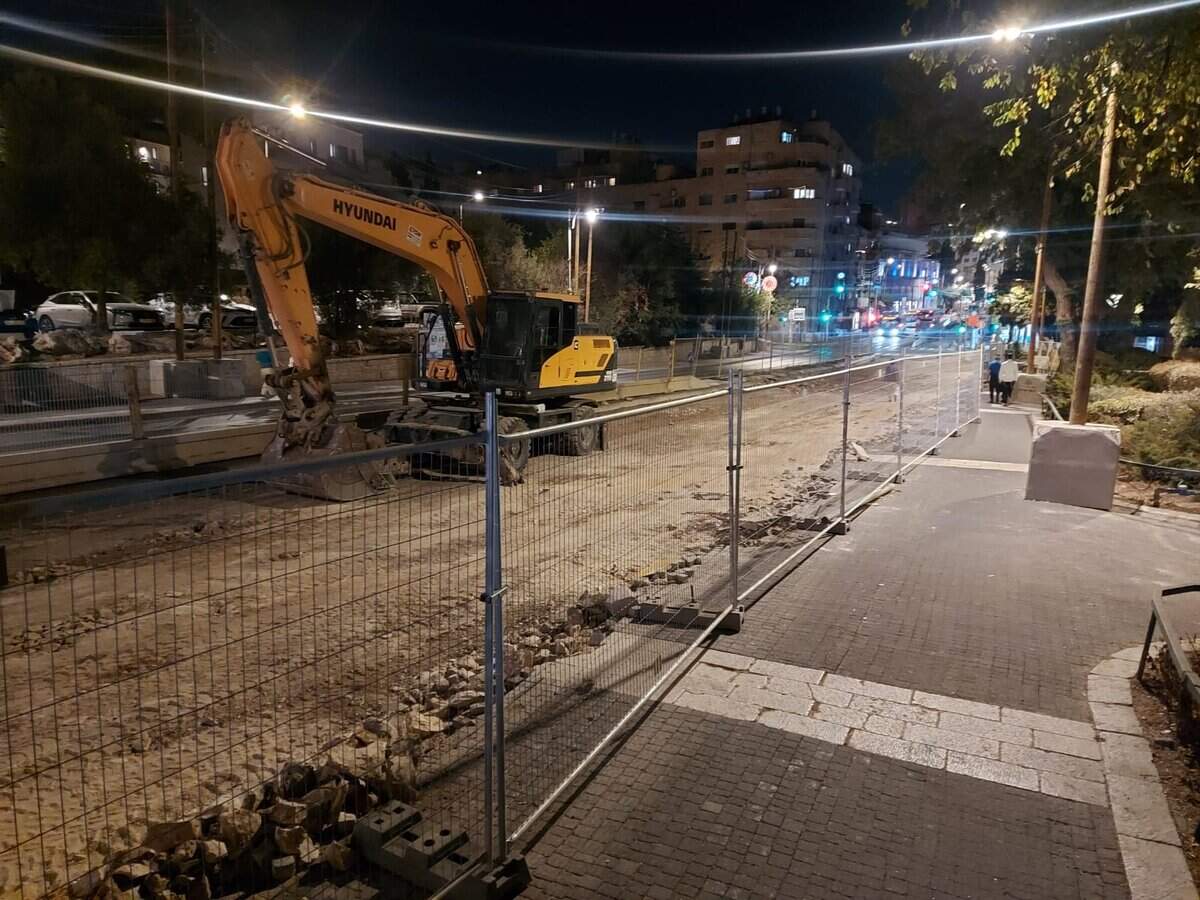
The light rail works once again dominate the beating heart of Jerusalem: after Jaffa Street, now King George – a street inaugurated in the days of the British Mandate, named after the King of England at the time.
Since Monday, heavy dust clouds have replaced the aroma of coffee at “Liba”, the Horse Garden has turned into a storage yard for massive equipment, and a street carrying the name of a king has lost all royal dignity.
On a Jerusalem morning, instead of the smell of coffee from the café on Shatz Street, thick dust spreads across the area. The noise of machinery replaces the voices of young people and retirees who once spent their mornings in the Horse Garden and near Simon Dweck’s record shop. Passersby now try to figure out which crossing feels less dangerous.
Light rail works shut down Jerusalem’s center
King George, once a lifeline of the city, is blocked for an extended period to lay new rail tracks. Jerusalemites who survived the nightmare of Jaffa Street understand this is a new chapter in a long story. Another upheaval is here – and perhaps past experience will help.
Fourteen weeks of work on Jaffa Street ended only recently. The city barely had time to enjoy the relative calm before adjusting to new hardships caused by the shutdown of King George, the Prophets, Strauss and Kiah. Drivers, pedestrians and shop owners again find themselves in a daily whirlpool of closures, traffic jams and detours. The mood is heavy: frustration, anger, and the recurring question – what is happening to this city?
King George disappears behind fences and closures
Electronics shops, restaurants and small food stands – including falafel and soup vendors – are likely to feel a sharp decline in daily income, with fewer customers and dust penetrating inside.
The Old Knesset Museum, Beit Avi Chai, Yeshurun Synagogue, Heichal Shlomo and the Jewish Agency – all are locked within barricades for the sake of the light rail extension. Even the Terra Sancta square will not be able to host demonstrations for the release of hostages, for peace, or for other national struggles. The City Garden and Simiko’s kiosk – run by a devoted Beitar Jerusalem fan – are also trapped behind fences. Maalot Street is silenced, and Be’eri Street, echoing the memory of Kibbutz Be’eri near Gaza, also feels under siege.
Small businesses suffer daily revenue loss
Traffic wardens in fluorescent vests try to replace traffic lights and protect bewildered pedestrians. Young volunteers in light-blue vests also make their presence felt, helping citizens navigate alternative bus routes and streets until the transport and urban upheaval ends. One wonders why Freud and his students weren’t drafted as well – to calm and balance the nerves of Jerusalemites breathing dust, stumbling into potholes, rushing to work or school, or simply losing patience with the endless drilling.
(Tradition and Safety: Jerusalem sets holiday rules)
Traffic jams and closures paralyze Jerusalem
Who, then, still reaches their destination on time?
Only those on motorbikes, bicycles and electric scooters.
And if King George V himself visited, he would likely ride a horse between bulldozers and cranes – perhaps even pleased with the modern innovations, with a certain pride.