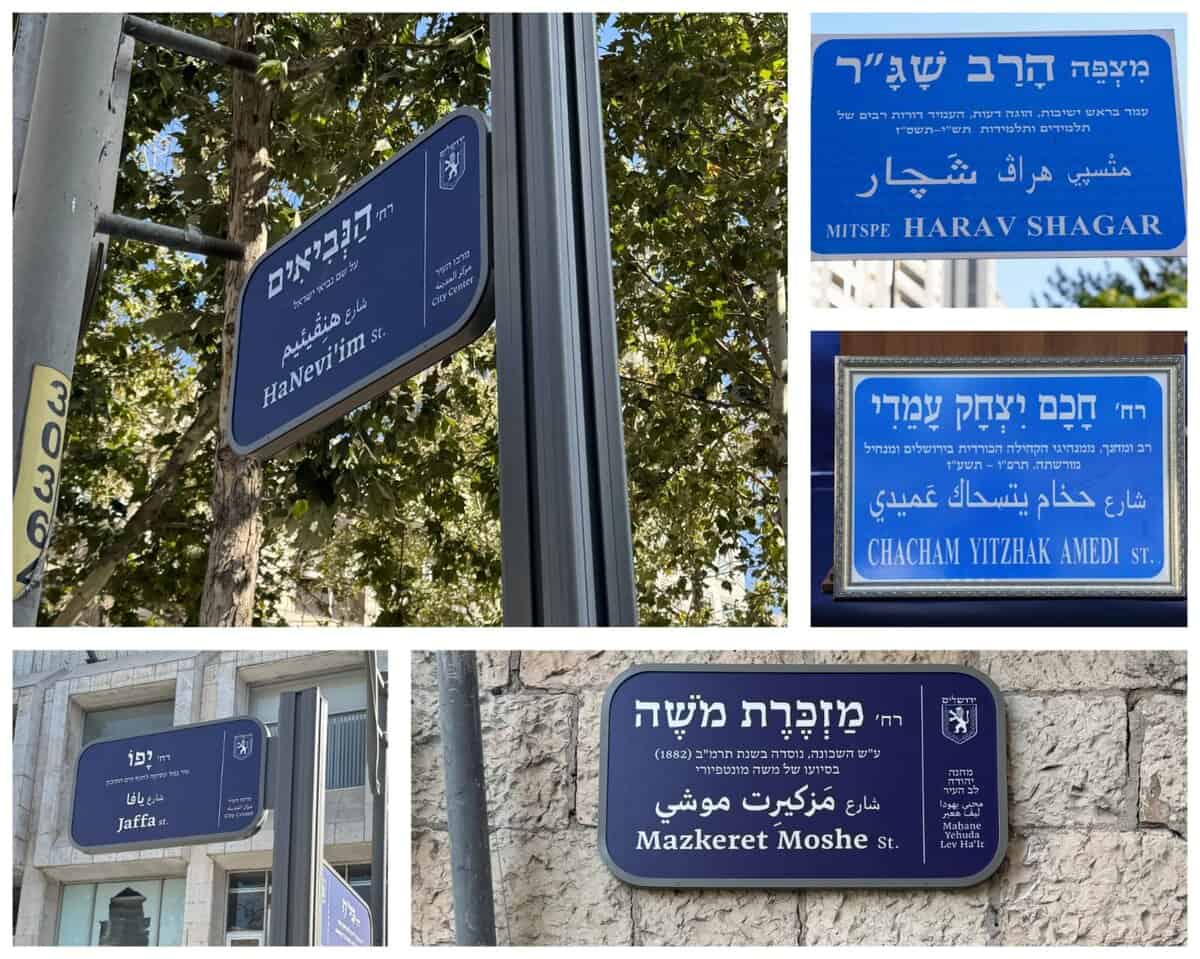
A striking change is unfolding in Jerusalem’s public space: the city is replacing its old street signs with a unified design in three languages – Hebrew, Arabic and English. The project not only upgrades the city’s appearance but also reflects its unique cultural identity. Already, streets like Jaffa Road, Nevi’im Street and the historic Nachlaot neighborhood are showcasing the new signs, blending function with symbolism
New street signs on Jaffa Road and Nevi’im Street
The first wave of installations has appeared along Jaffa Road and Nevi’im Street in the city center. The new blue signs feature clear lettering in three languages and corrected long-standing spelling mistakes. Residents say the update makes navigation easier while giving Jerusalem’s busiest streets a fresh, elegant look. This local change paves the way for broader upgrades across the city
Nachlaot and Mekor Baruch: a unified visual language
Beyond the main roads, neighborhoods such as Nachlaot and Mekor Baruch are seeing the transition to the new signage. By reducing unnecessary poles and integrating signs onto existing structures, the city frees up sidewalk space for pedestrians. The uniform design also gives older neighborhoods a sense of renewal, aligning them with Jerusalem’s wider urban identity. From here, the project spreads to additional districts
(High Holidays in Jerusalem: Tours, concerts and transport)
Kiryat HaLeom and Rehavia: urban transformation continues
In Kiryat HaLeom and Rehavia, the new signs were introduced as part of a citywide plan to reshape Jerusalem’s public face. Designed with input from architects and signage experts, the project emphasizes both functionality and symbolism. Mayor Moshe Lion described the initiative as bringing “elegance, unity and accessibility” to Israel’s capital. This broader perspective returns us to the heart of the story – Jerusalem presenting itself as a modern city that honors its layered identity