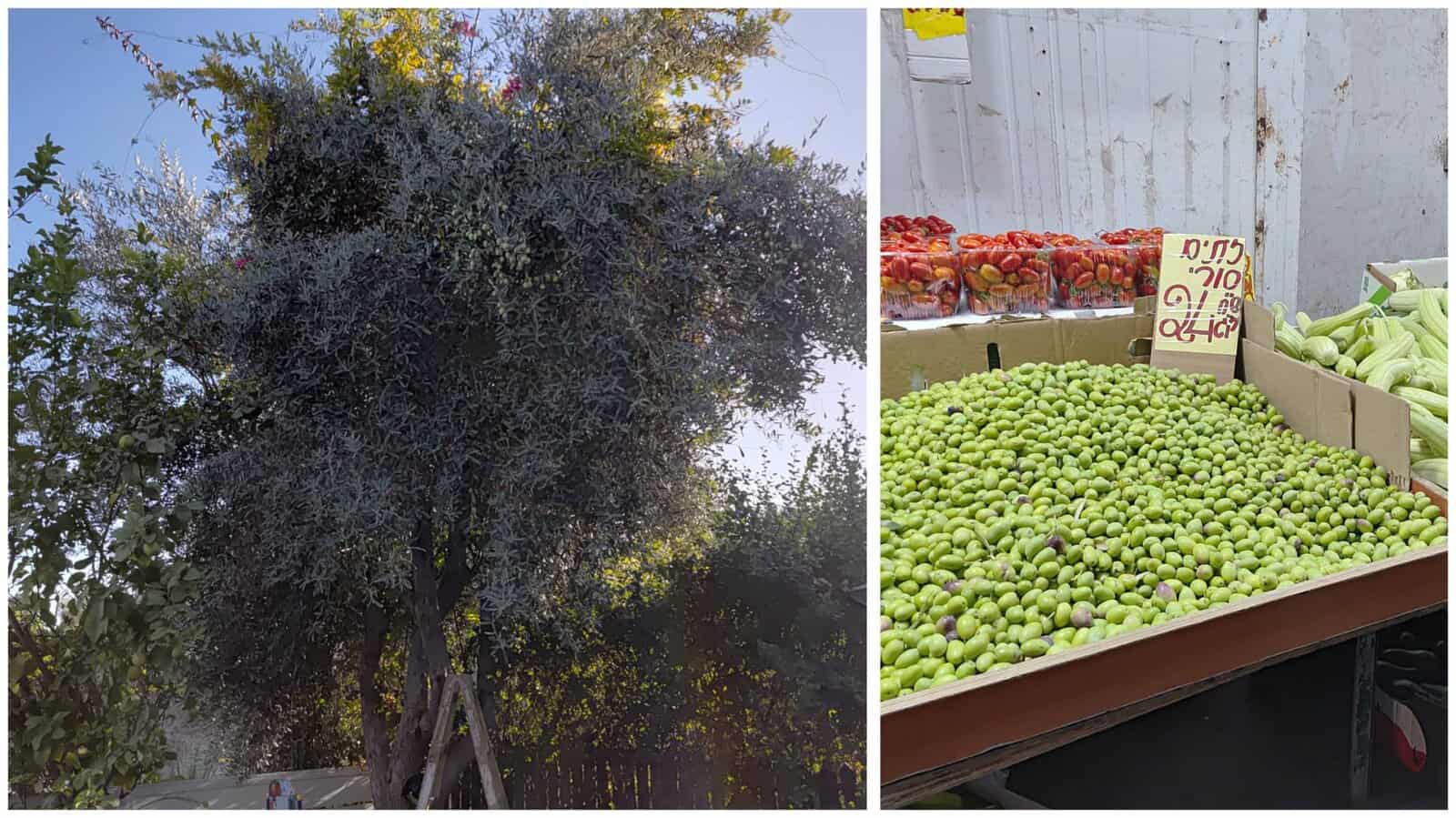
The olive tree I planted in my Jerusalem garden in 1995, the same year an Israeli prime minister was assassinated, has grown into a vast, fruit-laden tree. It reminds me each autumn that the olive harvest has arrived. A tree meant to symbolize peace still thrives in every corner of Jerusalem, together with the hope that peace itself may one day take root.
The Scent of Peace Returns to the City
This year, the olive harvest in Jerusalem arrives later than usual. After a long, unusually hot summer, the olive trees scattered across the ridges encircling the city, from Givat Shaul to Har Gilo, are slowly recovering from the scorching sun. In the parched soil, the fruits are smaller than usual, yet the oil they yield is dense, aromatic, and rich, a Jerusalem gift born of the land’s perseverance.
But in a city where almost every courtyard shelters an olive tree, the harvest is more than agriculture. It is a local ritual, a small ceremony of identity. Along the streets of Nachlaot, Geva, Be’er Sheva, Gezer and others, in the Greek Colony, Beit Hakerem, and the slopes of Armon Hanatziv, the olive remains a symbol of continuity. A green shade that has accompanied Jerusalem since biblical days.
Olive trees were planted in Jerusalem with its earliest neighborhoods, alongside pomegranate, willow, and citrus trees, a landscape woven together over generations. Each autumn, even if not everyone harvests olives, the tree stands as a symbol of endurance and peace. To look at it is to see the heart of historic Jerusalem, steadfast and brave.
Jerusalem’s Olive Oil Flows to Presses and Markets
Across the ridges around Jerusalem, from the fields near Bethlehem to the Judean hills, the olive harvest marks the season each year. Groves shift from deep green to silvery yellow, and in the olive presses of Abu Ghosh, Tzur Hadassah, and even Giv’on HaHadasha, the first drops of fresh oil are already flowing. At Mahane Yehuda Market, the city’s folkloric heart, the classic stalls open once more. Beside knafeh and roasted coffee, piles of green and black olives await the diligent, those who will buy a kilo or two, crack them, soak them, and season them with salt, bay leaves, and chili. Even as the market grows more touristic each year, a small corner of memory remains for the harvests of the past.
The Olive Tree of Jerusalem – A Symbol of Endurance and Hope
The olive harvest reminds people how everything is connected: climate, earth, and human life. Even in a city built of stone, the olive roots whisper that they are still here, waiting for the first rains to grow stronger. For Jerusalem, like its olive tree, knows how to wait. It knows that the finest oil, like peace or hope, can only emerge with time.
Meanwhile, Arab residents of the city spread mats under olive trees near Liberty Bell Garden, the Mount of Olives, the Valley of Hinnom, and along the Kidron stream and northern Ramot hills, striking the branches until a rain of olives and twigs falls to the ground. And on the tree, the dove remains.