There is an imaginary yet powerful line stretching between the stone alleys of Jerusalem and the bombarded streets of Kiryat Shmona, a town in northern Israel near the Lebanese border. It is a line forged in pain and resilience, redefining what a shared Israeli destiny means. While Jerusalem stands as the historical and spiritual heart of Israel, Kiryat Shmona serves as a human shield on the northern frontier, and the connection between them is no coincidence. Both cities have long known the price of holding onto the land and the meaning of living under constant threat. As Israeli singer Ofra Haza once sang, “One destiny placed us here in this land.” Today, those words carry a chilling weight, as Jerusalem and Kiryat Shmona are bound together not only by hardship, but by an inner strength that refuses to break even as conflict continues.
What does daily life in Jerusalem look like compared to northern Israel?
The current Israeli reality creates a painful paradox: an entire country tries to breathe with reports of a ceasefire, while for residents of the northern region, especially in Kiryat Shmona, nothing has truly changed.
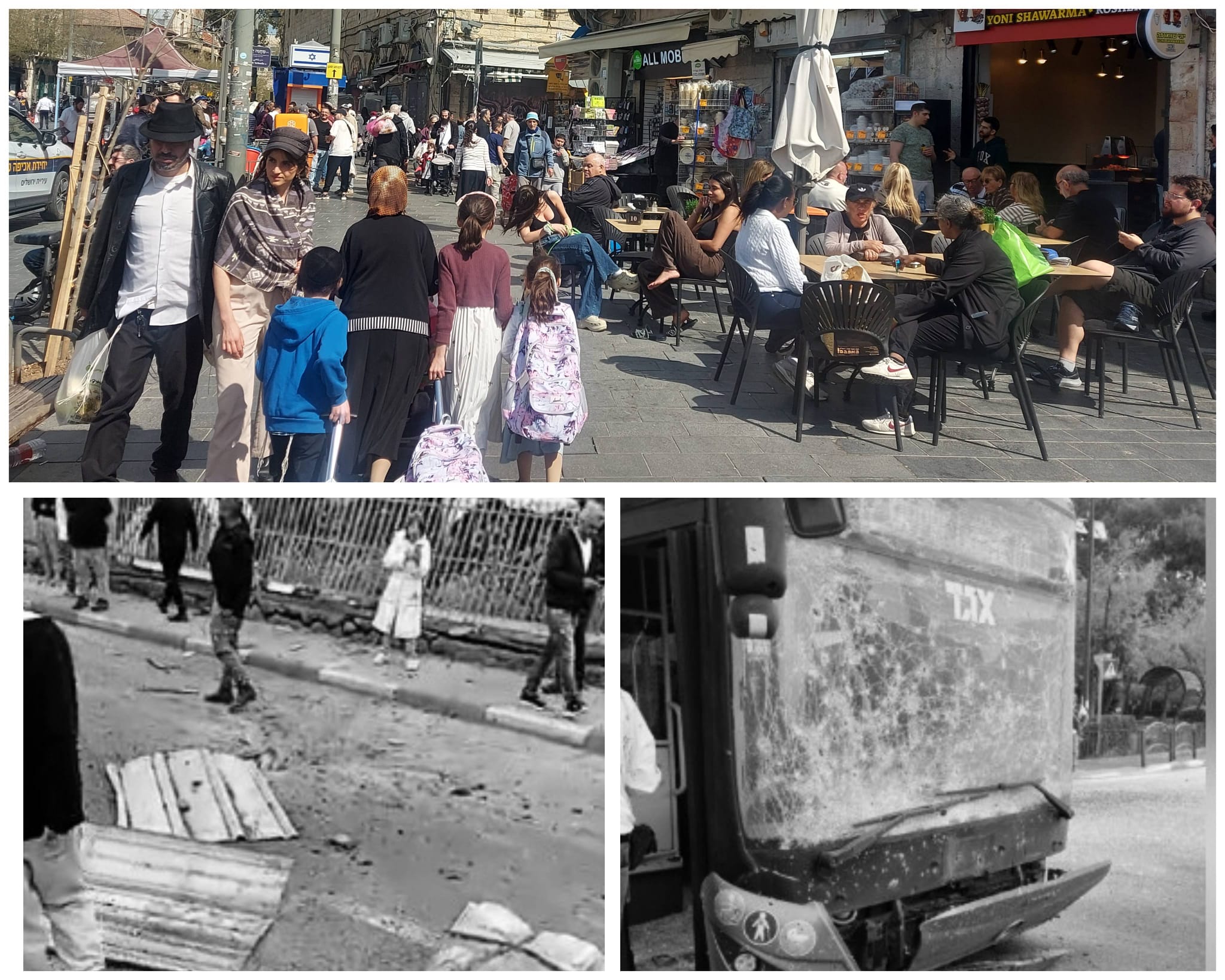
While cafés in Jerusalem are filling up again and the Machane Yehuda market is bustling, in Kiryat Shmona the security threat remains very real, and the sound of explosions continues to define daily life. Residents find themselves in an ongoing battle where political agreements feel distant from reality, and the sense is one of abandonment on a restless front line. It is a complex moment in which an entire city is required to continue demonstrating extraordinary resilience, while the world around it attempts to move on and look away from the flames still reaching the edges of the Galilee. For them, the war is not yesterday’s headline, but the tangible reality of every passing moment.
How does Jerusalem’s past shape its response to the north?
But Jerusalem’s memory does not fade, and it shapes the city’s response to the distress in the north. Jerusalem remembers well the periods when its own streets were on the front line, when routine life was repeatedly disrupted by violent events while other parts of Israel remained relatively calm. During those times, the security situation seeped into the social and educational fabric of the city, forcing people to find new emotional strength while the outside world carried on as usual. Schools had to cope with children’s anxiety and the strain on teachers, and communities were compelled to reinvent themselves in order to maintain continuity within chaos.
That experience taught Jerusalem how to build community support systems that do not collapse under pressure. Above all stands one fact: residents of both Jerusalem and Kiryat Shmona do not abandon their homes. This is a form of national resilience rooted in deep loyalty, even under heavy fire.
What connects Beitar Jerusalem fans to the north?
This emotional connection is also expressed through the strong support many residents of Kiryat Shmona have for Beitar Jerusalem, a football club that serves as a cultural bridge and a symbol of pride and resilience. The menorah featured in the club’s emblem unites fans from the north with those from the capital, reminding them that they are part of one extended family that refuses to surrender to fear.
It is a bond of courage, built on the understanding that strength lies in unity, and that as long as Jerusalem’s heart beats for Kiryat Shmona, no threat will break the spirit that continues to grow out of hardship and ongoing conflict.