“Palm Sunday” is a Christian observance held on the Sunday before Easter, marking the beginning of Holy Week, which culminates in Holy Saturday and Easter Sunday. The day commemorates Jesus’ ceremonial entry into Jerusalem, riding a donkey just days before his crucifixion. According to tradition, crowds welcomed him with joy, laying garments on the road and waving palm branches while shouting “Hosanna.” The palm branches symbolize victory and peace.
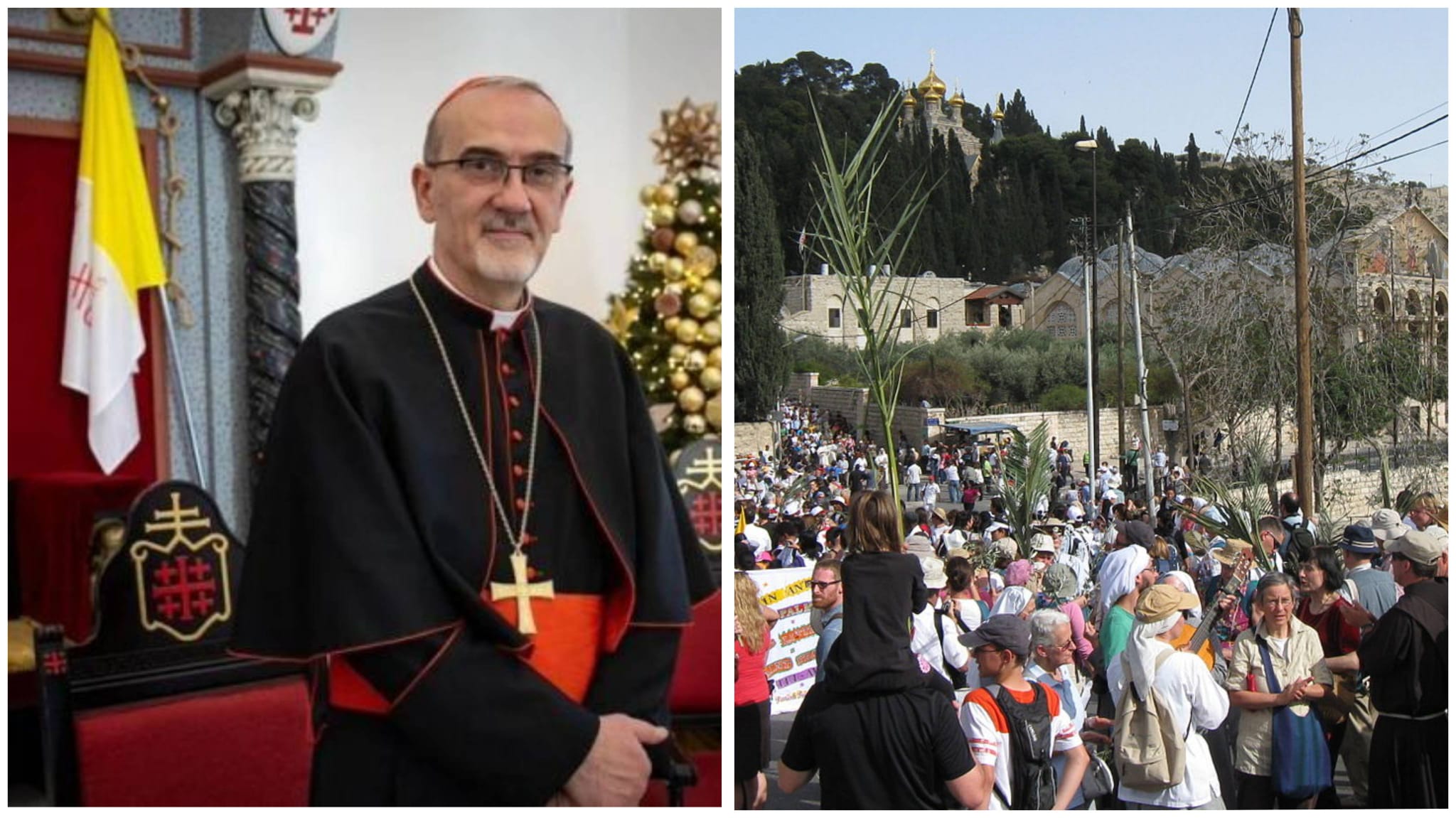
Jerusalem is the global focal point of Palm Sunday celebrations, and in ordinary years the city is filled with color and movement. The central event is a large procession reenacting Jesus’ path into the city. Thousands of believers and pilgrims from around the world walk from the Church of Bethphage on the Mount of Olives, descend toward the Kidron Valley and enter the Old City through Lions’ Gate, continuing to St. Anne’s Church. Participants carry palm fronds and olive branches, sing hymns and wave flags.
In the morning, a festive mass is held at the Church of the Holy Sepulchre, including the blessing of palm branches and their distribution to worshippers. Pilgrims often weave the branches into artistic crosses and religious symbols, decorating their homes and churches. For local Christians in Jerusalem, it is also a family and community celebration, accompanied by marching scout bands playing flutes and drums through the Old City streets.
Why was the Palm Sunday procession in Jerusalem canceled in 2026?
This year the date fell on Sunday, March 29, 2026. Due to a nationwide state of emergency and a ban on mass gatherings, the Latin Patriarchate, responsible for marking the day, canceled on its own initiative the large procession from the Mount of Olives to the Old City. It believed, however, that a modest, limited-attendance mass could still be held at the Church of the Holy Sepulchre.
Israel Police took a different view, preventing the Latin Patriarch of Jerusalem, Cardinal Pierbattista Pizzaballa, from entering the church to celebrate the Palm Sunday mass, even as he was already on his way there. In an unusually sharp official statement, the Latin Patriarchate said this was an unprecedented event in which church leaders were barred from holding the central ritual on this holy day for the first time in centuries.
Is this a violation of freedom of worship in Jerusalem during wartime?
The incident took place against a backdrop of heightened security tensions and strict restrictions imposed by authorities on gatherings in the Old City. The Patriarchate stressed that the cardinal attempted to reach the church privately, without any procession or ceremonial elements, and noted that the churches have complied with all restrictions since the outbreak of the war.
The cancellation of both the mass and the traditional procession from the Mount of Olives followed the closure of holy sites in the Old City for all religions on security grounds, a move that drew sharp criticism from religious leaders who see it as an infringement on freedom of worship. Muslims, for example, were largely prevented from accessing Al-Aqsa Mosque throughout much of Ramadan and the Eid al-Fitr period that followed, which many viewed as a cynical use of the situation to impose Jewish dominance on the Temple Mount and push them away from the mosque.