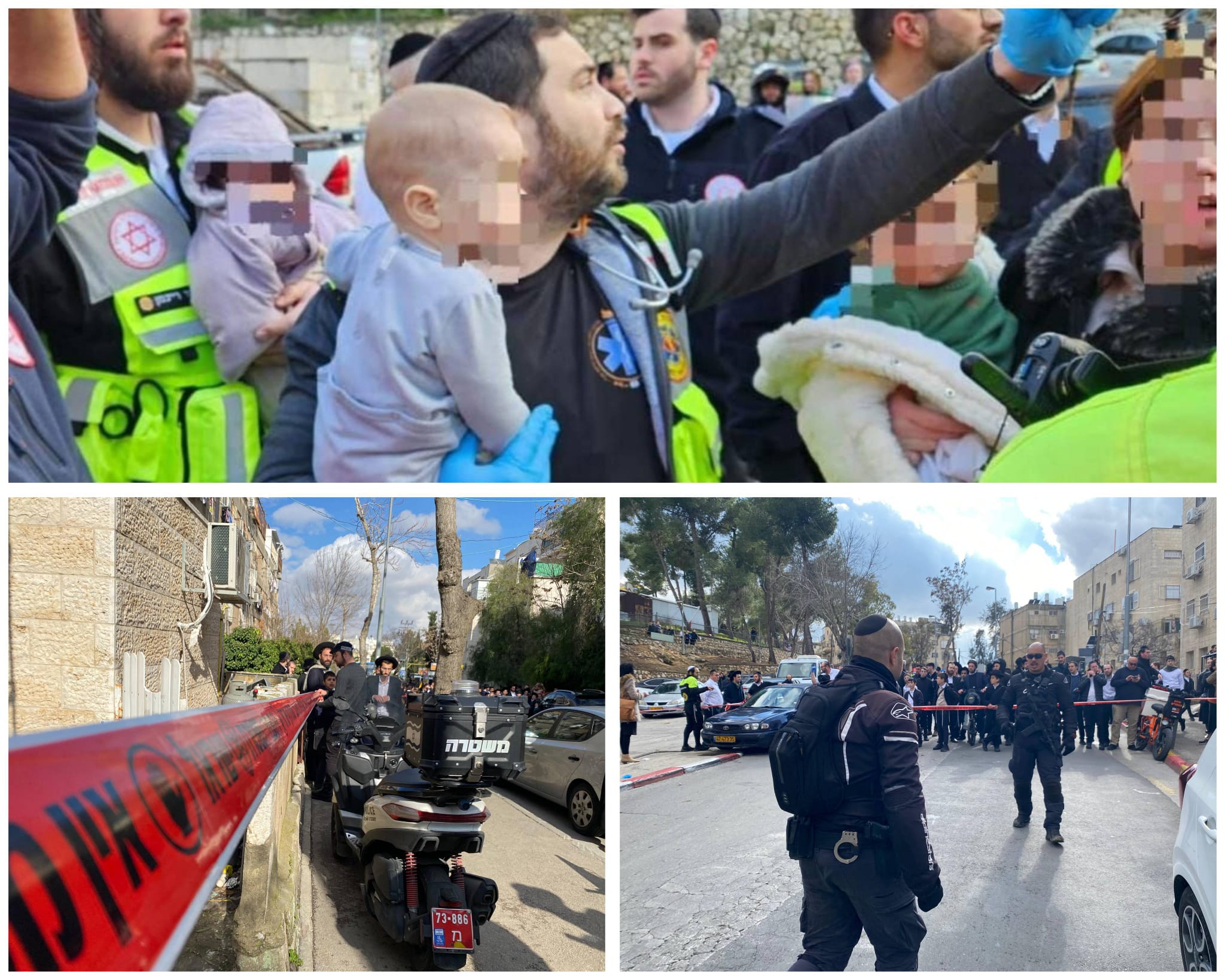
On Monday morning, two four-month-old infants were found dead at a private daycare in Jerusalem’s Romema neighborhood. According to investigators, the babies likely inhaled toxic fumes released from a heating system that had been operated carelessly inside a closed space. More than fifty toddlers were evacuated to hospitals after being exposed, allegedly, to poisonous substances emitted by improvised heating devices. Within minutes, a quiet apartment turned into an emergency scene. Rescue teams filled the street, and frantic parents searched for their children.
Police opened an investigation, medical teams are trying to determine the precise cause of the poisoning, and authorities are examining how a daycare allegedly operating without a license was able to function in the heart of a densely populated ultra-Orthodox neighborhood. Beyond the technical questions about heaters and ventilation, the tragedy in Romema raises a deeper issue – who allowed such a framework to operate, and who chose to send newborn infants there.
How does an unlicensed daycare operate in an ultra-Orthodox neighborhood?
Romema is not a marginal area. It is a long-established, organized and crowded ultra-Orthodox neighborhood with numerous educational institutions and a tightly knit community network. And yet, in its very center, a daycare allegedly operated without a license, without supervision and without minimal safety conditions.
In closed communities, this phenomenon is well known. A shortage of approved childcare facilities, deep mistrust of state authorities and a desire to maintain internal control create fertile ground for frameworks that operate under the radar. A recommendation from a neighbor replaces an official permit, and personal familiarity replaces professional inspection.
Enforcement mechanisms often struggle to penetrate closed neighborhoods. Inspectors are not always welcomed and sometimes fail to enter at all. The result is a parallel childcare system for infants, with no registration, no monitoring and no clear accountability. Only when disaster strikes does it become clear that there is no address, no documentation and no one clearly responsible.
Who is responsible when parents send children to an unlicensed daycare?
Beyond the licensing issue, the question of negligence now takes center stage. Operating improvised heating devices in a closed space where infants are present, without proper ventilation and without professional supervision, raises serious suspicion of a grave safety failure.
It is easy to point a finger at the caregiver or the daycare operators. But the role of the parents cannot be ignored. Anyone who hands over a months-old baby to a framework allegedly operating without a license, without approval and without supervision, is taking a conscious risk.
In communities where everyone knows everyone, personal trust often outweighs basic safety rules. A license is seen as a bureaucratic detail, not as the line separating a supervised facility from an uncontrolled one. The .tragedy in Romema shows how dangerous that perception can be