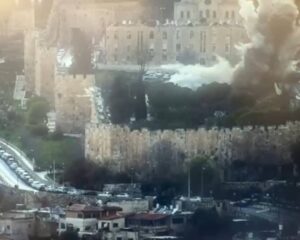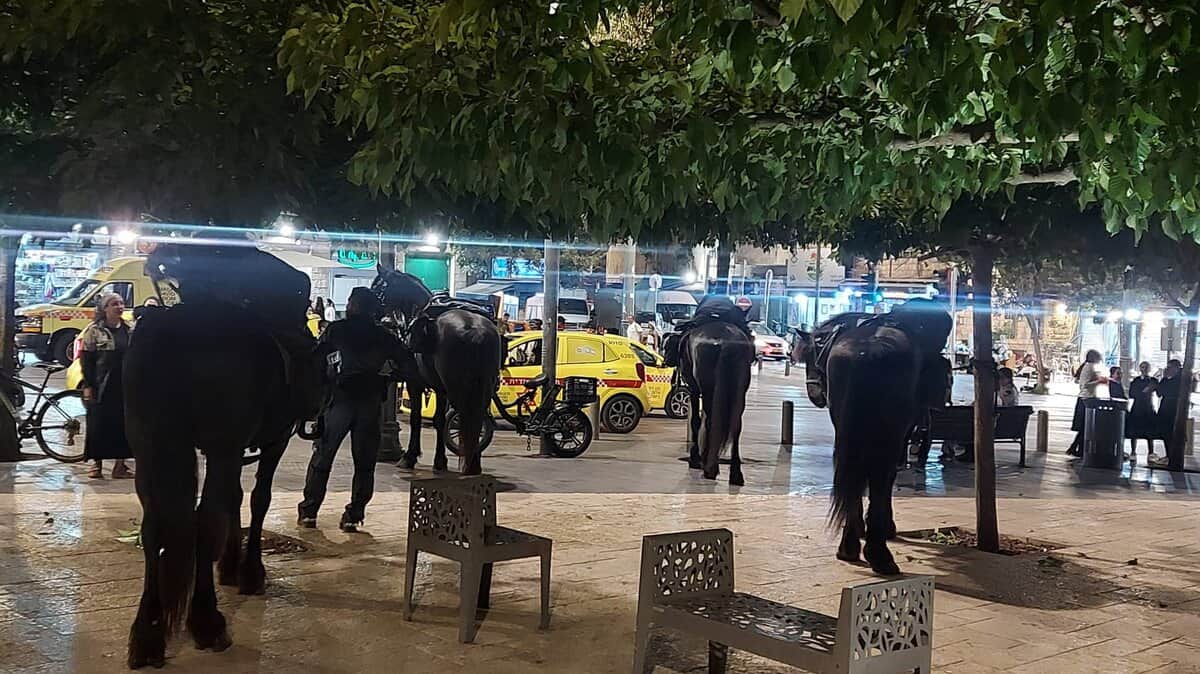
On Jaffa Street, near the bustling Mahane Yehuda market, police horses suddenly appeared – an unusual sight that quickly became a powerful symbol of a tense city. Public anxiety, heightened security measures, and a collective sense of trauma have converged, turning Jerusalem into a space of constant unease. The deadly attack at Ramot Junction is no longer just a singular event but part of a recurring reality of urban fear
Heightened security across Jerusalem
Amid this atmosphere, police announced on Wednesday evening that large forces, including Border Police, were deployed across the city and at the checkpoints around it, following reports of a person in distress in a passing vehicle. Although the searches revealed no concrete findings, the activation of multiple security units underscored the city’s maximum alert. The image of mounted police patrolling central Jerusalem illustrates a state of extraordinary readiness and a public space under strain
Arrest of suspected accomplice
In the aftermath of the attack, a resident of East Jerusalem was arrested on suspicion of helping the gunmen reach the scene. Police and the Shin Bet stressed that assisting terrorists is equivalent to carrying out the attack itself, declaring that anyone who enables terror will bear full responsibility. In the attack, six people were killed and dozens injured – and since then, Jerusalem’s sense of trauma has only deepened
(Behind the Jerusalem attack – haunting questions)
Collective trauma in Jerusalem
This leads directly to the psychological dimension of the crisis. Residents describe a daily fear of using public transportation and a constant sense of insecurity in city streets. Jerusalem functions as a city living with post-trauma: each attack does not end at the scene but seeps into daily life, reinforcing a collective state of anxiety
Cities worldwide under urban terror
Comparisons with other cities worldwide highlight the global nature of this phenomenon. In London, after the 2005 train and bus bombings, fear in public transport lingered for months; in Madrid, following the 2004 train attacks, the city carried a collective memory that reshaped its civic atmosphere. Jerusalem today echoes these examples: wherever terror penetrates urban centers, the result is an enduring condition of collective trauma