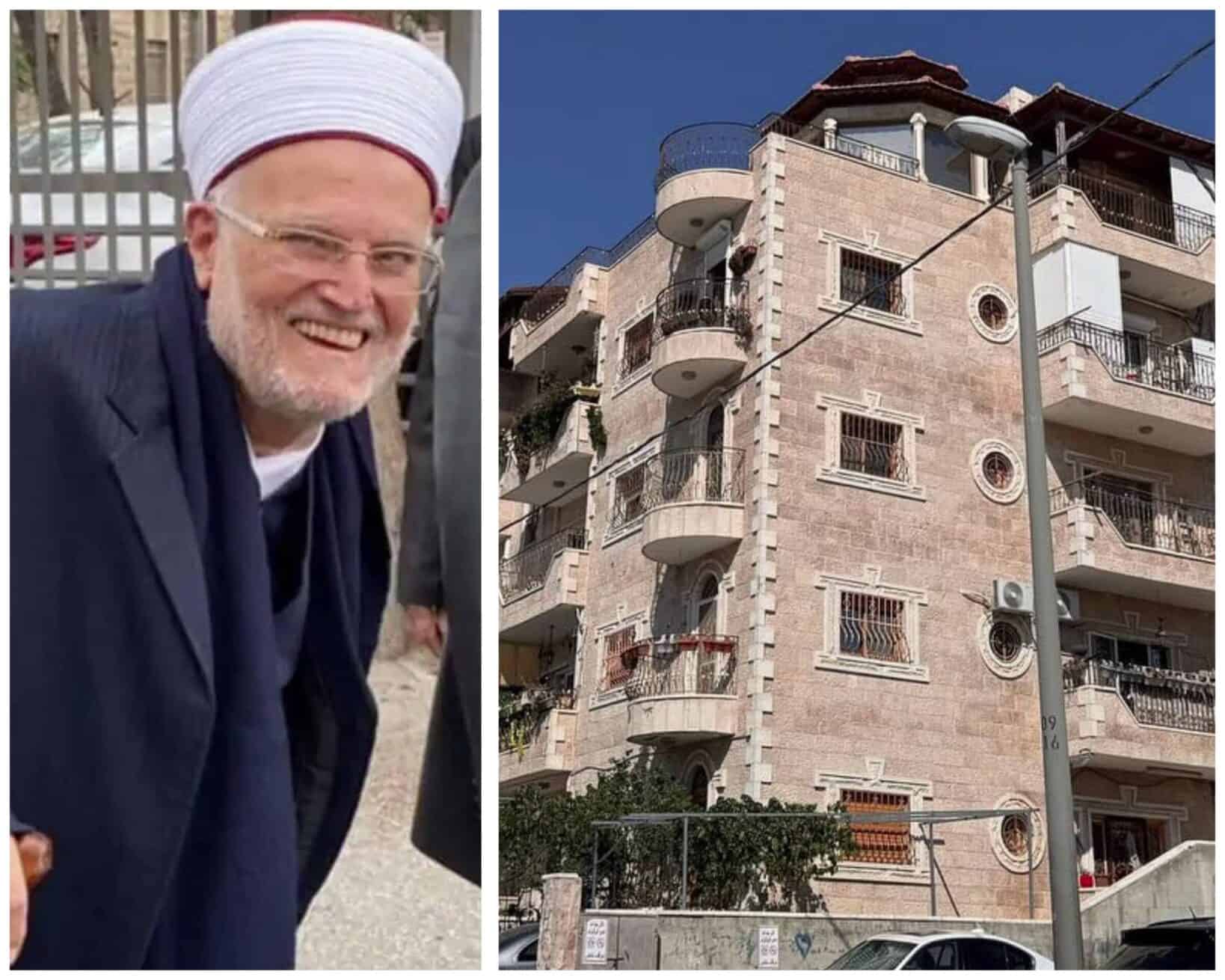
Recently, Israel’s Land Enforcement Authority notified residents of an apartment building in A-Tur, East Jerusalem, of its impending demolition. The building, constructed decades ago without a permit, houses 17 families totaling 140 people
One of the residents is none other than Sheikh Ikrima Sabri, currently head of the Supreme Islamic Council. Sabri previously served as Grand Mufti of Jerusalem and is widely known as one of the leading Palestinian voices in the campaign against the “Judaization” of Jerusalem and the Al-Aqsa Mosque
Sabri has also vocally opposed the sale of properties to Jews in Jerusalem, issuing a fatwa stating that anyone who sells land to Jews should not be buried in a Muslim cemetery. He has further ruled against sending Palestinian children to municipal schools that follow the Israeli curriculum for the Arab sector
(Palestinian Worker Dies Near Jerusalem Amid Alarming Pattern)
Enforcement Authority – Under Minister Ben Gvir
The demolition notice was issued by the Land Enforcement Authority, operating under Israel’s Ministry of National Security led by Minister Itamar Ben Gvir. This authority is the government’s main body for combating illegal construction
The building stands in Sawwana, a neighborhood of A-Tur on the western slopes of the Mount of Olives. The home of Sheikh Ikrima Sa’id Abdallah Sabri and his family has been the subject of prolonged legal and political disputes over its status as “unauthorized construction
The house was built by the Sabri family without a building permit, in violation of Israeli planning and construction laws applied to East Jerusalem. Though the exact year of construction is unclear, most reports suggest it began in the early 1990s
(From Mount Herzl, a National Storm Begins)
The first demolition order was issued back in 1993, based on the claim that the building lacked valid permits and violated planning regulations
Since then, the Sabri family has filed multiple appeals through their lawyers in Israeli courts, attempting to cancel or delay the demolition
They argue that it is nearly impossible for Palestinians to obtain building permits in East Jerusalem due to Israeli planning policies, including a lack of approved zoning plans, limited land allocation, and high permit costs. According to them, this amounts to discrimination and an attempt to curb Palestinian demographic growth in the city
Israeli authorities argue that the construction was illegal and approving it would set a dangerous precedent, undermining the rule of law and urban planning. They emphasize that planning laws apply equally to all Jerusalem residents
The legal proceedings have reached district courts and even Israel’s High Court of Justice. Over the years, courts have issued varied rulings — from temporary injunctions to outright rejections and deadline extensions for potential permit applications
Religion, Security, and Global Diplomacy Collide
Legal obstacles aren’t the only reason enforcement has been delayed. Sheikh Sabri is a major religious and political figure in Palestinian and Arab circles. He is still a prominent preacher at Al-Aqsa Mosque, and demolishing his home could be seen as a highly provocative act
Such a move could trigger mass protests and international condemnation. Israeli governments have historically avoided enforcement in highly sensitive cases to prevent escalation
(Jerusalem’s Chain Street: Old Decree, New Tensions)
Jerusalem – particularly its eastern neighborhoods – remains a flashpoint of religious and political tension. Demolishing the home of a high-profile cleric could destabilize the area
Finally, Israel faces potential international backlash. House demolitions in East Jerusalem often draw criticism from global powers and human rights groups. Given Sabri’s status, this case could invite significant international scrutiny
Will the demolition finally happen, after decades of legal delays and political hesitation