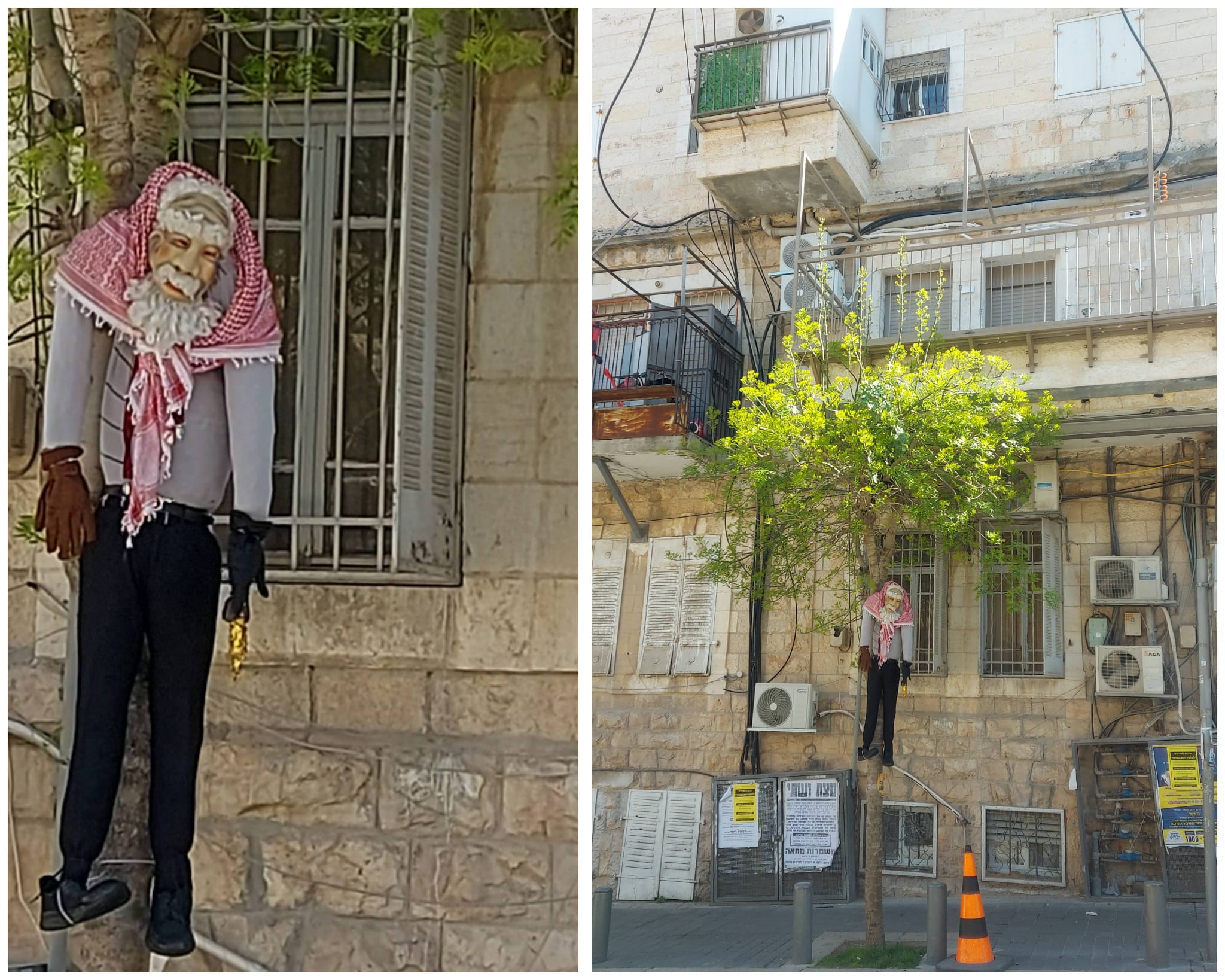
Purim, the Jewish holiday that commemorates the biblical Book of Esther and the rescue of the Jews of ancient Persia from a planned massacre, is marked by public readings, costumes and symbolic acts. In Jerusalem’s ultra-Orthodox neighborhood of Mekor Baruch, the story took on a striking visual form this year. An effigy representing Haman, the royal adviser who plotted to annihilate the Jews and was ultimately hanged on the gallows he had prepared for Mordechai, was suspended from a tree along a residential street.
This time, however, the figure was draped in a Palestinian keffiyeh, a contemporary reference set against the backdrop of the war with Iran and Operation “Roaring Lion,” as sirens intermittently sound across Jerusalem.
How did the custom of hanging Haman effigies develop in Jerusalem?
The practice of symbolically hanging an effigy of Haman stems directly from the biblical account of his downfall in the Book of Esther. Over generations, Jewish communities in Europe and the Middle East incorporated theatrical and visual elements into Purim observance, turning the dramatic reversal described in the scroll into lived ritual.
In Jerusalem, particularly in ultra-Orthodox neighborhoods, hanging a doll or figure from a tree or balcony became a localized expression of that tradition. At times, these effigies incorporate contemporary symbols, reflecting current political or security realities and linking the ancient narrative of Esther to the present-day life of the city.