“Kol b’Ramah is heard…” – thousands of worshippers ascend during September to Rachel’s Tomb near Jerusalem. The site has become a house of national supplication, where candles and tears blend, and the season of penitence places Rachel’s Tomb at the heart of collective devotion
Women’s prayers at Rachel’s Tomb
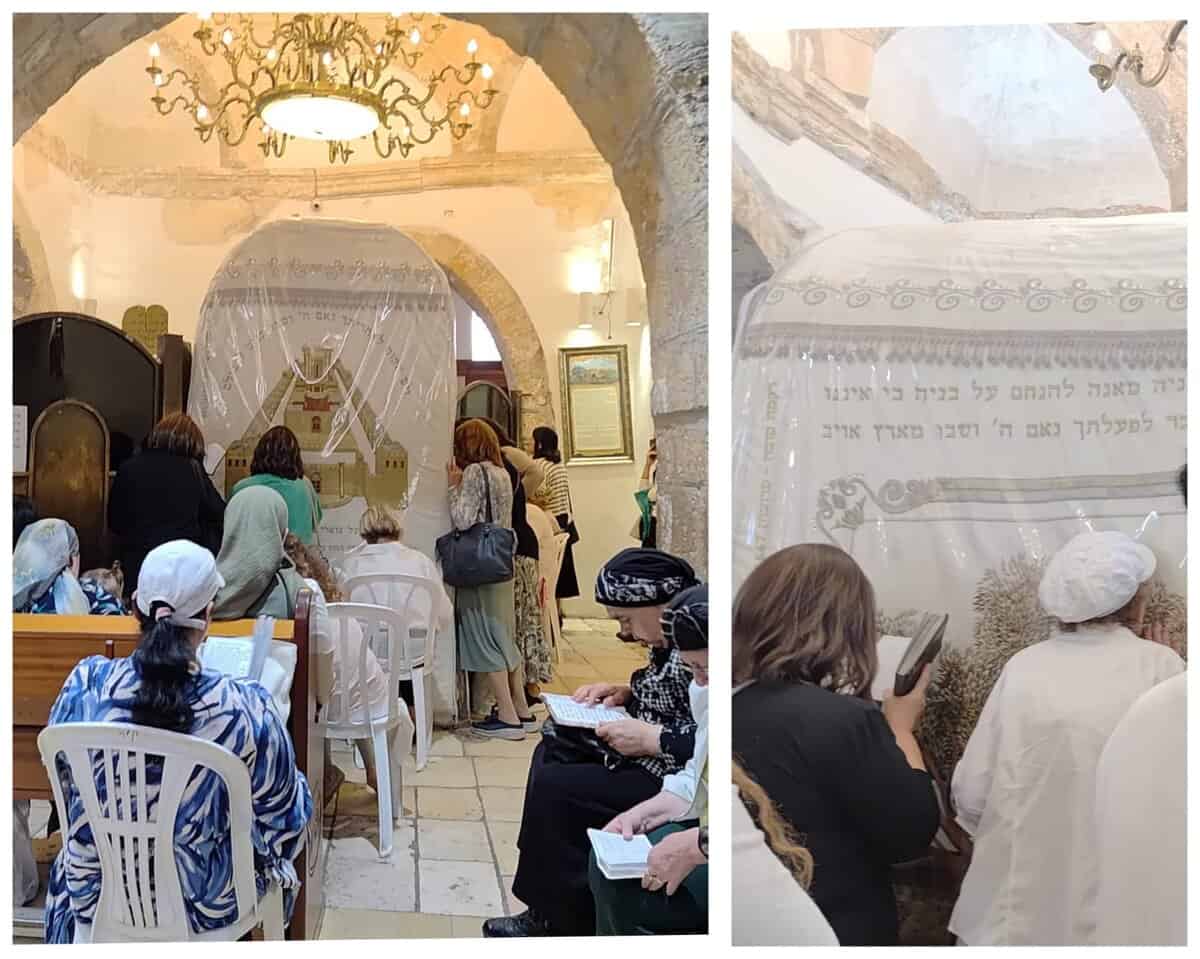
In a narrow, arched space, women crowd before the white curtain covering Rachel’s grave. Some whisper verses from Psalms, others lean closer to the stone in hushed prayer, all sending a shared plea to Mother Rachel and the God of Israel. A sacred silence fills the air
Meanwhile, men in the parallel section chant Selichot, their voices trembling with the words “We have sinned before You, have mercy on us…” and the piercing blasts of the shofar. Above the grave glows the eternal verse: “A voice is heard in Ramah, lamentation and bitter weeping; Rachel weeps for her children, refusing to be comforted… Thus says the Lord: restrain your voice from weeping… your children shall return from the land of the enemy.” These words, written millennia ago, speak directly to hearts today on the outskirts of Jerusalem
From Jerusalem to Bethlehem
During September, which usually corresponds to the Hebrew month of Elul, Jewish communities intensify their prayers in preparation for the High Holidays of Rosh Hashanah and Yom Kippur. This explains why Rachel’s Tomb and other sacred sites around Jerusalem become central places of devotion at this time
Rachel’s Tomb, located on the road from Jerusalem to Bethlehem, has become one of the most sacred and safeguarded places in Judaism. Thousands visit year-round, and especially during this season of reflection, prayer, and longing for comfort
Rachel, the third matriarch, is remembered as the heart of the nation – mother of Joseph and Benjamin, beloved wife of Jacob. She was not buried in the Cave of Machpelah with the patriarchs and matriarchs, but rather “on the way to Ephrath, which is Bethlehem.” Her lonely resting place turned into a symbol of nearness, faith, and devotion
Rachel’s Tomb as a national symbol
The site preserves both a sense of holiness and modern adaptation: facilities for visitors, corners for lighting candles, water and simple refreshments. Rachel’s Tomb is not only a memorial but also a national and feminine symbol – a place where history and mysticism intertwine
Rachel represents both the personal mother and the collective one: the woman who prays for her child, who waits for him to return from battle, who longs for the captive son to come home
(Bus 163 from Jerusalem to Rachel’s Tomb: Faith and Memory)
Rachel’s Tomb thus becomes the beating heart of the people of Israel. Not just stone and grave, but a living and eternal voice heard “in Ramah.” Where Rachel refused to be comforted, her children – the people of Israel – continue to seek consolation. Past, present, and future merge here in the 21st century, as Rachel’s voice endures as a timeless promise of return to the homeland